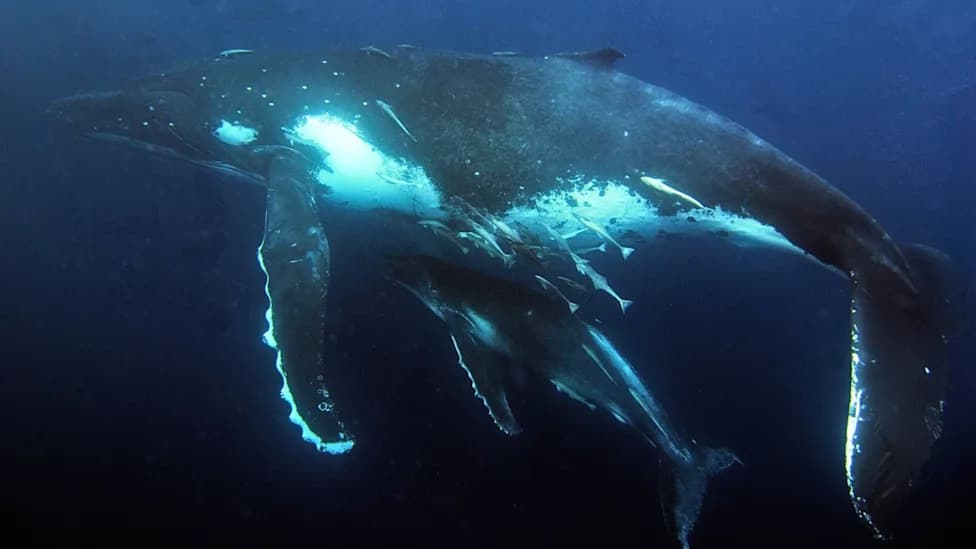
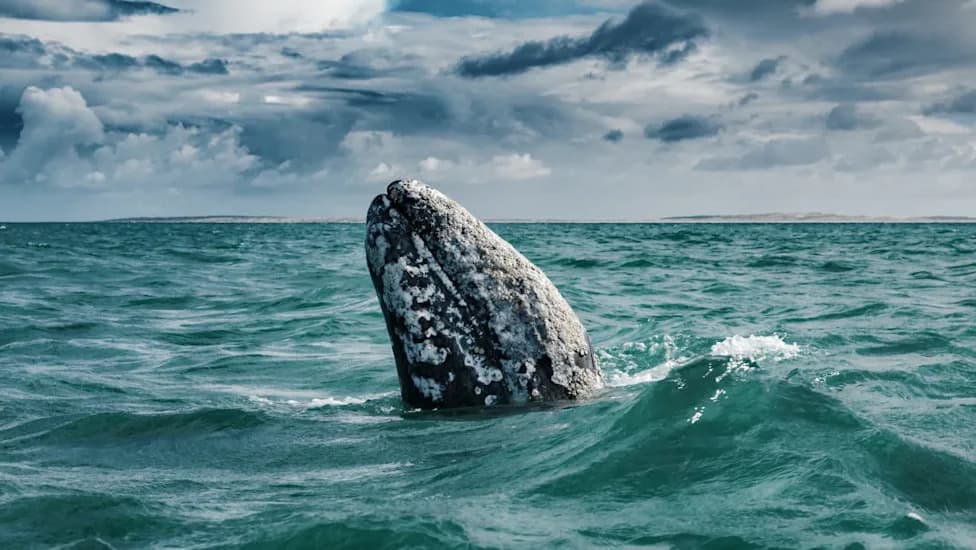
Photographers Chris and Monique Fallows recorded a rare humpback "supergroup" of 299 whales off South Africa, verified by Happywhale. The sighting reflects a strong rebound of southern hemisphere humpbacks from under 10,000 during peak whaling to over 100,000 today. However, a recent surge in shipping around the Cape — driven by Middle East conflicts and Red Sea attacks — has increased the risk of deadly ship strikes, prompting calls for speed limits and other protections.
Nearly 300 Humpbacks Form Rare 'Supergroup' Off South Africa — Recovery Bright, But Ship Traffic Poses New Threat
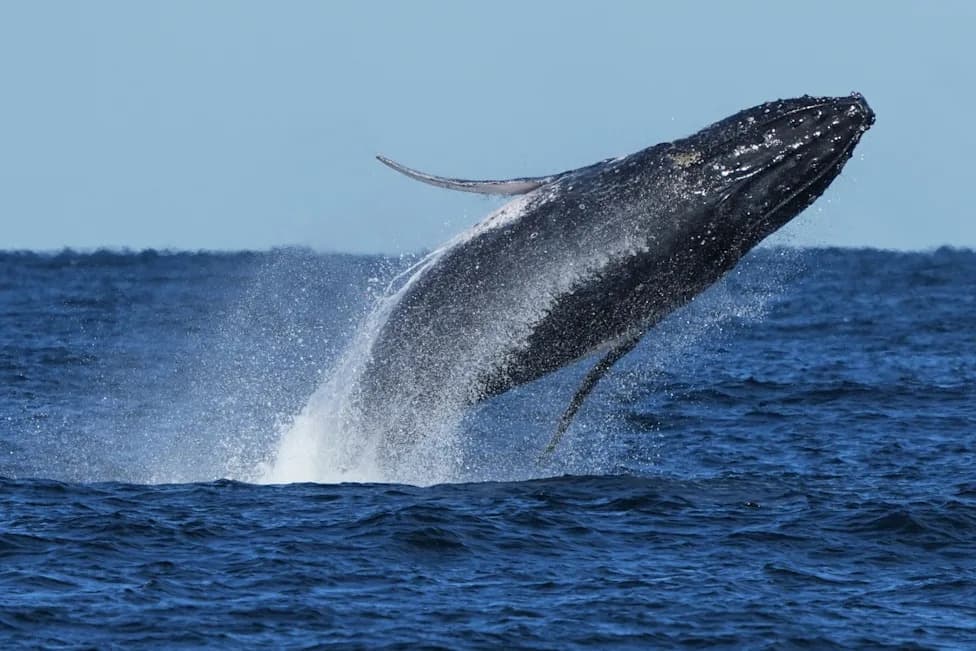
FILE - A humpback whale breaches off the coast of Port Stephens north of Sydney, Australia, June 18, 2025. (AP Photo/Mark Baker, File)(AP Photo/Mark Baker)
A South African couple encountered an extraordinary natural spectacle last December when they found themselves amid a humpback whale "supergroup"—an aggregation of nearly 300 animals feeding together off the country's west coast.
Chris and Monique Fallows, long-time marine observers and photographers, documented the event by photographing the whales' tails, or flukes. Each fluke has a unique pattern, allowing researchers to identify individuals. Using that photo-ID method, the Fallows recorded 299 humpbacks in the group.

Fine art wildlife photographer Chris Fallows looks out to sea from his boat near Hout Bay, in Cape Town, South Africa, July 12, 2026. (AP Photo/Neil Shaw)(AP Photo/Neil Shaw)
Verification and significance
Alex Vogel, Africa coordinator for the citizen-science platform Happywhale, said the organization verified the Fallows' count and that the aggregation appears to be the largest humpback group documented to date. Scientists say such supergroups are a strong sign of population recovery in the southern hemisphere following the international whaling moratorium.
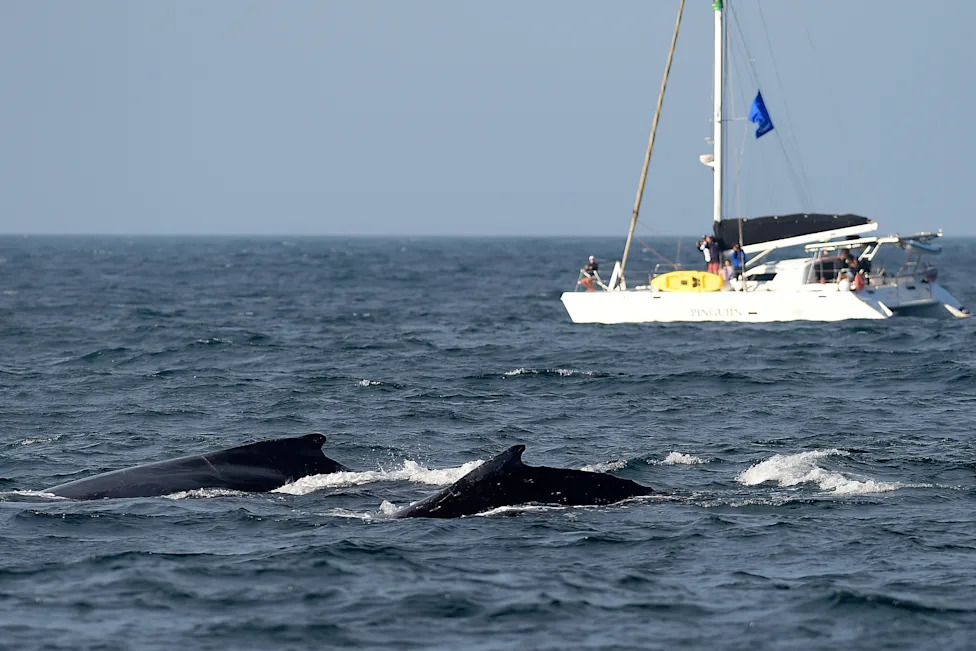
Humpback whales surface near a Humpback Whale Project boat during monitoring off the coast of Rio de Janeiro, Brazil, Tuesday, June 30, 2026. (AP Photo/Dhavid Normando)(AP Photo/Dhavid Normando)
Recovery, Behavior and Conservation Context
At the height of industrial whaling, southern hemisphere humpbacks numbered under 10,000. Current assessments by scientists and the International Whaling Commission estimate the population at more than 100,000. Humpbacks usually travel alone or in small pods, but when prey — such as krill or small fish — is abundant, they can form large feeding aggregations. Researchers also note that feeding humpbacks produce underwater sounds that may attract other whales, helping to form supergroups.
Despite the humpback comeback, recovery across whale species has been uneven. The World Wildlife Fund and other organizations warn that entanglement in fishing gear, ship strikes and climate change remain major threats. Seven of the 14 great whale species are listed as endangered or vulnerable by the IUCN; the North Atlantic right whale is critically endangered, with an estimated population of roughly 380 individuals.
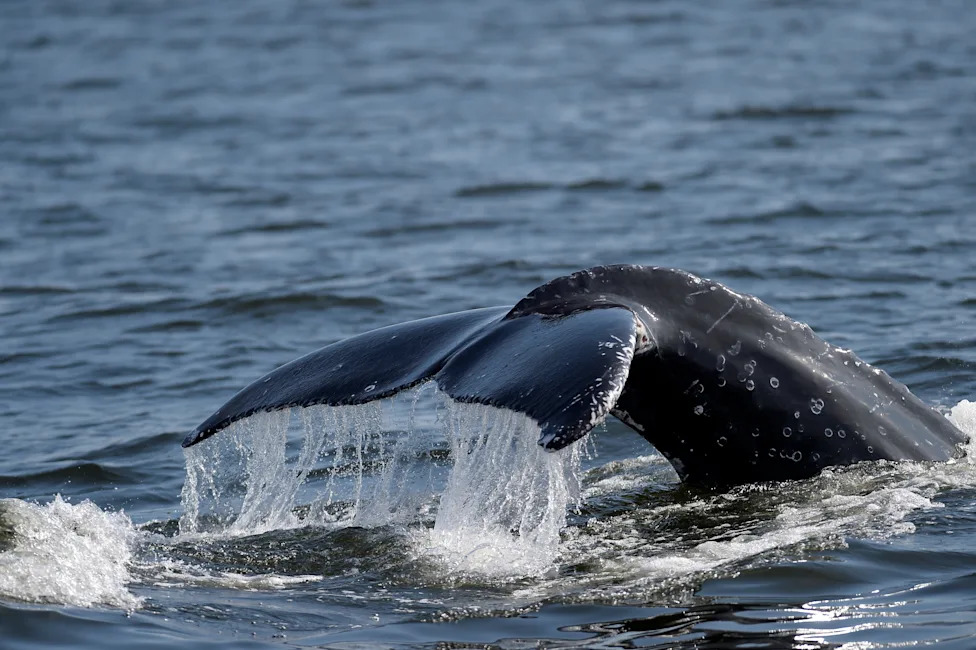
A humpback whale dives off the coast of Rio de Janeiro, Brazil, Tuesday, June 30, 2026. (AP Photo/Dhavid Normando)(AP Photo/Dhavid Normando)
Rerouted Shipping and Rising Risk
Els Vermeulen, chief scientist at the University of Pretoria's Whale Unit, co-authored a preliminary assessment showing that vessel traffic around the southern tip of Africa has roughly quadrupled since December 2023. The rerouting follows the outbreak of the Israel–Hamas war, attacks by Yemen's Houthi rebels on Red Sea shipping, and heightened tensions involving Iran and security in the Strait of Hormuz. More ships taking the longer route around Africa increases the chance of collisions with whales.
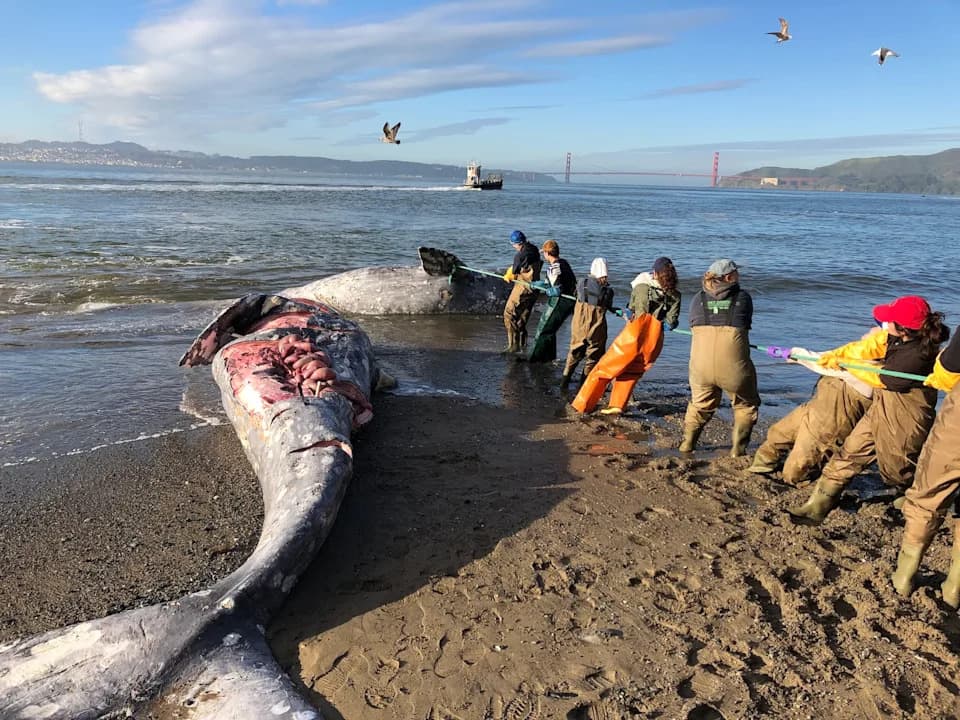
Because many whales struck by vessels sink at sea, ship-strike data are incomplete. Gregg Oelofse, Cape Town's coastal and environmental manager, noted that some whale carcasses washing ashore show clear propeller wounds and deep cuts consistent with vessel strikes.
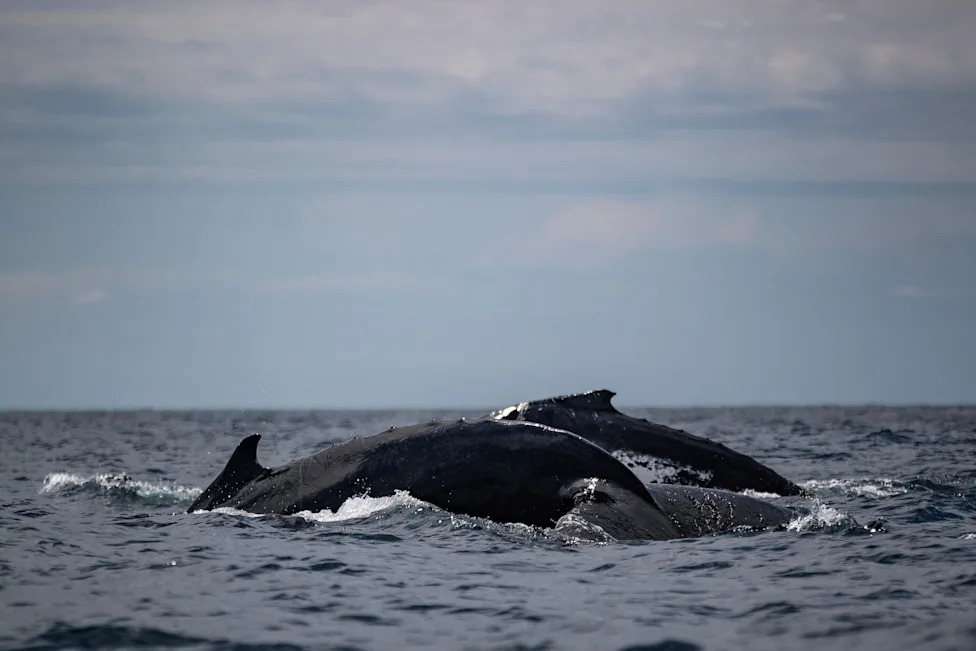
FILE - Humpback whales surface together in Bahia Solano, Colombia, Sunday, Aug. 27, 2023. (AP Photo/Ivan Valencia, File)(AP Photo/Ivan Valencia)
Scientists and conservation managers are urging mitigation measures — including official speed limits for ships near South African coasts, better monitoring, and routing guidance — to reduce collision risk, especially as humpback numbers and large feeding aggregations increase.
Outlook
The Fallows' sighting is a hopeful indicator of humpback recovery in the southern hemisphere, but it also underscores how human activity can create new threats. Continued monitoring, international cooperation on shipping practices, and targeted protections will be crucial to ensure whales can recover without facing rising mortality from vessel traffic.
— Associated Press reporting contributed to this account.
Help us improve.