Russia has modified Yak-52 trainers and An-2 biplanes to carry and launch FPV interceptor drones, footage from BARS-Sarmat shows. The Yak-52 is fitted with six underwing rails but was seen flying with four drones, while the An-2’s larger cabin can host control equipment for in-flight operations. Exercise clips reportedly show these interceptors engaging Ukrainian UAVs, including apparent Maya decoys. The effort echoes Ukrainian conversions of An-28s carrying P1-SUN interceptors and highlights a trend of adapting legacy airframes for low-cost counter-drone roles.
Russia Repurposes Yak-52 Trainers and An-2 Biplanes to Launch FPV Interceptor Drones
Credit: The Aviationist
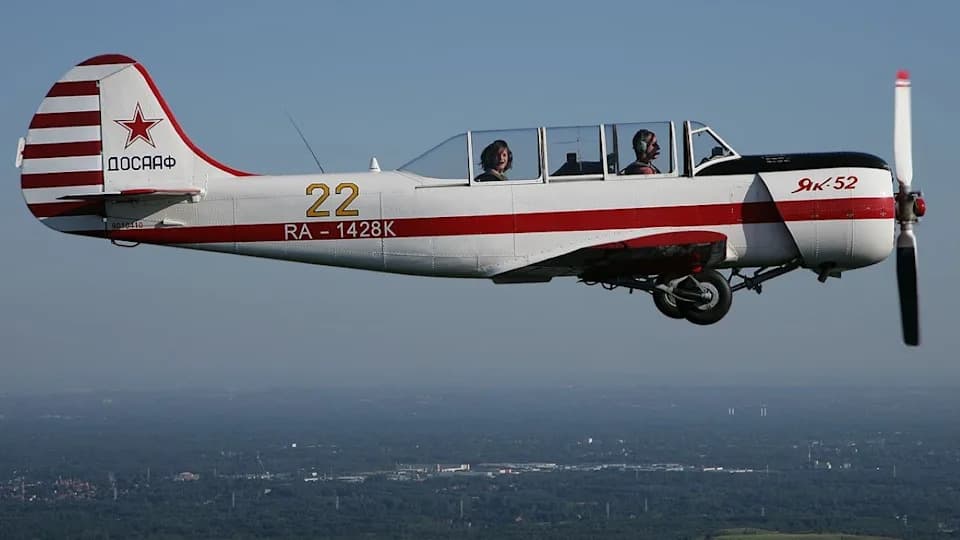
Russia is converting legacy Soviet aircraft into airborne counter-drone platforms by fitting Yak-52 trainers and An-2 utility biplanes with launch systems for FPV interceptor drones. Footage released by the unit BARS-Sarmat shows two configurations: one for ground launches and another adapted to release drones in flight against approaching UAVs.
Yak-52: Light Trainer, New Role
The Yak-52 in the video carries six underwing launch rails but appears to depart with only four drones loaded. The compact two-seat cockpit raises questions about how an FPV operator or control hardware would be accommodated aboard the trainer, since the airframe offers limited internal space for the consoles and antennas typically used to operate interceptor drone systems in flight.
An-2: Space for Operators and Equipment
The An-2 biplane forms the programme’s second element. With its roomy cabin, the An-2 can house onboard control equipment and personnel that the Yak-52 likely cannot. In the demonstrated configuration, drones are launched from a fuselage-mounted attachment. Russian sources have not disclosed maximum payload, sortie endurance, or whether future upgrades will add underwing launch stations.
Exercise Footage and Targets
Exercise clips show interceptor drones engaging multiple Ukrainian UAVs. Some struck targets reportedly resembled Maya decoys, while other engaged types were not clearly identified on camera. The footage underlines how lower-cost FPV interceptors are being trialled as a supplement to layered air-defence systems.

Google logo on a black background next to text reading 'Click to follow TechRadar'
Wider Context
This effort mirrors earlier Ukrainian adaptations — notably modified An-28 aircraft that carry P1-SUN interceptor drones with optical targeting systems to counter Shahed loitering munitions. Those Ukrainian platforms have been reported to carry up to six interceptors and serve as a cheaper complement to conventional missiles.
Using older airframes as launch platforms allows combatants to extend the service life and utility of legacy fleets while fielding relatively inexpensive counter-drone capabilities.
First flown roughly 80 years ago, the An-2 remains one of the world’s longest-serving utility aircraft. Russia has previously announced plans to restore several hundred An-2s, and this interceptor programme represents another attempt to extract new operational value from aging airframes.
Unknowns and Open Questions
Key technical details remain undisclosed: command-and-control arrangements for FPV interceptors aboard the Yak-52, the An-2’s payload limits in this role, the drones’ endurance and guidance methods, and how effective these systems are against modern loitering munitions in contested airspace. Independent verification of the engagement footage and the types of targets hit is limited.
Bottom line: The conversions demonstrate a pragmatic approach to counter-drone warfare — pairing inexpensive interceptor drones with tried-and-true aircraft — but leave important questions about operational practicality and effectiveness unanswered.
Help us improve.