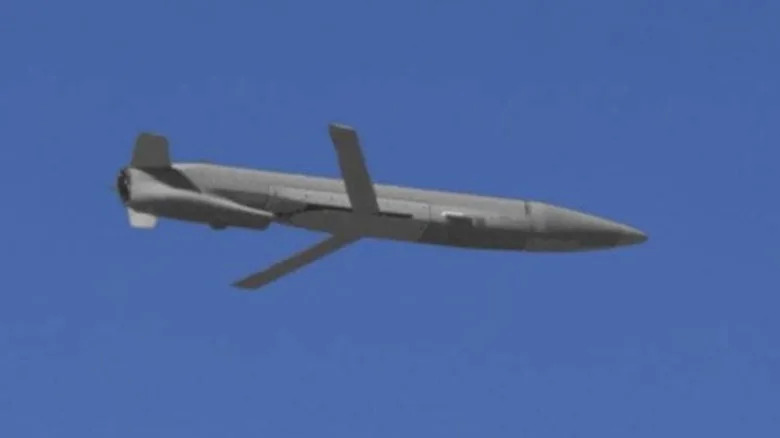
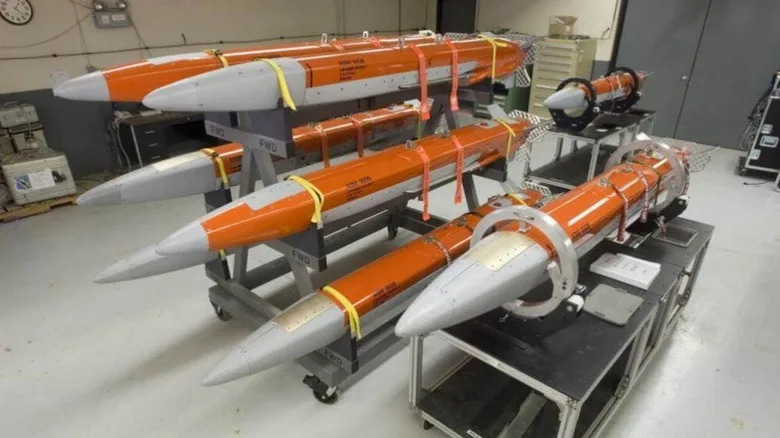
Aircrews have long used decoys to survive contested skies. The ADM-160 MALD family — including the jammer-equipped ADM-160C (MALD-J) — is a modern, upgraded miniature air-launched decoy designed to mimic and, in some variants, jam enemy radar signatures to protect manned aircraft in hostile airspace.
How MALD Works
MALD vehicles are launched from aircraft hardpoints in groups or individually and fly preprogrammed profiles that emulate the radar signature and flight paths of real combat aircraft. By creating convincing false contacts on early-warning and targeting radars, MALDs divert attention and fire away from crewed fighters, allowing those aircraft to continue missions with reduced risk.
MALD-J: A Jammer-Decoy Hybrid
The ADM-160C, commonly called MALD-J, adds electronic attack to the decoy role. It can approach enemy radar sites and emit jamming signals while loitering, degrading enemy sensors and buying time and freedom of action for friendly forces. MALD-J can operate alone or in coordination with other MALDs and manned aircraft.
Design, Performance and Origins
The MALD program began in the 1990s following a DARPA initiative; initial work was awarded to Teledyne Ryan (now part of Northrop Grumman). Raytheon took over the program in 2003 and developed later variants. Physically, each MALD measures about 9 ft 4 in long with a 5 ft 7 in wingspan, weighs roughly 99.2 lb, and is powered by a Hamilton Sundstrand TJ-150 turbojet. Typical performance figures include a range around 575 miles, a top speed near Mach 0.91 (~698 mph) and roughly 90 minutes of endurance—enough to penetrate denied areas and loiter near threat zones.
Operational Use
MALD platforms have been battle-tested in recent conflicts; reports indicate Ukrainian forces employed MALDs against Russian radar systems in 2023. Following demonstrated battlefield utility and renewed demand, Raytheon restarted MALD production in mid-July 2026 to supply more systems to active operations.
Limitations, Cost and Tactical Value
MALDs carry no warhead: their payload is an electromagnetic package that manipulates radar returns so hostile systems display false targets (for example, appearing as an F-15 or F-35). They are expendable and can be shot down, but at an estimated unit cost of roughly $380,000 each, they are far cheaper to lose than a high-end manned fighter such as an F-22 Raptor (acquisition cost around $369.5 million). Commanders use MALDs to create confusion, mask real flight paths, simulate larger formations or draw fire away from high-value assets.
Bottom line: MALD decoys and MALD-J jammer-decoys are force-multiplying tools that trade expendable platforms for the protection of expensive, crewed aircraft in modern contested airspace.