The 13th MEU trained aboard USS Makin Island with an upgraded L-MADIS counter-drone system that pairs passive RF sensors, radar and optics with an electronic-warfare jammer to sever drone control links. SkyView's passive capability lets Marines detect unmanned threats without emitting signals that reveal positions. The upgrade improves mobility and sensors; Marines stressed that operator skill and continued training are essential to the system's effectiveness.
Marines Test Upgraded L‑MADIS To Detect and Jam Hostile Drones Before They Reach Amphibious Ships
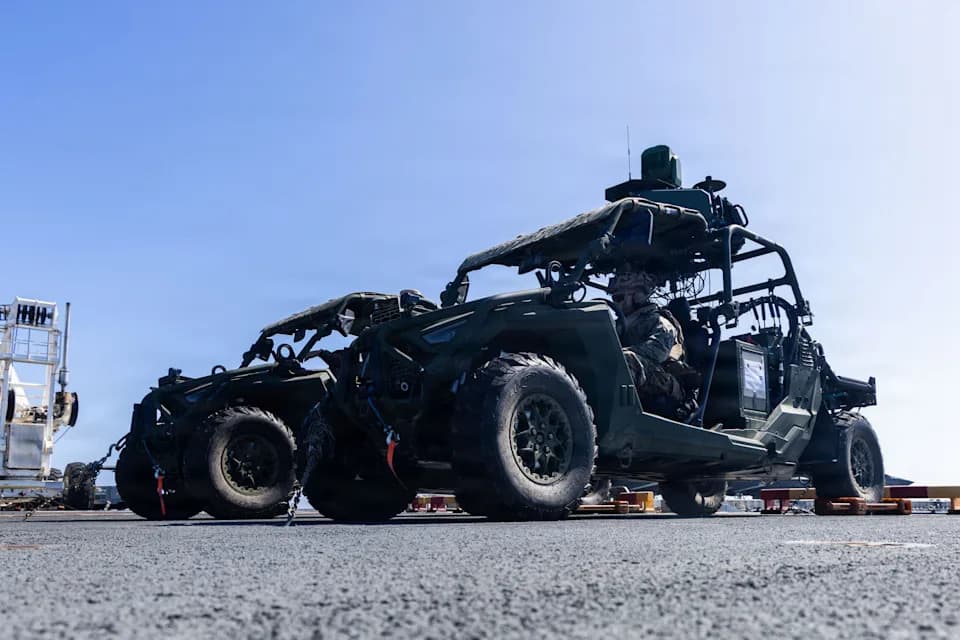
Marines operate L-MADIS during defense of the amphibious task force training.U.S. Marine Corps photo by Lance Cpl. Fernando Cruz Martinez
Marines from the 13th Marine Expeditionary Unit practiced detecting and neutralizing hostile drones aboard the amphibious assault ship USS Makin Island as part of deployment-preparation training. The exercise centered on an upgraded Light Marine Air-Defense Integrated System (L-MADIS), a mobile counter-drone package designed to spot small unmanned aircraft and sever their control links before they can threaten ships or personnel.
What L-MADIS Does
The two-vehicle L-MADIS package combines passive radio-frequency sensors, radar, optics and an electronic-warfare (EW) jammer. One vehicle serves as the command-and-control hub, housing radar, cameras and a SkyView radio-frequency sensor that can "listen" for drone signals without transmitting. The companion vehicle carries EW equipment used to interfere with the radio link between a drone and its operator.
Passive Detection And Targeting
The system's passive SkyView sensor helps Marines detect and classify unmanned aerial systems without emitting electronic signals that could reveal friendly positions. When a signal is detected, the system cross-references a database of known drone signatures common to the region and generates a track showing type, heading, range and operating frequency.
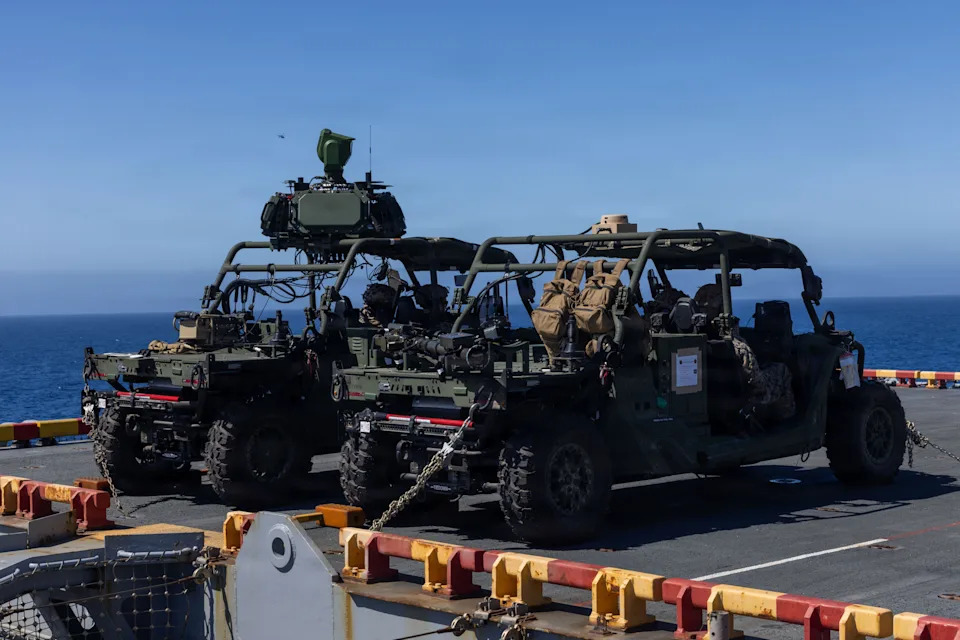
L-MADIS vehicles aboard the Makin IslandU.S. Marine Corps photo by Lance Cpl. Fernando Cruz Martinez
Jamming And "Near‑Kill" Effects
Operators can tune the jammer to the identified frequency and broadcast interference, effectively severing the remote-control link. Depending on the drone's design and programming, that loss of control can cause the aircraft to crash, hover in place, or attempt to return to its operator—sometimes exposing an enemy position. A disabled or hovering drone can then be engaged with small arms and specialized anti-drone ammunition or, for larger aerial threats, with weapons such as Stinger missiles.
"All these systems on this vehicle aid the operator in finding drones before they get too close to you to kill you," said Cpl. Julian Moore, an L-MADIS operator. He emphasized that training and operator skill are as important as the equipment itself.
Why The Upgrade Matters
The Corps accelerated counter-drone procurement after observing how inexpensive, commercially available drones reshaped combat in Ukraine and the Middle East. The Makin Island received an upgraded L-MADIS package about two months before the training, featuring lighter, more mobile vehicles and refreshed sensors and jamming suites to improve responsiveness and survivability at sea.
Marines and leaders say systems like L-MADIS are one piece of a layered counter-drone approach that gives small teams a practical, mobile way to detect and defeat small unmanned threats before they can harm ships or expeditionary forces. As Lt. Gen. Jay Bargeron noted, protecting units from one-way attack drones is an urgent gap the Corps is working to close.
Help us improve.