The U.S. Department of Defense and Lockheed Martin signed a framework agreement to expand AIM‑260 JATM production capacity; it is a demand signal, not a contract or missile order. Lockheed will invest company funds to grow capacity so production lines and suppliers are ready if Congress approves a multiyear buy. Public estimates place the missile's range at over 120 miles, and Australia has committed roughly $520 million to become the first export customer. No U.S. production rate or program dollar value was disclosed in the announcement.
Pentagon, Lockheed Sign Framework to Rapidly Scale AIM‑260 JATM Production
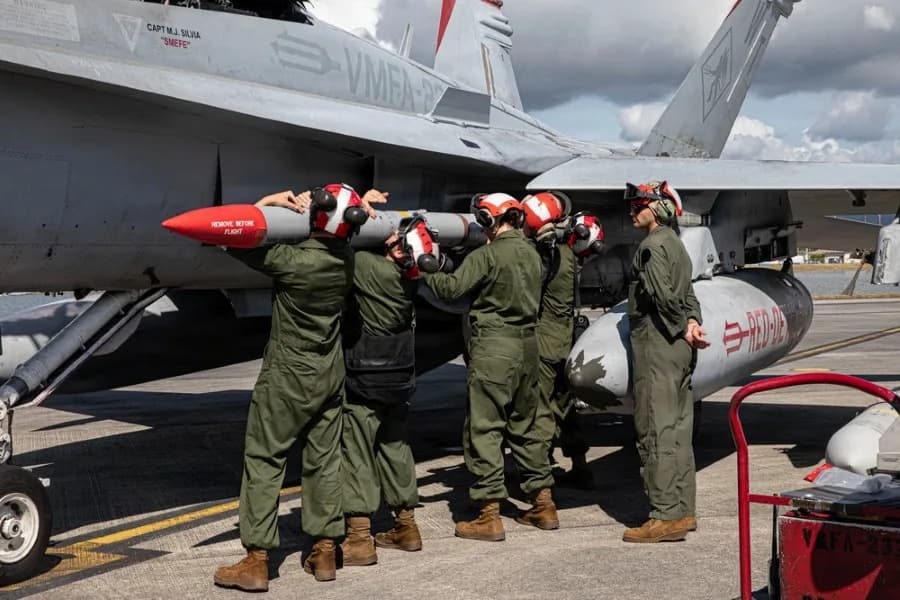
U.S. Marines load F/A-18 Hornet jets with an AIM-120, which will enventually be replaced by JATM, during a harpoon exercise at Marine Corps Air Station Iwakuni, Japan, Aug. 19, 2026. (Donald Dugger/U.S. Marine Corps)
The U.S. Department of Defense and Lockheed Martin on Thursday announced a framework agreement intended to expand production capacity for the AIM‑260 Joint Advanced Tactical Missile (JATM). The arrangement is a demand signal to industry to justify investments in factories, workforce and production efficiencies, not a contract or an immediate missile order.
If Congress authorizes and funds a multiyear procurement, the goal is to have production lines, supplier capacity and staffing ready to accept orders without delay. Officials say the framework helps provide the long‑term demand visibility required for industrial investment.
"Speed, scale, and stability drive acquisition excellence, and these gears must turn in unison," said Under Secretary of Defense for Acquisition and Sustainment Michael Duffey. "Today's announcement reflects our commitment to sending clear, long‑term demand signals across the defense industrial base."
Tim Cahill, president of Lockheed Martin Missiles and Fire Control, said the company will invest its own funds to expand production capacity ahead of any formal orders. "JATM is one of our nation's most important air dominance capabilities," Cahill told Reuters, noting the program's classified aspects have limited public discussion until now.
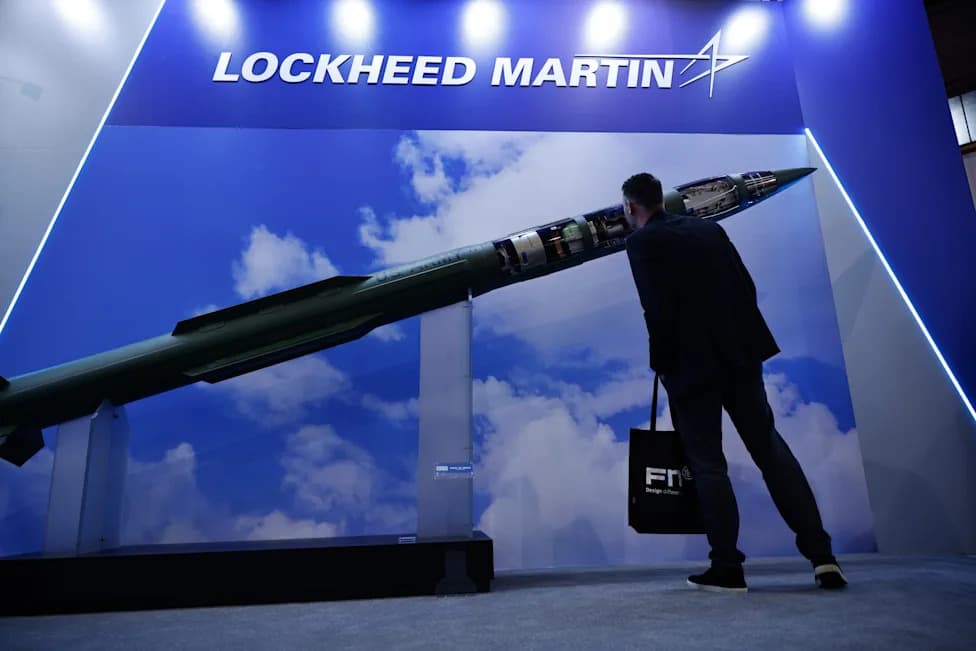
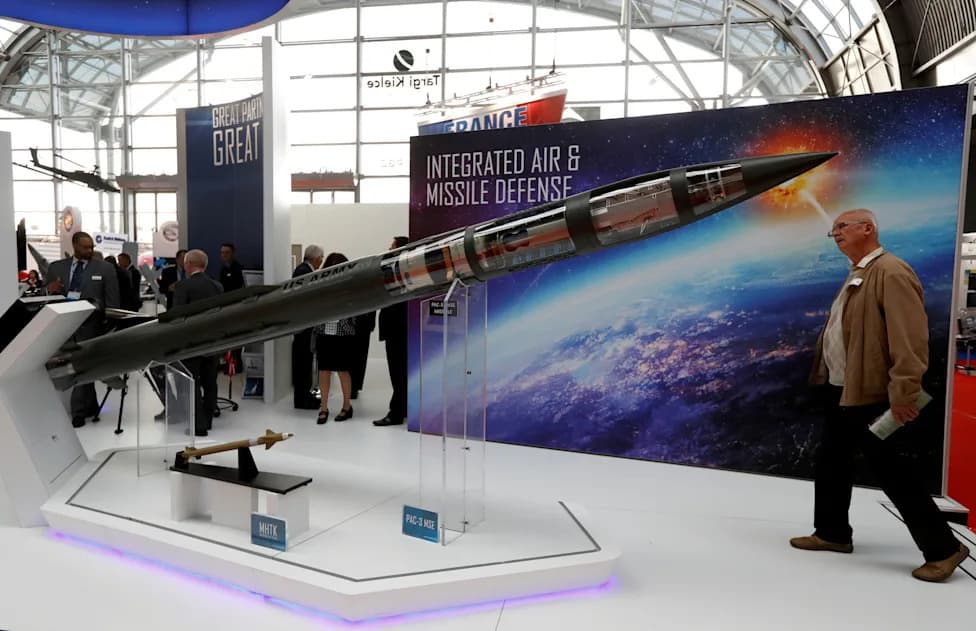
Lockheed developed the AIM‑260 for the U.S. Air Force and Navy to outrange and eventually replace the AIM‑120 AMRAAM. The company says the missile provides greater range and lethality than existing U.S. air‑to‑air weapons; public estimates place its range at more than 120 miles, a capability driven in part by longer‑range Chinese systems such as the PL‑15.
Designed to fit inside the internal weapon bays of fifth‑generation fighters like the F‑22 and F‑35, the AIM‑260 must deliver extended range without exceeding the AMRAAM's footprint. The first public photos of the missile emerged on May 13 when aviation photographer Jonathan Tweedy captured an AIM‑260 on a Navy F/A‑18F Super Hornet at Eglin Air Force Base; The Aviationist published the image two days later.
The framework also supports foreign military sales. On Aug. 6, Australia said it would invest about $520 million (roughly $736 million AUD) to acquire JATM for the Royal Australian Air Force, becoming the missile's first export customer. Australia plans initial integration on F/A‑18F Super Hornets, followed by F‑35A Lightning IIs and EA‑18G Growlers. In March, the U.S. approved a potential sale to Australia of up to 450 missiles and associated test articles valued at about $3.16 billion.
Unlike some earlier 2026 framework agreements with Lockheed, Thursday's announcement did not disclose a U.S. production rate or dollar value. Officials and the company emphasize this step is intended to accelerate readiness and industrial scaling should congressional funding and formal orders follow.
Help us improve.