The LSE and CMCC estimate Britain’s record June heatwave cost the economy about £1.15 billion and caused roughly 24 million lost work hours. A survey of 1,950 UK adults found an average weekly reduction of 0.47 hours and that 3.6% (≈1.25 million workers) missed work entirely during the week of June 22. Some 87% reported health effects; researchers say the findings highlight inadequate adaptation and urge urgent government action.
June Heatwave Cost UK Economy £1.15bn and 24 Million Work Hours, LSE Study Warns

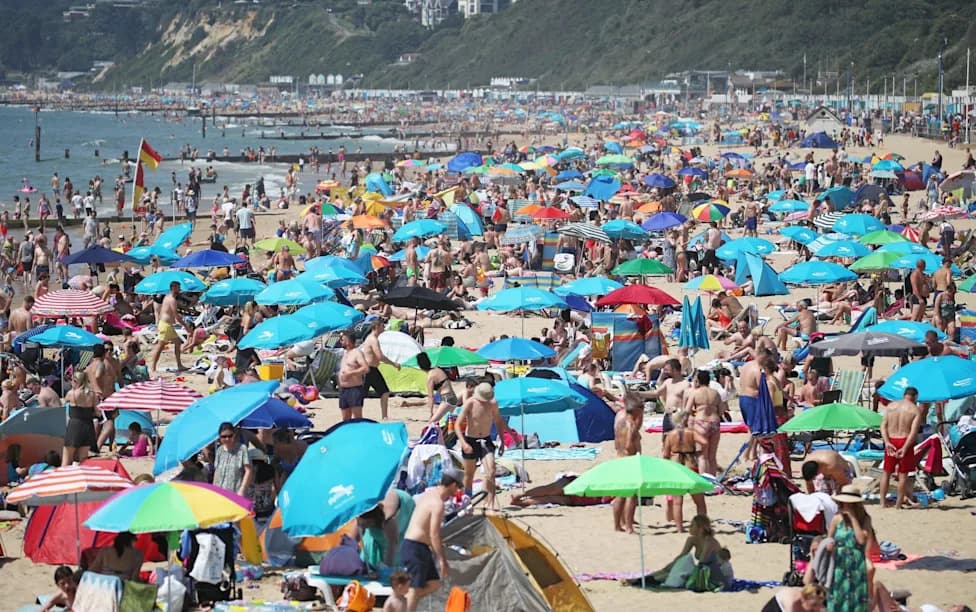
The UK broke the record for its hottest ever June day during last month's heatwave (JUSTIN TALLIS)
Britain's record June heatwave cost the UK economy an estimated £1.15 billion and resulted in roughly 24 million lost working hours, a study from the London School of Economics (LSE) has found.
The research, carried out by the Grantham Research Institute at LSE together with the Euro‑Mediterranean Center on Climate Change (CMCC), surveyed 1,950 UK adults about the week of June 22. On average respondents reported working 0.47 fewer hours that week. The survey also showed that 3.6% of respondents—equivalent to about 1.25 million workers across the population—did not work at all because of the extreme heat.
The heatwave disrupted transport, schools and hospitals across the UK, France and other European countries, exposing vulnerabilities in public services and infrastructure that are not well adapted to high temperatures.
Who Was Most Affected
The study found that workers in occupations with high exposure to heat and heavy physical demands—such as construction and agriculture—reduced their hours substantially more than those in low‑exposure, less physically demanding roles (for example, academic or office-based jobs).
Health Impacts
A large majority—87% of respondents—reported at least one health-related symptom during the sweltering week, including disrupted sleep, pronounced tiredness at work, dizziness, fainting and a faster heartbeat.
"Our findings point to a country that remains insufficiently adapted to the changing climate," said Elizabeth Robinson, director of the Grantham Institute. "The government cannot continue to ignore extreme heat—act now."
England recorded its warmest June on record this year, and scientists warn that climate change is making extreme weather events more frequent and more intense. The study’s authors say the economic and health impacts underscore the need for better workplace protections, public‑health preparedness and infrastructure adaptation to rising temperatures.
Help us improve.