The Senate hearing on Lt. Gen. Douglas A. Schiess’s nomination underscored that space is increasingly central to deterrence and warfighting as adversaries target space assets early in conflicts. Lawmakers said recent operations, notably a five-month conflict involving Iran, exposed vulnerabilities and stressed Space Force capabilities. Schiess warned China and Russia are expanding anti-satellite and jamming tools and urged fielding systems to deny and degrade these threats. If confirmed, Schiess would become the third Chief of Space Operations.
Space Rising as a Warfighting Domain, Schiess Tells Senate as Space Force Faces Growing Threats
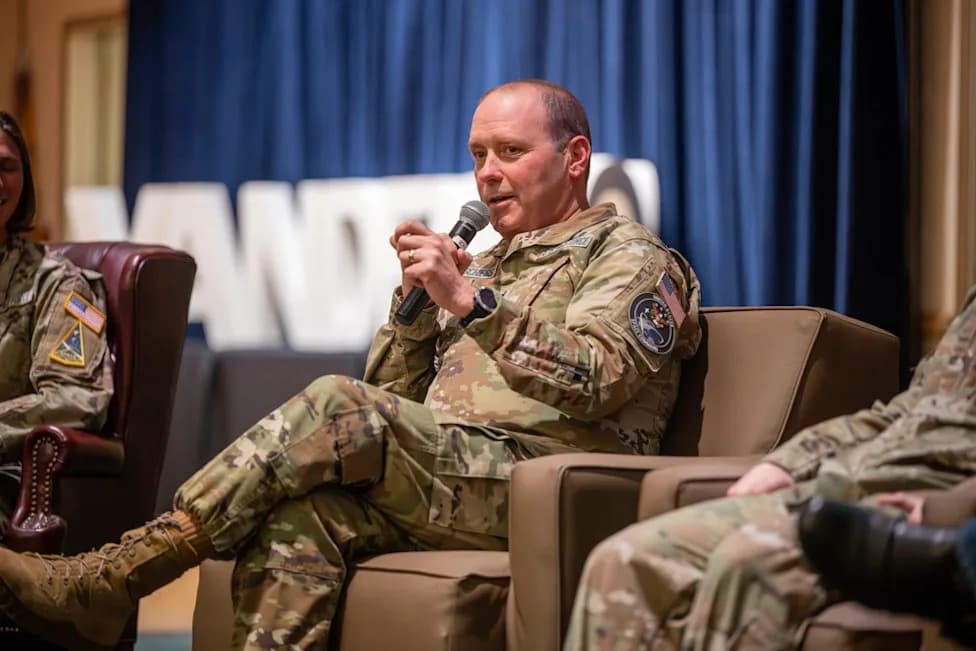
U.S. Space Force Lt. Gen. Douglas A. Schiess answers questions during the Guardian Path series at Vandenberg Space Force Base, California, May 30, 2025. (David Dozoretz/U.S. Space Force)
Lawmakers and Lt. Gen. Douglas A. Schiess, President Trump’s nominee to lead the U.S. Space Force, told senators the ability to fight and maintain superiority in space is becoming central to deterrence on Earth as adversaries increasingly target space assets early in crises.
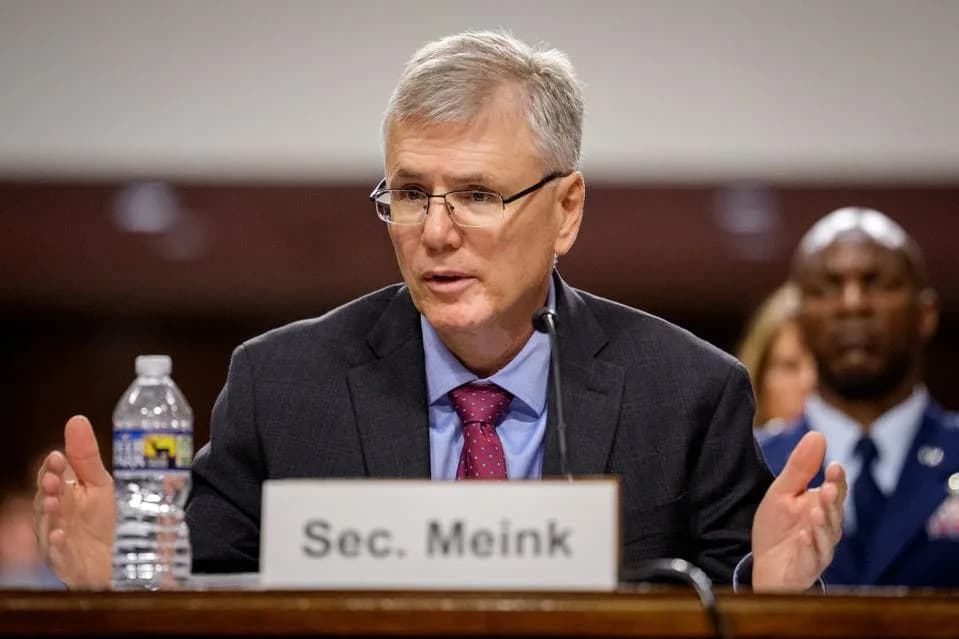
The Senate Armed Services Committee convened Thursday to consider Schiess’s nomination to become the third Chief of Space Operations. Sen. Jack Reed (D-R.I.), the committee's ranking member, described recent operations — particularly five months of fighting involving Iran — as a substantial stress test for Space Force capabilities.
"Space Force assets were among the first to be deployed in Operation Epic Fury and among the first to be targeted," Reed said. "Iran has specifically targeted Space Force command and control nodes and weapon systems throughout this conflict." An Air Force statement accompanying Schiess’s nomination also noted operations linked to Iran and Venezuela that "underscored guardians' ability to deliver combat-ready, asymmetric advantages from space."
Witnesses and officials at the hearing highlighted concerns that Iran, with assistance from partners such as Russia, has expanded its use of the space domain for satellite intelligence, reconnaissance and launches that could interfere with U.S. or allied capabilities.
Reed observed that the Space Force’s early years were rightly focused on building organization, personnel, infrastructure and base operations from scratch. "That was appropriate for a new service finding its footing, but the Space Force is quickly becoming a mature warfighting entity," he said.
Schiess emphasized that U.S. space capabilities are essential to deterring near-peer competitors, particularly China and Russia, which are enhancing anti-satellite, electronic-jamming and intelligence, surveillance and reconnaissance (ISR) capabilities. He warned these advances could threaten the space links that U.S. forces rely on.
"The United States no longer has the luxury of viewing space as a permissive environment," said Sen. Roger Wicker (R-Miss.), committee chairman. "China and Russia have made clear that they see space as a critical warfighting domain."
Schiess called out China’s anti-satellite tests and jamming as especially troubling, saying Beijing has built a longer-range "kill chain" — a set of sensors, networks and weapons that can detect and target U.S. forces at greater distances. "So the Space Force needs to bring capabilities to deny and degrade that kill web to protect the joint force," he said.
Asked whether a future major fight could take place in space, Schiess acknowledged that possibility and said space would at minimum be at the forefront of any conflict with China or Russia. "I think about China every day," he added.
Schiess was first nominated by President Donald Trump in May to be the Space Force’s highest-ranking officer. If confirmed by the Senate, he would succeed Gen. Chance Saltzman, who is scheduled to retire after four years leading the service.
Help us improve.