The United States has publicly acknowledged deploying an offensive weapon in Earth orbit, Air Force Secretary Troy Meink said, calling the system necessary to protect US forces. Officials offered no details on the weapon’s capabilities or launch timing. The move comes amid growing Russian and Chinese counterspace programs and reports of alleged Russian interceptions of European satellites. US policy now emphasizes both defensive and offensive roles for the Space Force as part of broader space-security planning.
US Confirms Offensive Weapon Deployed in Earth Orbit, Air Force Secretary Says
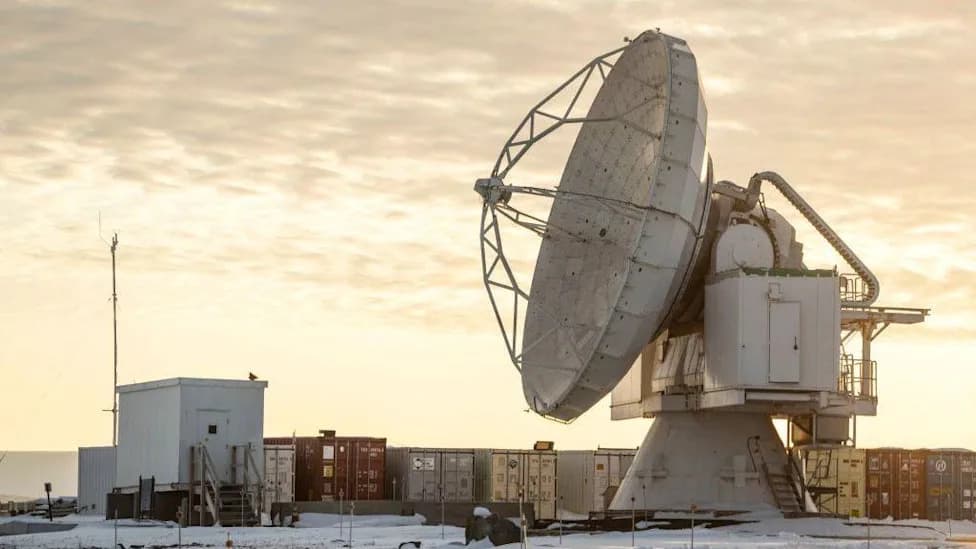
[Thomas Traasdahl/Ritzau Scanpix/AFP via Getty Images]
The United States has, for the first time, publicly acknowledged that it has placed an offensive weapon in Earth’s orbit, US Secretary of the Air Force Troy Meink said at the Air, Space and Cyber Conference.
Meink described the "on-orbit" system as necessary to safeguard US forces from hostile actions, but he declined to provide details about the weapon's capabilities or when it was launched.
Why the Move Matters
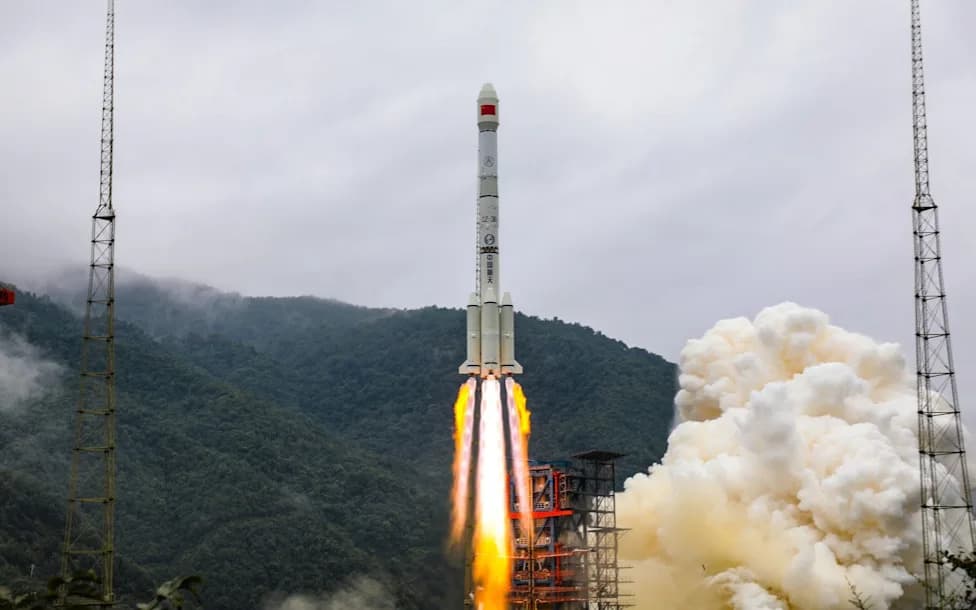
Senior military officials have long warned of growing counterspace programs in Russia and China that seek to disrupt or disable satellites used for communications, navigation and surveillance. Those satellites are now considered high-value military assets, and officials say new capabilities are intended to deter or respond to evolving threats.
Legal and Policy Context
Under the 1967 Outer Space Treaty, weapons of mass destruction are banned from orbit, but the treaty does not bar all kinds of weapons or counterspace capabilities. In recent years, key powers have explored capabilities outside the WMD ban, including systems that could disrupt, degrade or potentially destroy rival satellites.
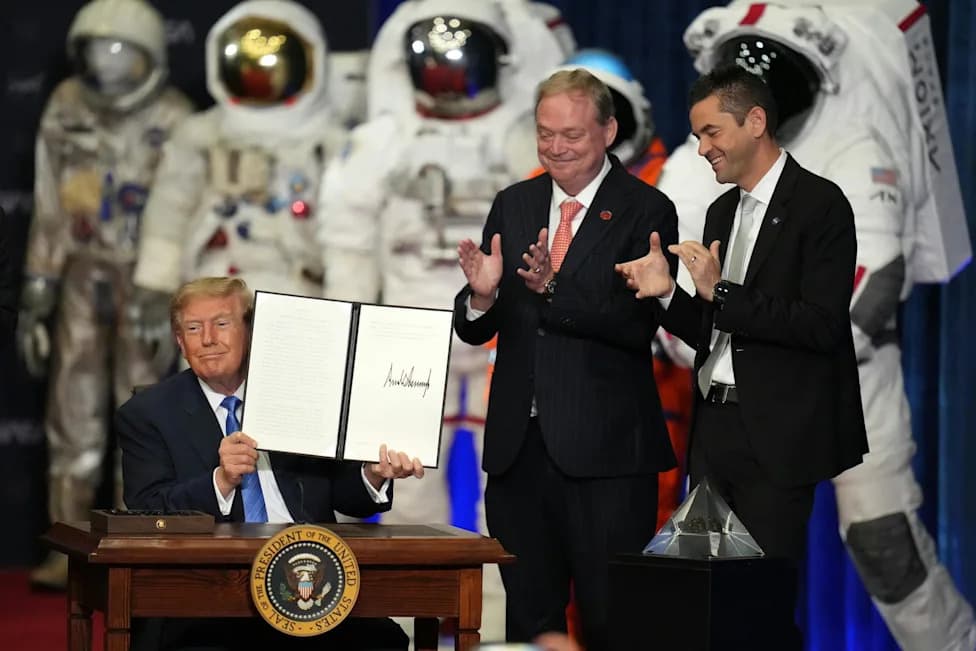
The Trump administration promoted space-based assets and interceptor missiles as part of a broader "Golden Dome" defense architecture. Last year, former President Donald Trump issued an executive order underscoring the US Space Force's role not only in defending space assets but also in conducting offensive operations when directed.
US Space Force on Capabilities: A Space Force spokesperson said space control "encapsulates the mission areas required to contest and control the space domain – employing kinetic and non-kinetic means to affect adversary capabilities through disruption, degradation and even destruction, if necessary." The spokesperson added that such capabilities can be used for both offensive and defensive purposes at the direction of combatant commands.
Recent Incidents and Concerns
In early February it emerged that two Russian satellites have likely intercepted the communications of at least a dozen European satellites since Russia's invasion of Ukraine in 2022. Those interceptions may have allowed Russia to read sensitive data or, hypothetically, attempt to seize control of targeted satellites.
In 2024 US officials also said Russia launched a satellite they believed could be used to attack other space platforms; Russia did not publicly comment on that claim. Meanwhile, the US Space Force asserts that China "develops and operates space and counterspace capabilities as part of a military modernization strategy," and that Russia "views space as a warfighting domain."
Officials provided no technical details about the newly acknowledged US system, leaving questions about its role, capabilities and the strategic implications for space security and arms-control efforts.
Help us improve.