Coastal access in the U.S. depends on state law and tide lines: most states set the public boundary at the mean high tide line, while a few extend public rights to dry sand through statutes or court rulings. The public trust doctrine and customary-use doctrines provide legal foundations for access, but rising seas and shoreline armoring cause coastal squeeze, shrinking beaches and fueling disputes. Beach nourishment can temporarily restore sand and requires public access, but it is costly and not a permanent solution.
Who Owns the Beach? How State Law and Tide Lines Decide Public Access
If you want to stroll the shoreline, know your rights.
As Americans flock to the coast each summer, they step onto shorelines shaped not only by tides and sand but also by complex state laws and long-running legal doctrines. Ownership and access vary widely: what is public beach in one state may be private property a few miles away.
Public Rights, Tide Lines, and Legal Roots
Most states mark the public–private boundary at the mean high tide line, calculated as an average over a 19-year tidal epoch. That generally leaves a wet, walkable strip of beach—the zone between high and low tide—that the public may traverse. A minority of states, including Maine, set the boundary at mean low tide, which can require wading to cross the shore.
The idea that some parts of the coast belong to everyone goes back to ancient Rome and became embedded in English common law as the public trust doctrine. Medieval judges and later American courts used this concept to hold that certain natural resources—like the seashore—should be preserved for public use.
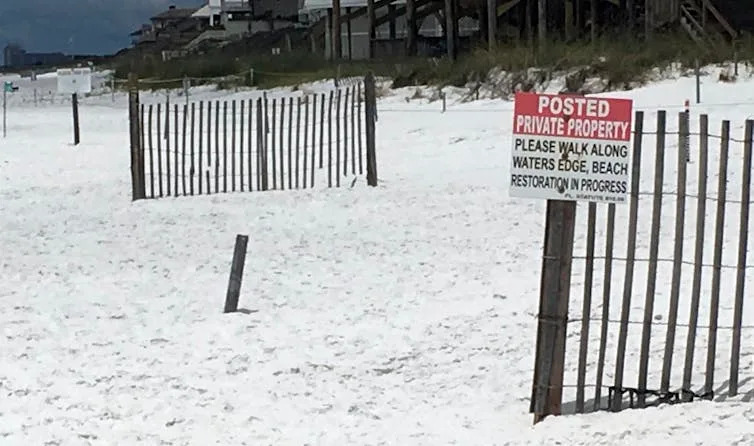
A sign marks the demarcation between public beach and private property in Santa Rosa Beach, Florida.AP Photo/Brendan Farrington
“By the law of nature these things are common to all mankind; the air, running water, the sea and consequently the shores of the sea.”
How States Protect (or Limit) Public Access
States use a mix of doctrines and statutes to preserve beach access. Key approaches include:
- Mean-tide boundaries: The public–private line is set at a tidal datum (usually mean high water).
- Customary use: Courts in some states recognize historic public uses of dry sand as creating access rights.
- Statutory easements: Laws such as Texas’s 1959 Open Beaches Act create explicit public easements across dry sand and allow the easement to "roll" inland as the shore migrates.
Notable legal milestones include Oregon’s 1969 decision opening dry sand by customary use, Florida’s 1974 ruling (with later parcel-by-parcel limits), New Jersey’s 1984 extension of the public trust to recreational use of dry sand, and Texas’s early statutory protection for public sandy beaches.
Sea-Level Rise, Coastal Squeeze, and Legal Conflicts
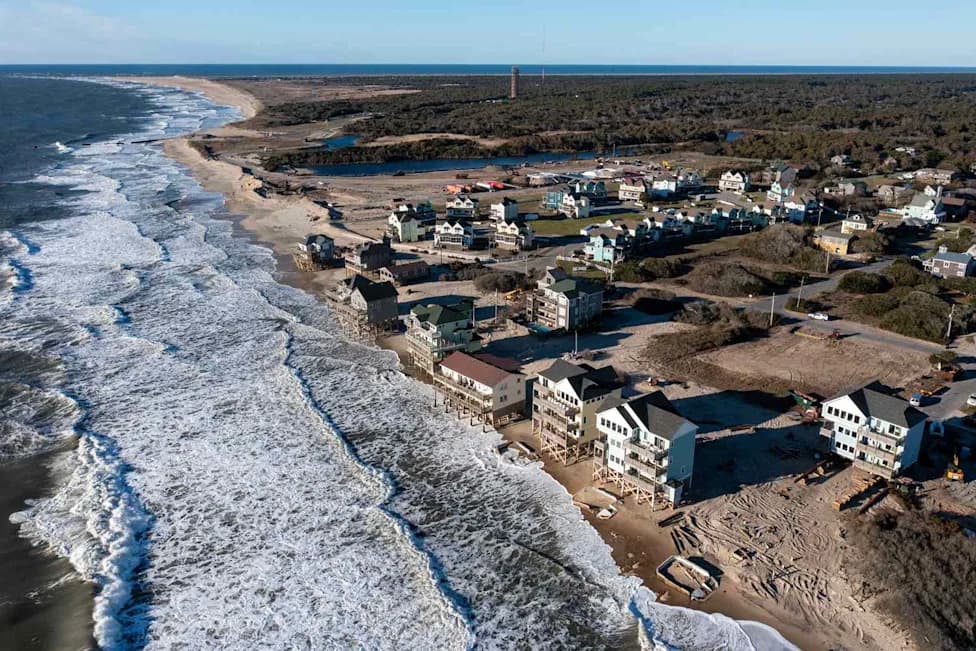
Climate change and rising seas are intensifying what experts call coastal squeeze: as beaches erode, property owners often build seawalls and revetments to protect assets. Those hard structures can block the natural flow of sand and accelerate loss of dry beach, shrinking the public space between the built environment and the water. In many developed places the former wet-sand zone between mean high and low tide can be reduced to two lines on a vertical wall.
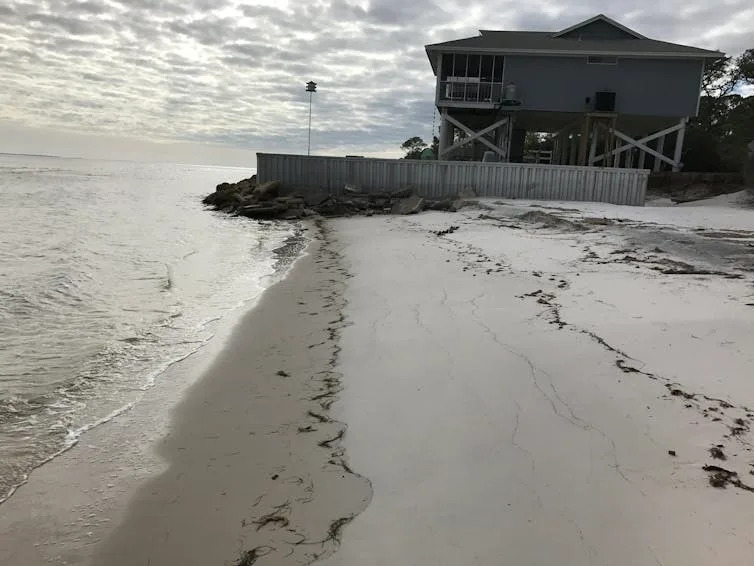
The sea wall around this Florida Panhandle beach house blocks public movement along the shore. Thomas Ankersen,CC BY-ND
These physical changes fuel legal fights. In Florida’s Panhandle, disputes over dry-sand access erupted in 2016 and later, with localities such as Walton County trying to preserve customary use and the state legislature imposing limits on local ordinances. Landowners have even taken nourishment and access disputes to the U.S. Supreme Court.
Managing Beaches: Nourishment and Limits
One common response is beach nourishment, where the U.S. Army Corps of Engineers (and local partners) add sand dredged offshore or trucked from inland sources. Federal funding usually requires communities to provide reasonable public access—parking and street connections—to nourished beaches, and new beaches built on submerged areas must remain open to the public until sea-level rise makes them unusable.
But nourishment is temporary. Good-quality offshore sand is scarce in some regions, costs are high, and accelerating sea-level rise may eventually outpace available supplies. In constrained areas—such as South Florida, hemmed in by development and reefs—planners have even floated extreme ideas, highlighting the dire trade-offs communities face.
What This Means For Beachgoers
Where you can walk, sunbathe or fish depends on state law, local court rulings and the physical shoreline. Doctrines like the public trust and customary use give the public important protections, but rising seas, shoreline armoring and competing private rights make access an evolving and often contested issue.
Bottom line: Public access is real in many places but fragile—legal protections matter, as do policy choices about armoring, nourishment and retreat.
Help us improve.