NASA's UAVSAR radar imagery revealed Camp Century, a U.S. Cold War base buried about 100 feet beneath the Greenland Ice Sheet. Built in 1959–1960, the complex included 21 tunnels (≈9,800 ft) and a PM-2 nuclear reactor. While the reactor was removed, more than 47,000 gallons of nuclear waste reportedly remain under the ice. A 2016 study warns the site could begin to be exposed around 2090 as the ice thins, creating potential environmental risks.
NASA Radar Reveals Camp Century: Buried Cold War Base and Nuclear Waste Under Greenland Ice
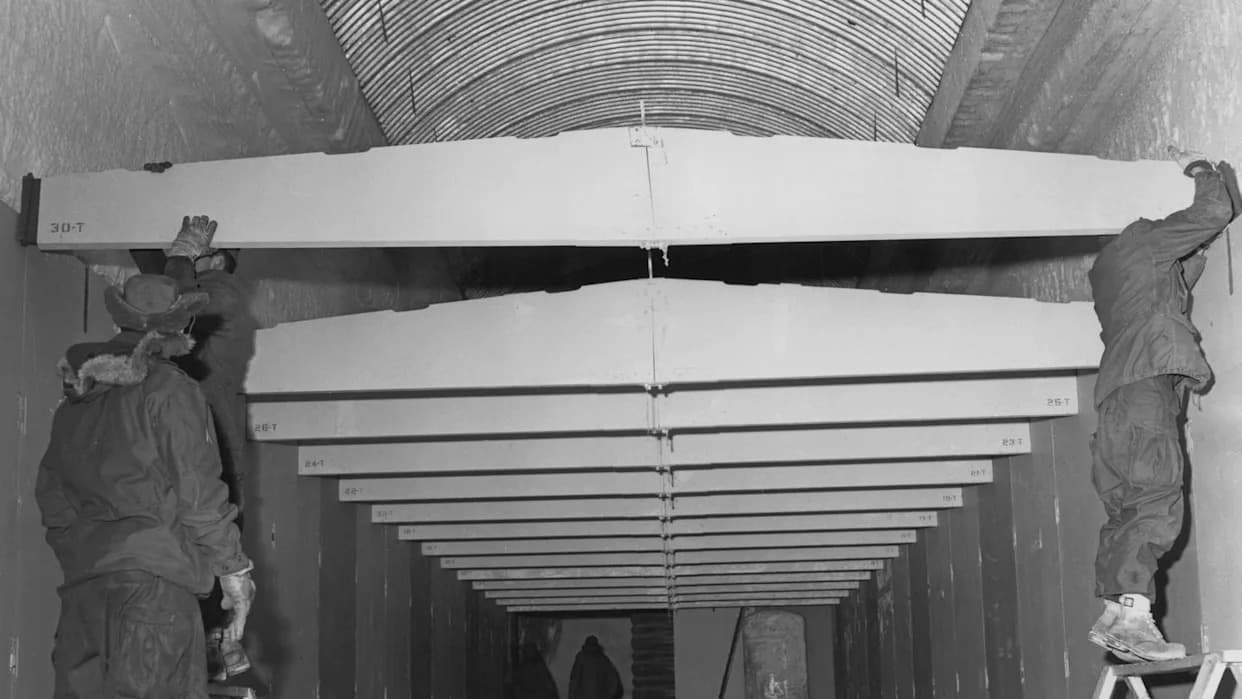
NASA Found a Secret U.S. Army Base Buried in IcePictorial Parade - Getty Images
Ice preserves surprising records of human and natural history. In April 2024, NASA added a Cold War relic to that list when radar imagery revealed the outline of a buried U.S. military facility beneath roughly 100 feet of Greenland's ice.
Discovery
During an aerial survey of the Greenland Ice Sheet, scientist Chad Greene captured UAVSAR radar images that showed geometric features where researchers expected only natural bedrock. "We were looking for the bed of the ice and out pops Camp Century," said Alex Gardner, a cryospheric scientist at NASA's Jet Propulsion Laboratory (JPL). The images made many of the base's structures clearly discernible.
Construction and Life at Camp Century
Built in secret from June 1959 to October 1960 by the U.S. Army Corps of Engineers, Camp Century was nicknamed "the city under the ice." The complex included 21 tunnels totaling roughly 9,800 feet, with a principal 1,000-foot main passage known as "Main Street." Engineers excavated trenches in the snow and assembled wooden buildings capped by steel roofs to create subterranean living and working spaces.
Supplying the camp was a major logistic effort: about 6,000 tons of material were hauled over the ice on slow sled trains from the Thule area, a journey that could take some 70 hours at only a couple of miles per hour. To generate electricity in the extreme cold, Camp Century housed a PM-2 medium-power nuclear reactor that operated on site for about 33 months under strict safety protocols.
Project Iceworm: The Hidden Agenda
Although Camp Century was publicly known and even promoted in Army materials, much of its scientific activity also served as cover for a classified plan called "Project Iceworm." The program envisioned a vast network of tunnels under the ice—plans discussed up to 52,000 square miles of shafts and galleries that could, in theory, house hundreds of ballistic missiles with dozens of launch sites and a large permanent garrison. Practical obstacles made the project unworkable, and it was never implemented. Camp Century was decommissioned and abandoned in 1967; the full scope of the missile plans became publicly documented later, including a 1997 report by the Danish Institute of International Affairs.
Environmental Legacy and Risk
When the camp closed, the reactor itself was removed. However, records indicate that operations left behind a significant quantity of radiological waste—reported as more than 47,000 gallons—still buried beneath the ice, according to the National Museum of Nuclear Science and History. For decades this waste remained locked under steadily accumulating snow and ice.
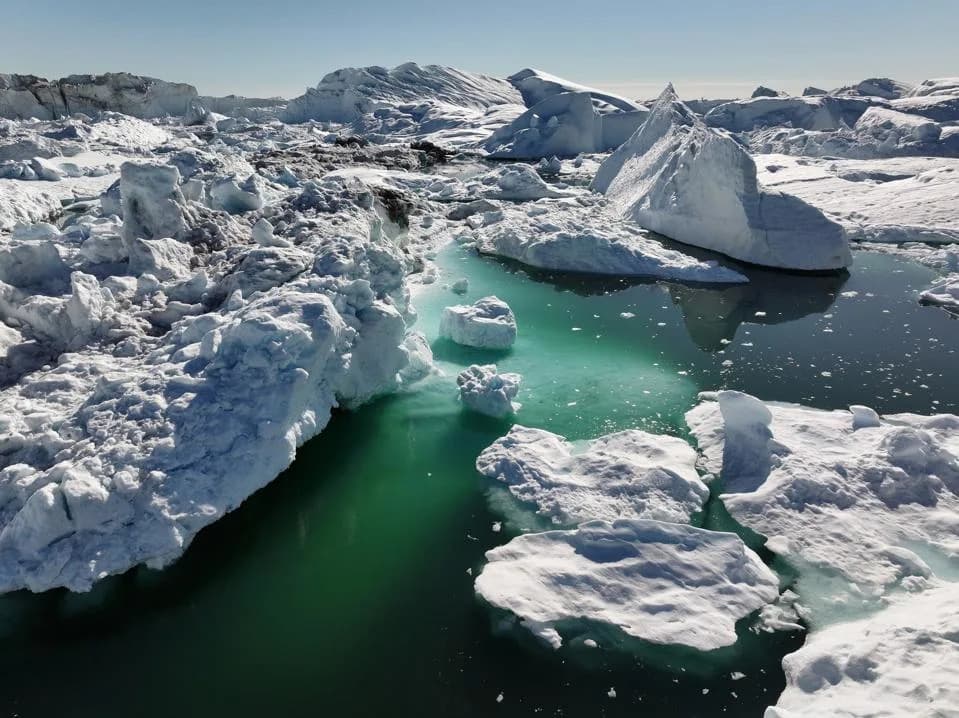
Climate change has altered that calculus. A 2016 study led by glacier scientist William Colgan of York University projected that the ice above Camp Century could begin to retreat around 2090 under current warming scenarios. "They thought it would never be exposed," Colgan said. "Back then, in the '60s, the term global warming had not even been coined. But the climate is changing, and the question now is whether what's down there is going to stay down there." If the ice cap thins or retreats, the site — and its leftover waste — could become a new environmental and logistical challenge.
Why This Matters
The rediscovery of Camp Century highlights how past military activities intersect with modern scientific monitoring and climate risk. What was once a secret Cold War experiment is now a test case in how warming polar regions can expose long-buried infrastructure and hazardous materials, raising complex questions for scientists, policymakers, and international partners.
Help us improve.