A Paris court will decide whether TotalEnergies violated France's 2017 duty of vigilance by failing to prevent environmental and climate risks. Plaintiffs — four NGOs and the City of Paris — seek a ban on new fossil projects and production cuts of 37% for oil and 25% for gas by 2030, and say TotalEnergies' end‑user emissions were about 342 million tonnes CO2e in 2024. TotalEnergies argues the law covers only its own operations and contractors and calls the requested measures impractical.
Paris Court To Decide If TotalEnergies Breached Duty Over Climate Risks
The case at the Paris Judicial Court is the latest in a growing wave of climate litigation targeting major corporate emitters worldwide (Sameer Al-DOUMY)(Sameer Al-DOUMY/AFP/AFP)
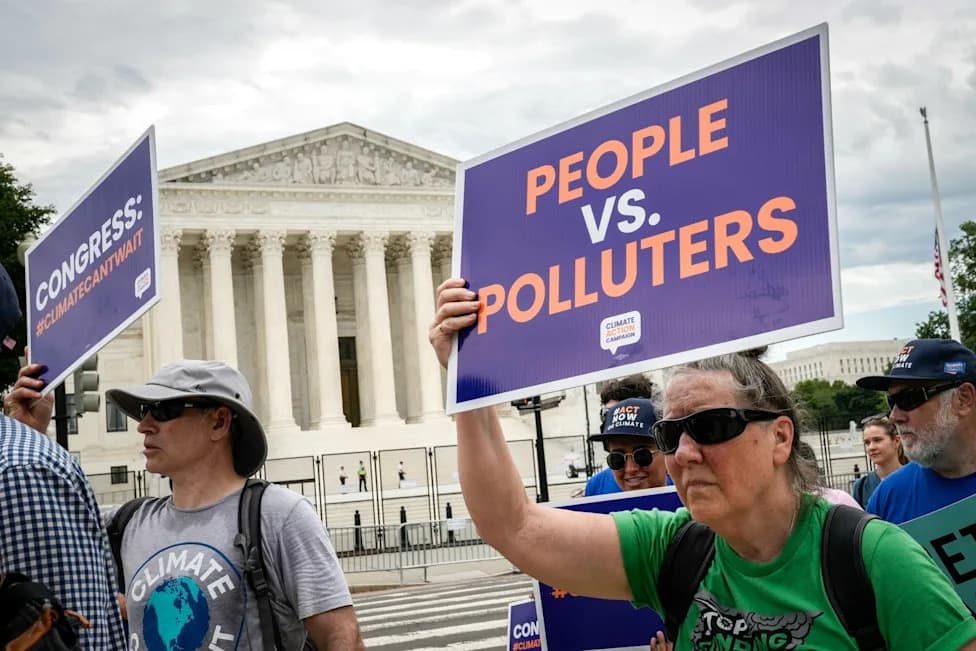
A Paris court is due to rule on Thursday whether oil and gas major TotalEnergies breached its legal duty to prevent environmental and climate risks in a high-profile lawsuit brought by four NGOs and the City of Paris.
The case, heard at the Paris Judicial Court, is one of several landmark climate-related corporate lawsuits around the world seeking to hold major emitters legally accountable for their contribution to global warming.
What the Plaintiffs Want
The plaintiffs ask the court to order TotalEnergies to stop approving new fossil fuel projects and to reduce production by 37% for oil and 25% for gas by 2030. They also argue the company must account for indirect emissions from end users — which they estimate at 342 million tonnes of CO2 equivalent in 2024 — when assessing its environmental duties.
Company's Defence
TotalEnergies contends that France's 2017 corporate duty of vigilance law applies only to the group's own operations and those of its contractors and subsidiaries, not to downstream emissions from customers. The company has also described the remedies sought by plaintiffs as unreasonable and ineffective, arguing production cuts or cancelled projects would likely shift output to competitors rather than reduce global emissions.
Prosecutor Intervention And Legal Debate
In an uncommon step, the Paris public prosecutor intervened in the civil proceedings, echoing concerns that imposing an overly broad protective obligation on companies could be impractical. The core legal question is whether the law's requirement to prevent environmental risks should be read to include climate-change risks and so cover indirect, end-user emissions.
"Drug dealer defence," said Anne Stevignon, a lawyer for the NGO Notre Affaire a Tous, criticizing TotalEnergies' refusal to account for downstream emissions. TotalEnergies has rejected the allegation and said it has been unfairly "demonised" by campaigners.
Procedural History And Wider Context
The lawsuit, filed in 2020, has delivered interim wins for campaigners. In 2024, the Paris appeals court allowed the case to proceed but rejected attempts by several foreign local authorities, including New York City, to join the action — recognising only the City of Paris as having standing. The case sits alongside similar global legal battles, including an overturned Dutch ruling in 2024 that had ordered Shell to deepen cuts to emissions.
The upcoming ruling could set an important precedent for how far corporate duties to prevent environmental harms extend in law — and whether those duties can require large companies to account for the emissions caused by the use of their products.
Help us improve.