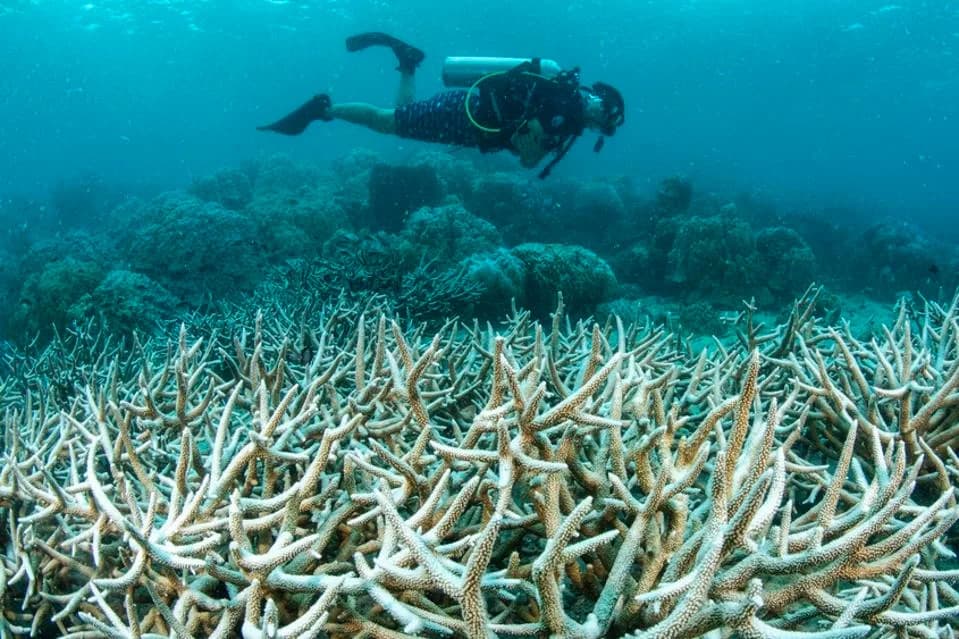
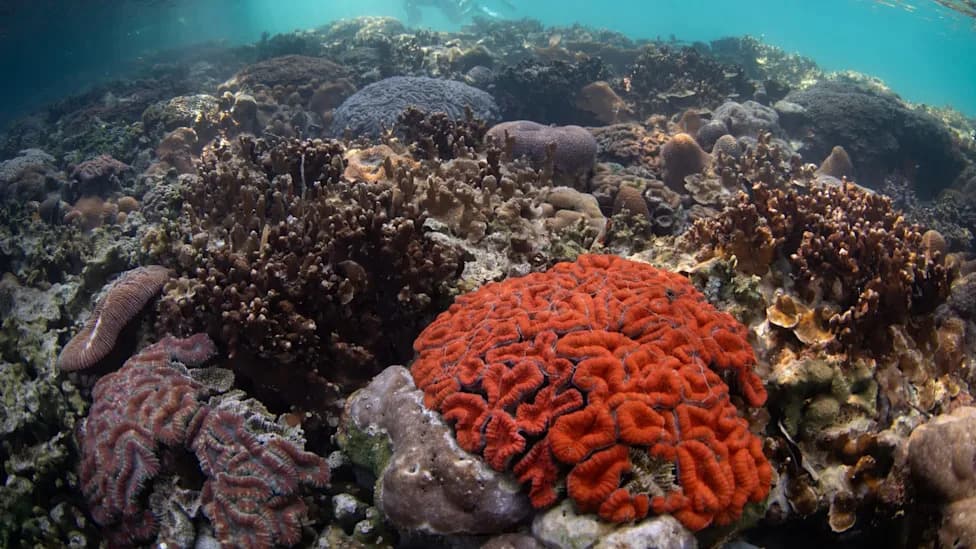
Scientists mapped global coral reefs at far higher resolution and found roughly one-third — about 64,000 square miles — may be more resilient to ocean warming than previously thought. The new map, up to 10,000 times more detailed in places, identified roughly three times as many resilient sites. Over half of that resilient area lies in Australia, the Bahamas, Cuba, Indonesia and the Philippines, but only 28% is actively protected. Researchers stress that conservation can buy time, but reducing carbon pollution remains essential for reefs' long-term survival.
New High-Resolution Reef Map Finds One-Third Of Coral Reefs Climate-Resilient — But Most Remain Unprotected
Photo Credit: iStock
Scientists report that roughly one-third of the world’s coral reefs — about 64,000 square miles — show signs of greater resilience to ocean warming than previously believed. The findings, published in the peer-reviewed journal Frontiers in Marine Science and presented at the Our Ocean Conference in Mombasa, Kenya, were summarized by Phys.org.
Key Findings
Researchers used new, higher-resolution monitoring data that integrate depth and temperature to produce a global reef map that is, in some places, up to 10,000 times more detailed than earlier maps. That level of detail allowed scientists to identify approximately three times as many potentially climate-resilient reef sites as past estimates.
About half of the resilient reef area is concentrated in a few countries and regions — notably Australia, the Bahamas, Cuba, Indonesia and the Philippines. Scientists say these locations may benefit from locally cooler waters, corals with greater heat tolerance, or faster recovery after heat stress.
Protection Gap and Risks
Despite the encouraging identification of these hardier reefs, only 28% of the climate-resilient area is currently under active protection. Researchers warn that resilience is not immunity: without significant reductions in planet-heating pollution, even tougher reefs remain vulnerable to more frequent and severe marine heatwaves.
Bottom line: Targeted conservation of resilient reefs could buy critical time and help nearby ecosystems recover, but long-term reef survival depends on cutting carbon emissions.
Why This Matters
Coral reefs provide essential services — they protect coastlines from storms, support fisheries that feed millions, and underpin local economies through tourism. Protecting identified resilient reefs can maximize the return on conservation investment by prioritizing sites that are most likely to persist and aid broader ecosystem recovery.
Sources: Frontiers in Marine Science; presentation at Our Ocean Conference; reporting by Phys.org; data and commentary from the Wildlife Conservation Society.
Help us improve.