Hundreds of Velella velella — known as by‑the‑wind sailors — have washed ashore along Anglesey, Gwynedd and Tenby, creating striking stretches of bright blue on the beaches. These small, roughly 7cm colonial hydrozoans drift with currents and often strand together after storms. Marine specialist Frankie Hobro praised their beauty but warned they carry stinging cells and advised people not to touch them. Observers were struck by their crystalline sparkle in sunlight.
Brilliant Blue 'By‑The‑Wind Sailors' Wash Ashore Along Welsh Coast
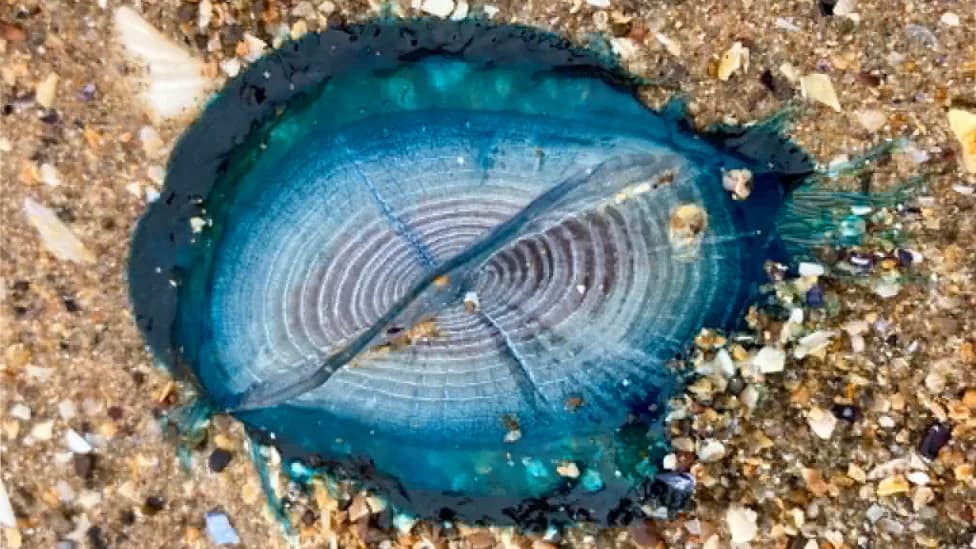
Maxine Allinson spotted a velella velella - commonly known as by-the-wind sailors - on Tenby South beach Tuesday [Maxine Allinson]
Hundreds of vivid blue marine animals, identified as Velella velella and commonly called by‑the‑wind sailors, have washed up on beaches across Anglesey, Gwynedd and Tenby.
Beachgoers were captivated by the tiny, sail‑topped creatures. One visitor described a specimen found on Tenby South beach as "like a crystal," while nature enthusiast Maxine Allinson said, "It was fantastic — they are so beautiful." Marine specialist Frankie Hobro of Anglesey Sea Zoo praised their appearance but advised caution: although spectacular, the animals carry stinging cells and should not be handled.
What Are By‑The‑Wind Sailors?
Velella velella are free‑floating colonial hydrozoans related to sea anemones and corals. Each individual is roughly 7 cm long and has a small, transparent sail that catches the wind and carries it across the ocean surface. They cannot swim and drift with currents, which is why large numbers can be deposited ashore together after storms or shifts in currents.
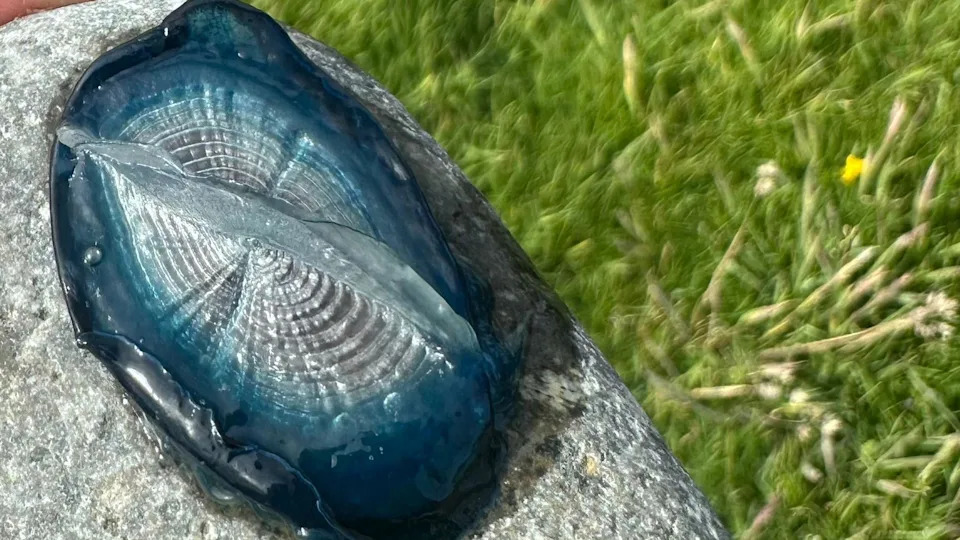
Frankie Hobro discovered one of the creatures on the beach at Trefor on the Llŷn Peninsula on Sunday [Frankie Hobro]
Why They Turn Up In Groups
Hobro explained that by‑the‑wind sailors travel in the same currents, so when conditions change they are often "dumped" ashore in dense patches — creating striking blue stretches along the coastline, especially when sunlight makes them sparkle.
How They Compare To Portuguese Man O' War
Although often mistaken for the Portuguese man o' war, by‑the‑wind sailors are much smaller and usually a brighter blue. Both are colonies of animals and possess stinging cells, but Velella's sting is generally much milder than that of the man o' war.
"You probably wouldn't feel it through normal fingers because human skin is fairly thick," Hobro said. "But if you touched your lips, face or another sensitive area, it could be quite painful and cause a tingling sensation."
Safety Advice
Experts urge people to admire these animals from a distance and avoid touching them. Even when they appear dead on the beach, their stinging cells can remain active and may cause irritation if they come into contact with sensitive skin.
If you find large numbers washed ashore, consider reporting the sighting to a local wildlife group or beach authority so scientists can track their occurrence.
Help us improve.