A 21-year-old Pembrokeshire free diver, Iestyn Morgan, filmed a giant lion's mane jellyfish near Trefin Beach and estimated its length at about 10–15 metres, with tentacles stretching beyond visibility. Dr Cathy Lucas warns that the species' fine tentacles can be hard to see and that detached pieces still sting, though they are not usually dangerous. The Wildlife Trusts note lion's mane tentacles can exceed 30–36.5 metres, making them among the longest animals on Earth. Morgan films marine life to raise awareness and says he is seeing more warm-water species in Welsh waters.
Giant Lion's Mane Jellyfish With '40ft' Tentacles Filmed Off Pembrokeshire Coast
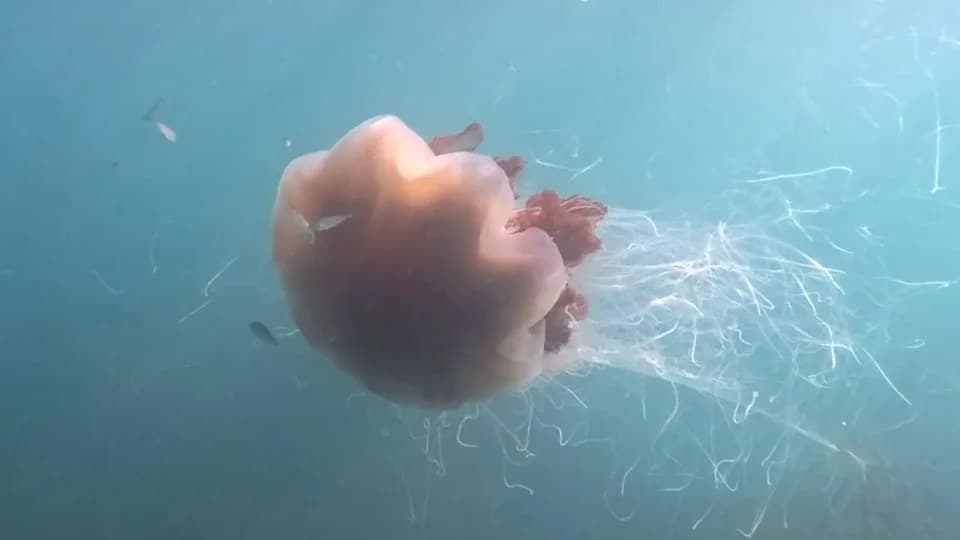
The lion's mane jellyfish was spotted near the Pembrokeshire coast [Iestyn Morgan]
A free diver says he "couldn't believe his luck" after encountering a giant lion's mane jellyfish off the Pembrokeshire coast.
Iestyn Morgan, a 21-year-old conservationist from Pembrokeshire who records marine life to raise awareness of threats to our seas, filmed the animal while swimming near Trefin Beach. He estimated the jellyfish — including tentacles that stretched "beyond the range of visibility" — to be about 10–15 metres (roughly 33–49 ft) in total length.
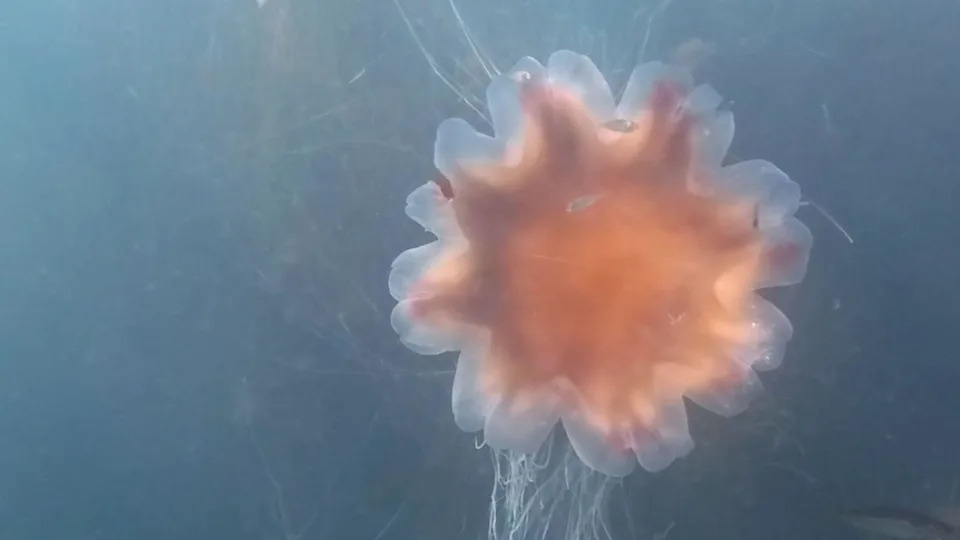
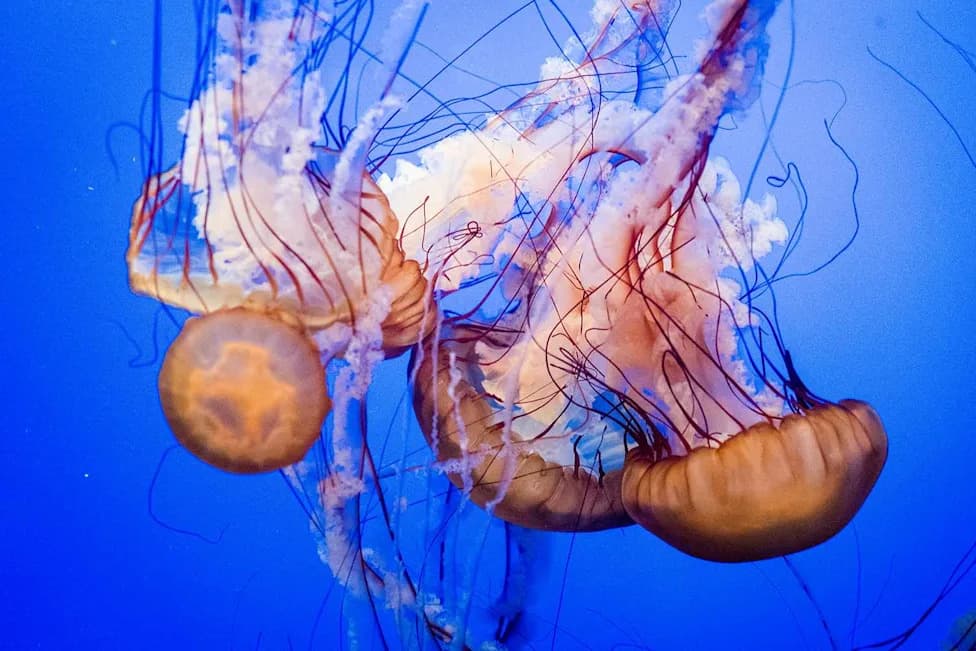
The lion's mane jellyfish's name comes from its long flowing tentacles [Iestyn Morgan]
At first Morgan thought the animal was a compass jellyfish, a species common around UK shores, but he quickly realised it was far larger. "It must have been the length of a bus or small train. I couldn't believe how big it was," he said.
How Big Can Lion's Mane Jellyfish Get?
The Wildlife Trusts note that lion's mane jellyfish can have a bell up to around 3 m (about 9 ft 8 in) across, while their tentacles — used to capture prey — can extend more than 30 metres (98 ft) and sometimes up to 36.5 metres (120 ft), making them among the longest animals on Earth.
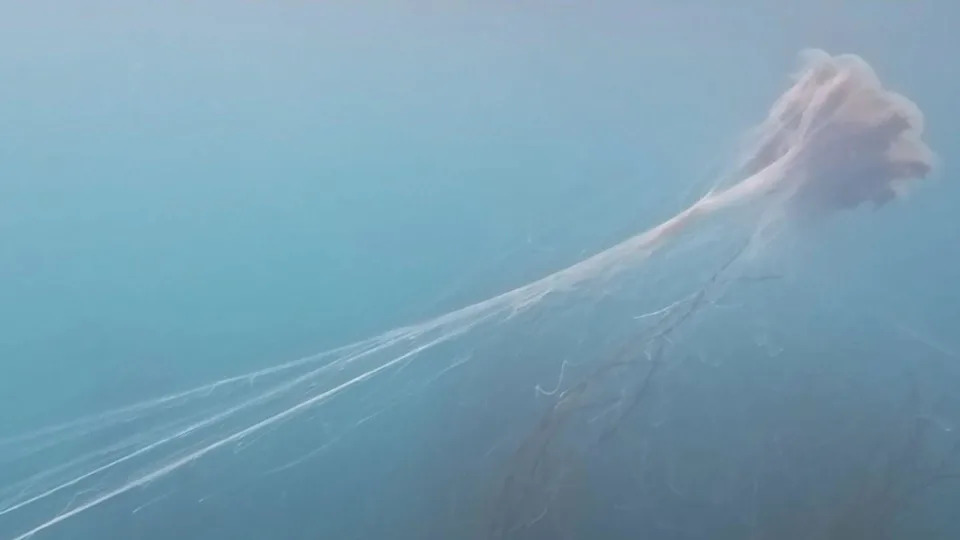
Lion's mane tentacles can stretch to more than 30m making it one of the longest animals in the world [Iestyn Morgan]
Expert Advice
Marine biologist Dr Cathy Lucas of the University of Southampton said the footage highlights how long and delicate the tentacles can be: "The tentacles are so long and so fine you might not even see them." She warned that detached pieces of tentacle can still sting: "They still sting after they break off," she said, adding that while the lion's mane gives one of the most painful stings commonly encountered in UK waters, it is not usually life-threatening.
"The advice is not to touch them and if you get a bit of tentacle on your skin flick it off with a stick and wash in warm water to neutralise," Dr Lucas said.
Changing Seas
Morgan said he has noticed more jellyfish and an increase in warm-water species appearing around Welsh coasts. He believes these sightings — including an earlier sighting of a Mediterranean triggerfish — may reflect shifting local marine life patterns.
Morgan said creating videos is "very rewarding" because it makes underwater environments more accessible to the public. He emphasised he never wants to harm animals for content: "I don't want to turn it into something that I'm going out to hunt the animals or anything. I just get in the water, film and swim."
Help us improve.