Freediver Iestyn Morgan filmed a giant lion’s mane jellyfish near Trefin Beach, estimating it at 10–15 metres (33–49 ft) with tentacles "beyond the range of visibility." Marine biologist Dr. Cathy Lucas confirmed tentacles can exceed 30 metres and warned detached fragments can still sting. Although lion’s manes are more common in Scotland, scientists say warming seas and marine heatwaves may be bringing more warm-water species into Welsh waters.
Freediver Films Giant Lion’s Mane Jellyfish Off Wales — Tentacles 'The Length Of A Bus'
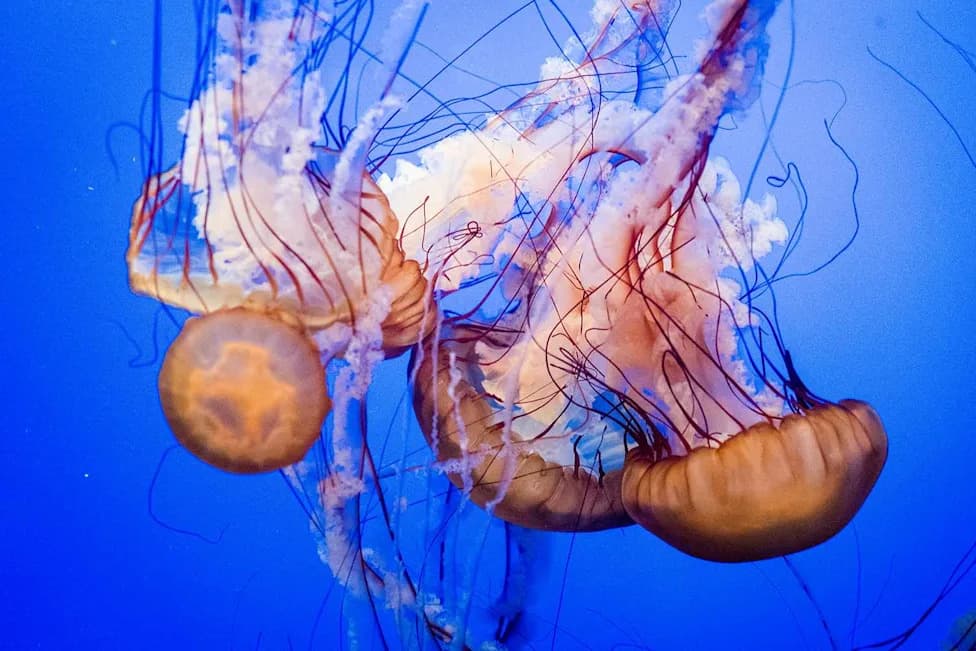
Several lions mane jellyfish in water showcasing their tentacles and translucent bodiesCredit: Getty
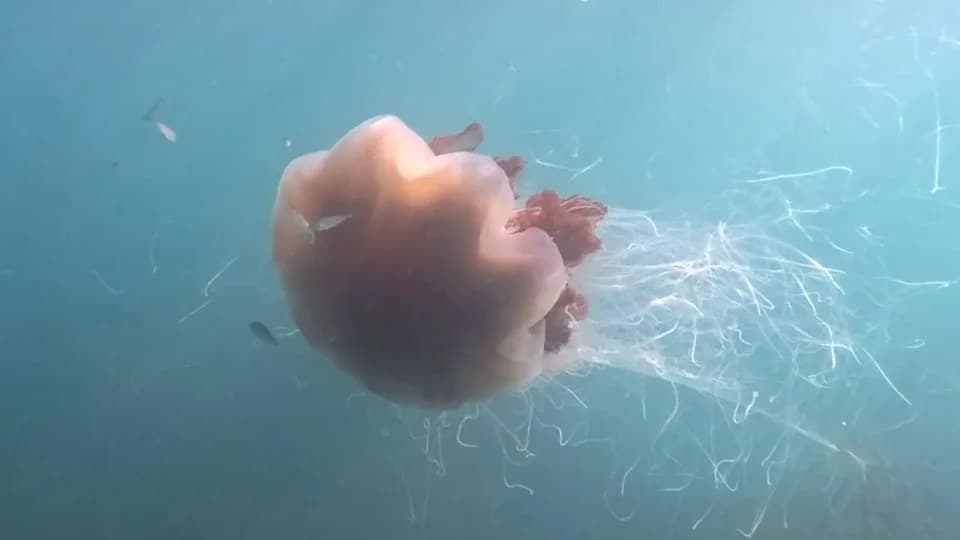
A freediver off the Pembrokeshire coast captured rare and striking footage of a giant lion’s mane jellyfish near Trefin Beach. Iestyn Morgan, 21, described the animal as "the length of a bus," estimating its total length at roughly 10–15 metres (33–49 feet) as he swam past the trailing tentacles.
What Morgan Saw
Morgan said the encounter began when he noticed a few pale strands drifting through the water. "Three turned to 10, and then to 20," he told the BBC after posting the video on Instagram. The jellyfish’s tentacles extended so far they appeared "beyond the range of visibility," creating a dramatic underwater display.
About the Lion’s Mane
The lion’s mane jellyfish (Cyanea capillata) gets its name from long, flowing tentacles used to capture prey. While the bell can reach up to about 3 metres across, tentacles can exceed 30 metres, making it one of the longest animals on Earth. Marine biologist Dr. Cathy Lucas of the University of Southampton confirmed the footage showed the species’ characteristic extreme tentacle length.
"The tentacles are so long and so fine you might not even see them," Dr. Lucas said, noting that detached fragments can still sting.
Sting and Safety
Dr. Lucas described the lion’s mane sting as painful — "nasty" and among the worst in the U.K. — but rarely life-threatening. If you come into contact with a tentacle, experts recommend carefully flicking it off with a stick or other object and rinsing the area with warm (not hot) water. Seek medical attention if symptoms are severe or if there are signs of an allergic reaction.
Why It Matters
Lion’s manes are most commonly recorded in Scottish waters and only occasionally drift as far south as Wales in late summer or autumn. Morgan and local researchers say warming seas and marine heatwaves are making warm-water species more frequent around the Welsh coast, while stressing animals adapted to cooler conditions. Morgan has also noted other warm-water visitors, such as triggerfish, that are usually associated with the Mediterranean.
Filming With Care
Morgan films marine life to make underwater environments more accessible and to highlight environmental pressures affecting the oceans. He said he is careful not to harm animals while filming: "I just get in the water, film, and swim." His footage provides a vivid reminder of how dynamic and changing coastal ecosystems are.
Help us improve.