Volunteer diver Derk Remmers filmed a roughly 13‑foot great white about 50 miles off the Strait of Sicily at nearly 200 feet depth, producing what experts say may be the first underwater video of an adult male great white in the Mediterranean. Genetic research shows this population is distinct and has been isolated for about 3.2 million years, but low genetic diversity and heavy human pressures leave it highly vulnerable. Studies estimate dramatic declines — one found a 61% drop since the late 20th century — and experts warn only a few hundred individuals may remain. Conservationists urge stronger enforcement, coordinated monitoring (tagging and photo‑ID) and new bycatch‑reduction measures such as deterrents and gear restrictions.
Diver Films Rare 13‑Foot Great White — Possible First Underwater Video of an Adult Male in the Mediterranean
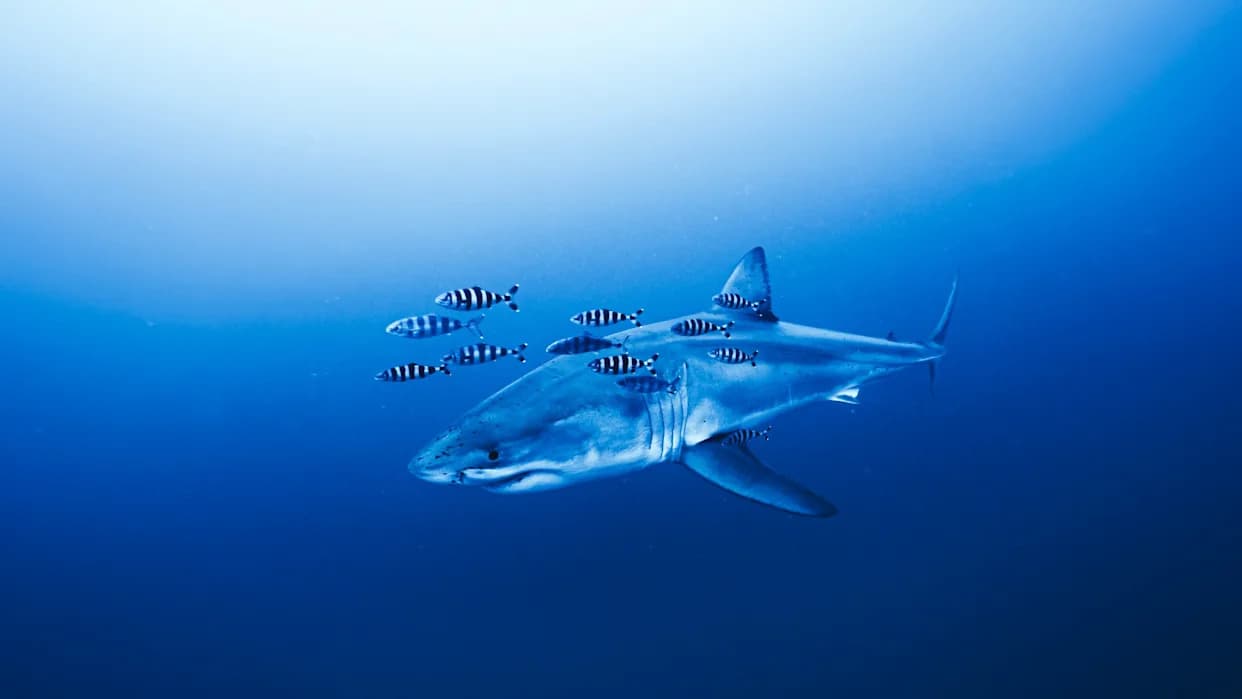
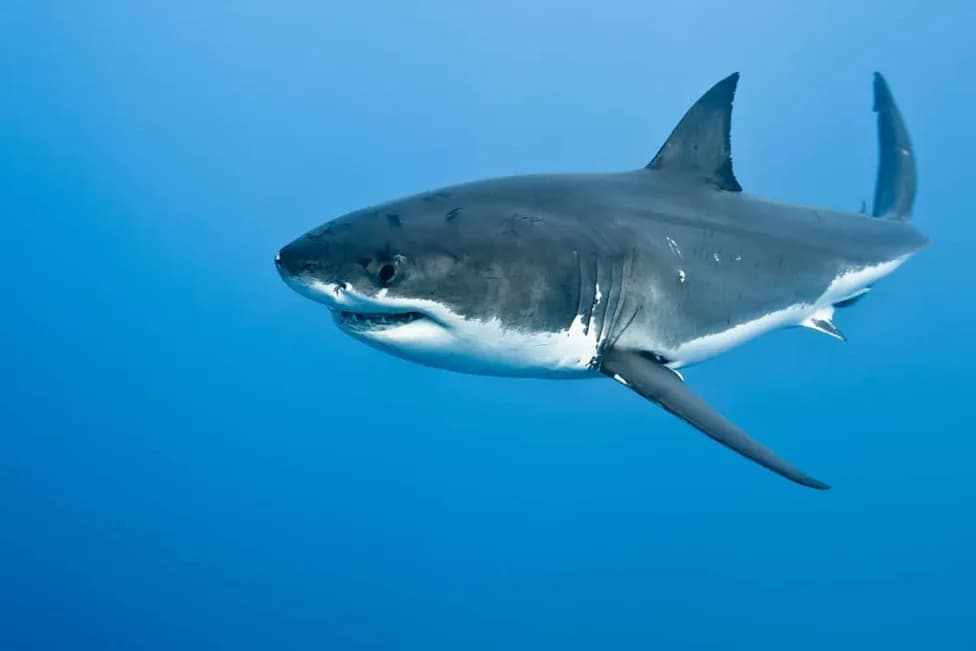
While removing abandoned fishing nets from a submerged shipwreck, divers recently spotted a great white shark swimming through the Mediterranean Sea.Derk Remmers / Ghost Diving / Healthy Seas
In mid-May, about 50 miles off the Strait of Sicily, volunteer diver Derk Remmers had an unexpected close encounter with a large great white shark while working nearly 200 feet below the surface to remove abandoned fishing nets.
Roughly three minutes into the dive, a roughly 13‑foot great white rose from the depths. Remmers said his heart raced as he fumbled to start his camera; the footage shows the shark passing within an estimated nine feet before disappearing into the blue. Experts believe the clip may represent the first underwater video of an adult male great white recorded in the Mediterranean.
“My first thought was: ‘I need to get the camera running or no one will ever believe us.’ I felt my fingers shaking very much,”
Remmers recalled. “It was just passing by and seemed as surprised by this encounter as we were.”
Why This Sighting Matters
Researchers say the video is an important record of an elusive “ghost population” of great whites that still inhabit the temperate, heavily trafficked waters of the Mediterranean. Once more common, these apex predators have declined sharply over the past century from habitat loss, accidental entanglement or hooking by fishers, competition with industrial fleets for prey, and historic hunting. Because sightings are rare and scattered, precise population estimates are difficult to obtain.
Genetics and Vulnerability
A 2020 genetic study led by the University of Bologna found that Mediterranean great whites form a genetically distinct population isolated from other great white groups for about 3.2 million years. By analyzing mitochondrial DNA from remains spanning the past 200 years, researchers concluded Mediterranean sharks are genetically closer to some Pacific populations than to Atlantic ones, and suggest an ancient route via the Central American seaway may explain their presence.
The study also found low internal genetic diversity within the Mediterranean group, making it particularly vulnerable to environmental change and human pressures because its members have limited adaptive capacity.
History, Hunting and Protection
Humans have documented sharks in the Mediterranean for centuries. In 1554 French physician Guillaume Rondelet wrote of a very large shark caught off Marseille and published an illustration in his marine encyclopedia, naming it De Lamia. In the 19th century great whites were widely hunted; between 1872 and 1905 the Austro‑Hungarian authorities offered bounties for sharks, and dozens of specimens were recorded. A nearly 18‑foot female caught off Croatia in 1906 — nicknamed “Carlotta” — is still preserved at the Natural History Museum of Trieste.
Today, international treaties and national laws protect many Mediterranean shark species — including great whites — yet illegal catches and market displays still occur in some regions. Globally the species is listed as Vulnerable by the IUCN; the Mediterranean population is listed as Critically Endangered.
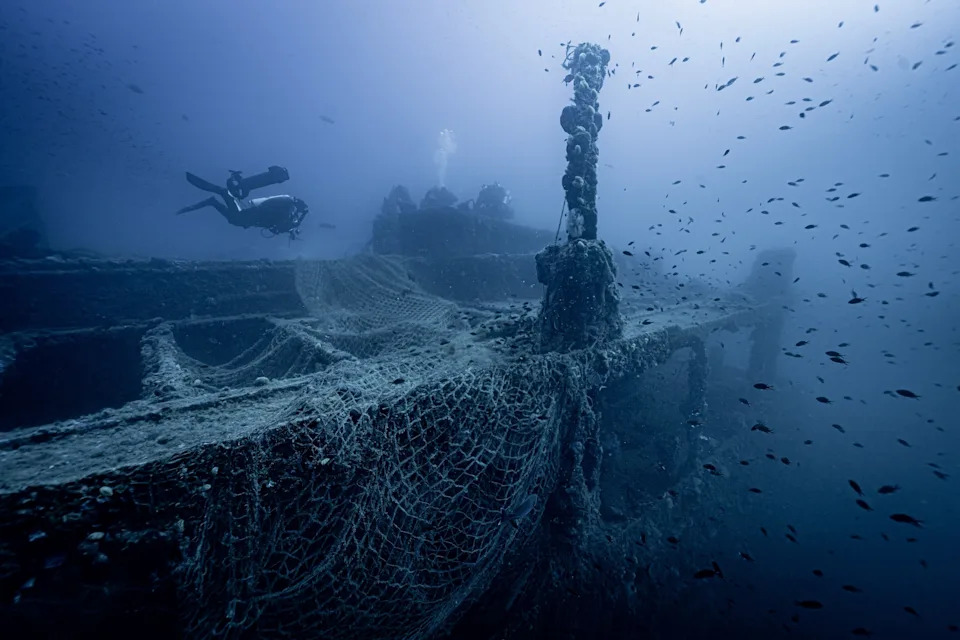
The site of this shipwreck lies in the Straight of Sicily, a region thought to be one of the last remaining nurseries for Mediterranean great white sharks.Credit Derk Remmers/Ghost Diving/Healthy Seas
Population Trends and Data Gaps
A 2019 study estimated a 61% decline in Mediterranean great white numbers since the latter half of the 20th century. Alessandro De Maddalena, a former professor of vertebrate zoology and now an independent expert, estimates there may be at most a few hundred individuals remaining in the entire Mediterranean and suggests the total decline over the last century could exceed 90%.
Accurate population assessments are hampered by limited data. Effective monitoring would require coordinated tagging with GPS transmitters and a large, cross‑border photo‑identification program — efforts that currently lack the necessary scale and funding. De Maddalena’s private Italian Great White Shark Data Bank compiles more than 700 historical and modern records from museums, markets, archives and eyewitness reports to help fill knowledge gaps.
Ecology, Nurseries And Threats
Mediterranean great whites feed on marine mammals and large pelagic fish such as bluefin tuna, and will also prey on smaller sharks and rays. Protecting other shark species and the broader food web is therefore essential to conserving great whites.
The Strait of Sicily — where Remmers filmed the shark — is a biodiverse region believed to act as a nursery and a remaining stronghold for the population. Other suspected nursery areas include the Eastern Adriatic (off Croatia) and the Gulf of Edremit in Turkey. Main threats include bycatch (especially from longlines), habitat degradation, ghost nets and illegal fishing.
Conservation Actions Underway
Scientists and conservationists call for stronger enforcement of existing protections across all Mediterranean countries, bans on particularly harmful fishing methods such as longlines, and expanded monitoring (tagging and photo‑ID). The LIFE PROMETHEUS project is testing electromagnetic deterrent devices attached to fishing gear to reduce unwanted shark–fishery interactions; such innovations could reduce bycatch if proven effective at scale.
“Improving our understanding of critical habitats, identifying key hotspots, and clarifying behavioral patterns would greatly facilitate conservation,” said Carlo Cattano of the Sicily Marine Centre, Stazione Zoologica Anton Dohrn. De Maddalena added that institutional interest in shark research has increased recently, but urgent action and coordinated research are still needed to prevent local extinction.
This rare video offers both a hopeful sign that Mediterranean great whites persist and a stark reminder of how much remains to be done to secure their future.
Help us improve.