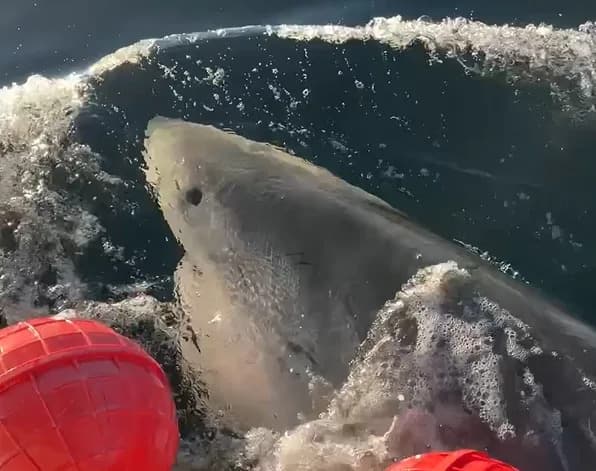
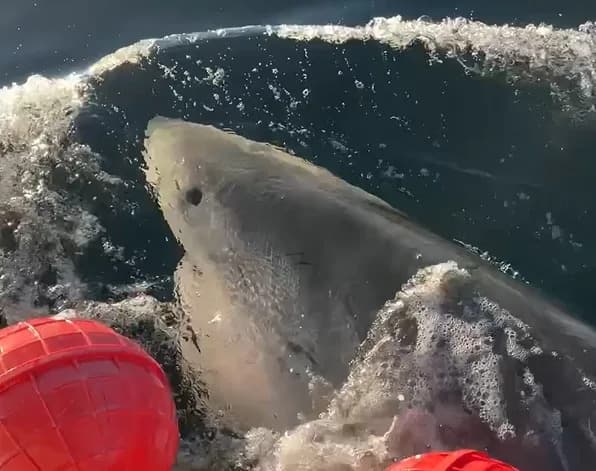
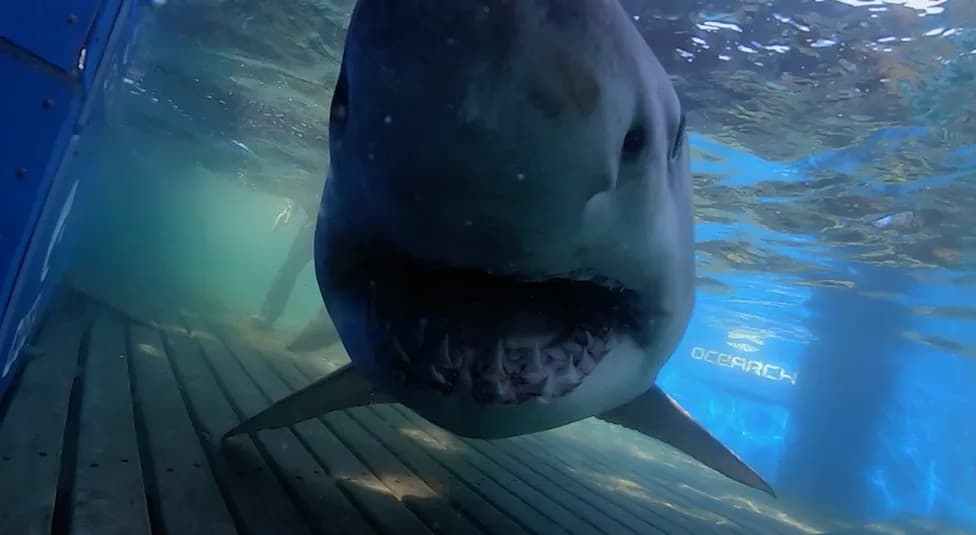
Ocearch researchers tagged a record-sized male great white shark nicknamed "Contender" roughly 70 km off the Georgia–Florida coast. The shark measured 4.2 m (≈13.8 ft) and weighed about 750 kg (≈1,653 lb), larger than typical adult males. After release, Contender traveled nearly 470 km and was last tracked near Merritt Island on February 10. Data from the encounter will improve growth models and support international shark conservation efforts.
Record-Breaking Great White "Contender" Tagged Off Florida Coast — 4.2 m, 750 kg
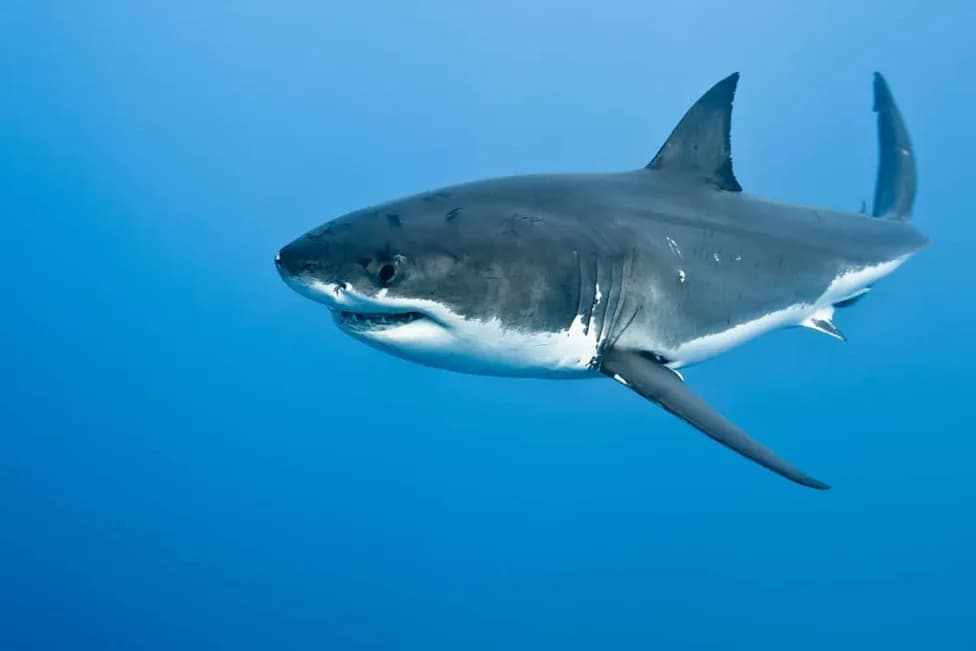
World's largest shark discovered: what scientists found left them speechless© vladoskan/ via Canva.com
In January, researchers from Ocearch encountered an unusually large male great white shark about 70 kilometres (≈43 miles) offshore near the maritime boundary between Georgia and Florida. Nicknamed "Contender," the shark immediately drew attention for its exceptional size.
Contender measured 4.2 metres (≈13.8 ft) and weighed roughly 750 kilograms (≈1,653 lb), exceeding typical lengths for adult male great whites, which the Smithsonian National Museum of Natural History places at about 3.4–4.0 metres. Such an individual is a rare outlier and an important opportunity for science.
"Male white sharks reach maturity around 26 years, and at that age measures are commonly near 3.5 meters," said Dr. Harley Newton, Ocearch's lead veterinarian. "Finding an individual of this size is particularly remarkable for our team."
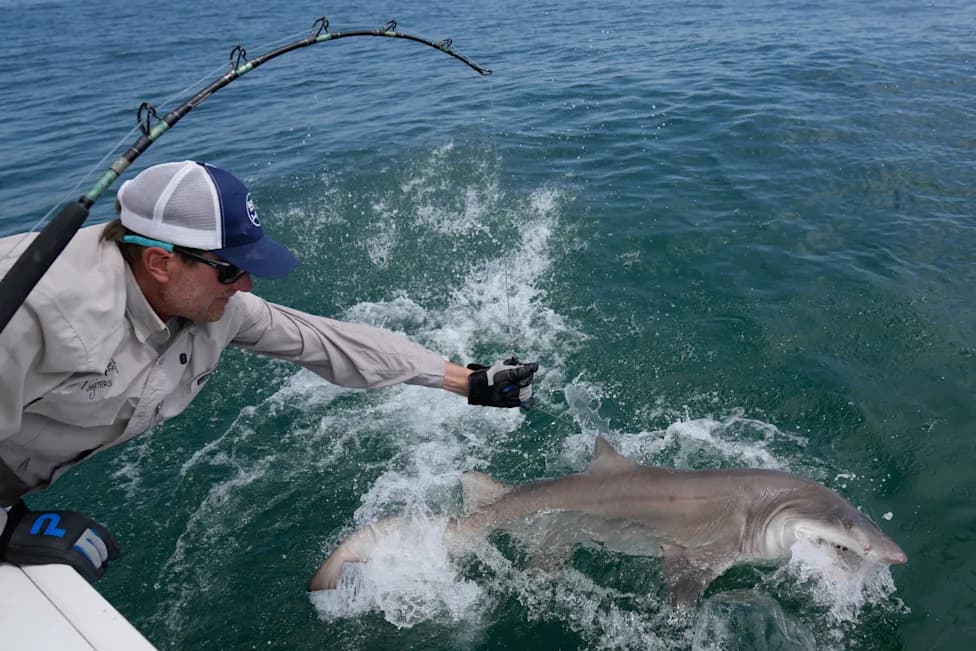
Because great whites travel vast distances, dive deep, and spend long periods far from shore, direct encounters are infrequent. Researchers took advantage of the chance to collect biometric and biological samples, then fitted Contender with a Spot satellite tag attached to his dorsal fin.
Tracking and Movement
Almost immediately after release, Contender covered a striking distance of nearly 470 kilometres (≈292 miles), underscoring how far individual great whites can roam. The most recent transmission, received on February 10, placed the shark off Merritt Island, near Orlando, Florida, illustrating both his mobility and the utility of satellite tracking for real-time monitoring.
Conservation Implications
Ocearch's tagging and data collection feed into growth and aging models for male great whites and contribute to international conservation planning. As apex predators, great whites help regulate prey populations and maintain balance in marine ecosystems; declines in their numbers could have cascading ecological effects.
Beyond the immediate scientific value, encounters with exceptional individuals like Contender help shift public perception—from seeing great whites as villains to understanding them as vital ecosystem stewards. As Contender continues to move through the Atlantic, researchers hope additional tracking data will reveal more about the species' life history and migratory patterns.
Where the Data Go: Biometric measurements and biological samples from Contender will be integrated into global models of growth and aging, support policy and protection efforts, and fuel educational outreach about the ecological importance of great white sharks.
Help us improve.