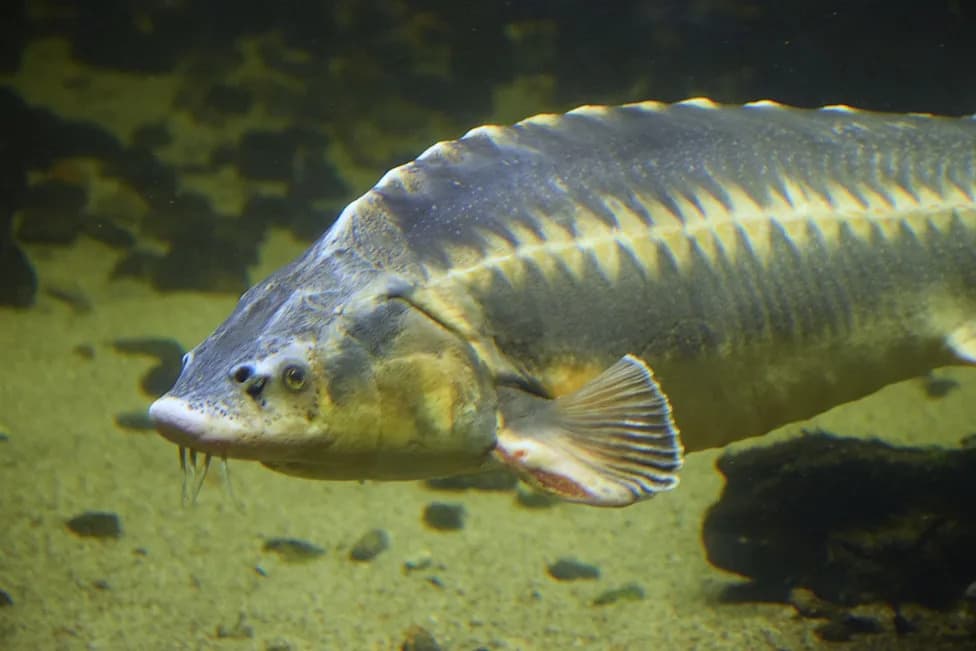
Researchers recorded, for the first time, low-frequency "thunder" sounds produced by Atlantic sturgeon at a major Hudson River spawning site. Over 31 days of recordings in spring–summer 2021 they documented nearly 7,700 rumbles with peak energy around 44 Hz, and captive fish produced matching sounds. The findings suggest passive acoustic monitoring can noninvasively locate spawning sites, estimate group size and inform conservation of this endangered species.
Scientists Record First Known 'Thunders' From Atlantic Sturgeon — Nearly 7,700 Low-Frequency Rumbles
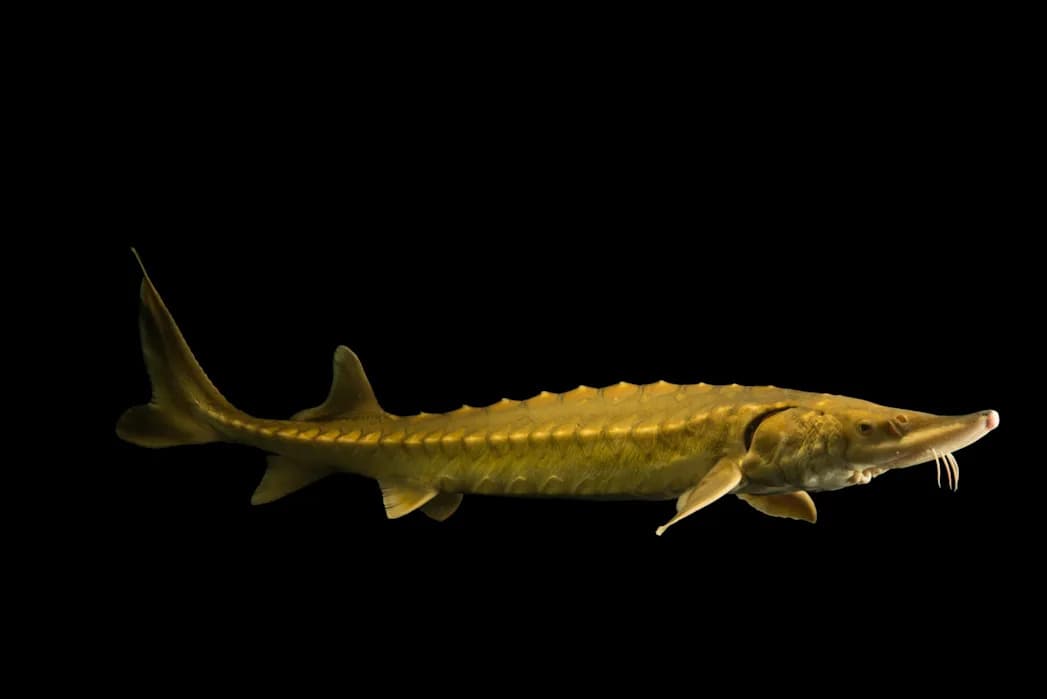
An Atlantic sturgeon, Acipenser oxyrinchus oxyrinchus, at the Welaka National Fish Hatchery Aquarium.Joel Sartore, National Geographic Image Collection
With rows of bony plates, spine-tipped fins and whisker-like sensory organs studded with taste buds, Atlantic sturgeon still resemble their ancestors that swam alongside dinosaurs roughly 100 million years ago. Now, after centuries of relative silence, these prehistoric fish have been heard.
A research team recorded Atlantic sturgeon gathered at a major spawning site in the Hudson River and, while analyzing the recordings, documented thousands of deep, low-frequency rumbles that resembled a reverberating clap of thunder. The sounds—reported in the journal Endangered Species Research—are the first documented noises attributed to Atlantic sturgeon.
How the Sounds Were Recorded
In spring and summer 2021 the team deployed underwater recorders anchored to cement blocks around a known sturgeon breeding area near Hyde Park, New York, collecting 31 days of audio spread across multiple months. As they reviewed the recordings, the researchers filtered out noise from nearby trains and excluded sharp "thuds" produced by invasive freshwater drums. That process revealed recurring rumble-like sounds that peaked near 44 hertz—toward the lower edge of human hearing.
What the Sounds Looked (and Sounded) Like
The researchers nicknamed the bursts "thunders." Cohen, the study's lead author and a bioacoustics researcher at the Cornell Lab of Ornithology, describes them as metallic timpani strikes followed by a continuous low rumble. The thunders were absent in April, before adults arrived at the site, but during peak spawning in June and early July the recordings became cacophonous: over a little more than a month the team documented nearly 7,700 individual rumbles.
Confirming the Source
To verify that Atlantic sturgeon produce the sounds, the team also recorded captive sturgeon at a National Fish Hatchery in South Carolina. Those captive fish generated sounds that matched the field recordings from Hyde Park, strengthening the link between the thunders and sturgeon behavior.
"It's very exciting that this sound is closely tied to reproduction," says Rebecca Cohen. "Better understanding this crucial activity is what's going to drive population recovery for a depleted species like this."
Why It Matters for Conservation
Atlantic sturgeon range from the Gulf of St. Lawrence to Florida and can grow up to 14 feet long. Despite that range and size, many aspects of their life history—coastal migration routes, frequency of spawning and precise spawning locations—remain poorly known. These knowledge gaps complicate conservation: historical overfishing and habitat loss have left all U.S. populations listed as endangered or threatened.
Passive acoustic monitoring offers a noninvasive way to detect when and where sturgeon are spawning, potentially helping managers locate critical breeding habitats, estimate spawning-group sizes and evaluate environmental conditions that support reproduction. Because sturgeon require clean water to spawn, periods of heavy acoustic activity could also indicate healthier river conditions.
Open Questions and Noise Sensitivity
Researchers still need to determine how Atlantic sturgeon perceive these low-frequency signals and whether the sounds function primarily as communication, as a mating display or both. Dennis Higgs, who discovered similar thunder-like sounds in spawning lake sturgeon, observed that the vibrating rumbles can ripple the water—suggesting fish might both hear and feel the signal. "The females likely hear and feel the water, telling them the male is ready to spawn," he says.
Other studies indicate sturgeon are sensitive to human-made noise. Arthur Popper, a fish bioacoustician at the University of Maryland, documented sturgeon avoiding pile-driving noise during bridge construction in the Hudson River and returning only after the work ceased. Filtering out anthropogenic noise will be crucial to reliably monitoring sturgeon acoustics and protecting spawning habitats from disturbance.
The discovery of Atlantic sturgeon "thunders" opens a new, less invasive tool for studying and conserving a long-misunderstood species, while underscoring the importance of quieter, cleaner rivers for successful spawning.
Help us improve.