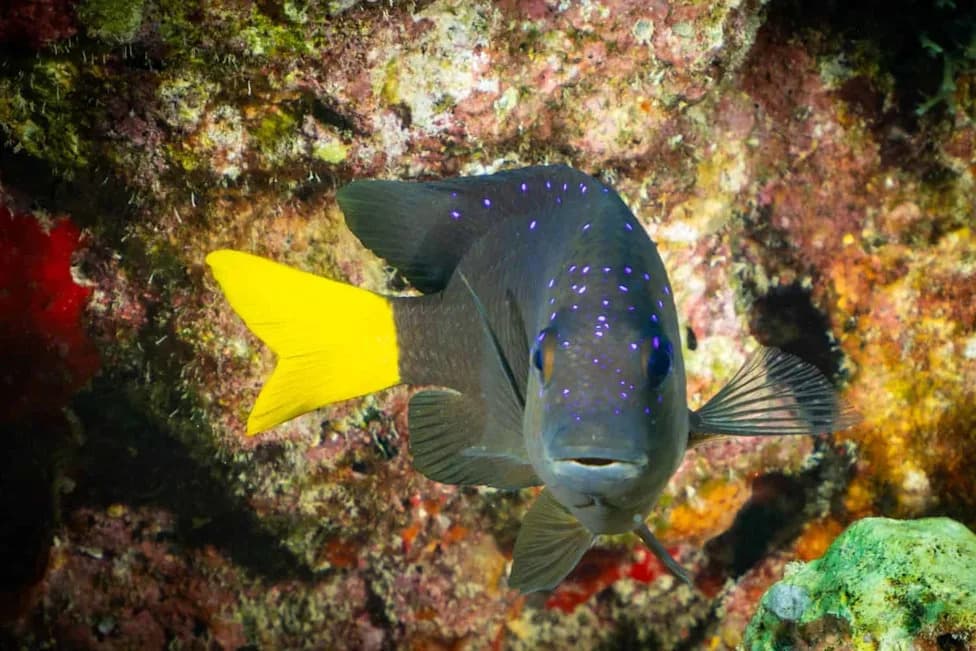
Motorboat noise on the Great Barrier Reef impairs growth and escape behaviour in the spiny chromis (Acanthochromis polyacanthus). In a 78-day experiment, juveniles exposed to engine noise were about 7% smaller and showed correct escape responses less often; roughly 40% swam toward a simulated predator. Effects persisted after 24 hours of silence, suggesting lasting developmental impacts. Researchers recommend reducing boat traffic or speed near breeding reefs to boost offspring survival and protect reef ecosystems.
Motorboat Noise Stunts Baby Reef Fish and Makes Them More Likely To Swim Toward Predators
Beautiful tropical coral reef with shoal or red coral fish Anthias and diversity of hard corals.© Tunatura/Shutterstock.com
Researchers have found that motorboat noise on the Great Barrier Reef can stunt growth and impair anti-predator behaviour in a common reef fish. A new laboratory study led by the University of Exeter, with collaborators at the University of Bristol and James Cook University, reports that early and chronic exposure to engine noise alters both size and escape responses in the spiny chromis (Acanthochromis polyacanthus).
How the Study Worked
The spiny chromis was chosen because, unlike many reef species, it lacks a dispersing pelagic larval stage: parents guard eggs and young until juveniles emerge. That parental care enabled researchers to control acoustic exposure throughout early development. Broods were divided into groups of embryos, juveniles, and mixed-age cohorts and reared for 78 days while exposed either to recorded natural reef soundscapes (with boat noise removed) or to motorboat noise recordings.
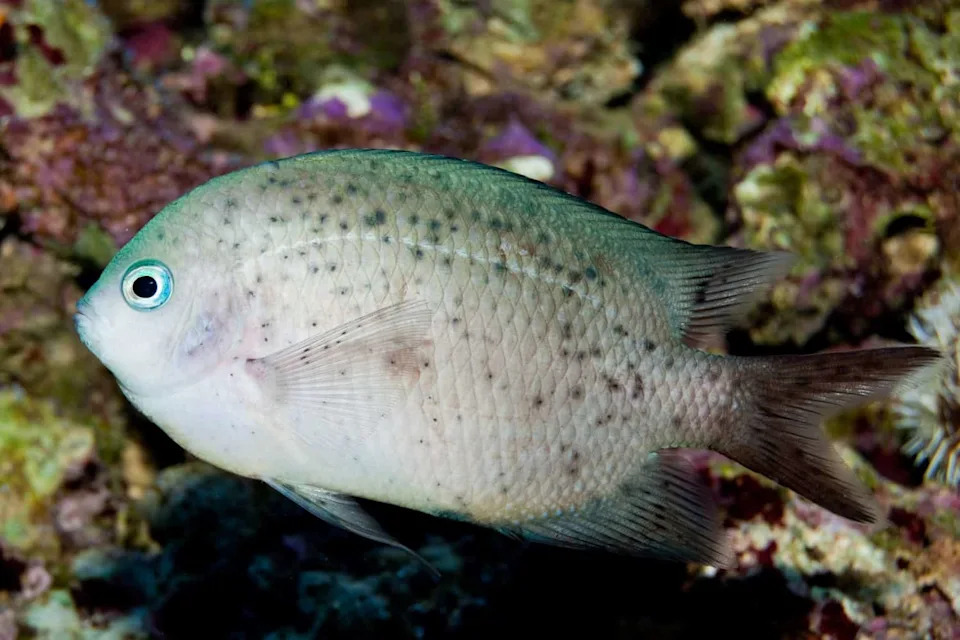
Spiny chromis were the subject of this study.©iliuta goean/Shutterstock.com
After the 78-day exposure, the fish were kept in silence for 24 hours so that tests would measure lasting developmental effects rather than immediate distraction. To simulate a predator attack, the team dropped a weight on the water surface and recorded escape responses. A normal spiny chromis reaction is to curl into a “C” shape and dart away.
Key Findings
Compared with fish reared with natural reef sounds, juveniles exposed to motorboat noise throughout development were about 7% smaller, a meaningful difference because smaller juveniles swim more slowly and have fewer energy reserves—making them more vulnerable to predators. Behaviourally, fish raised with natural reef sounds showed a normal escape response roughly 80% of the time. In contrast, fish exposed to boat noise across development showed normal escapes only about 68% of the time, and roughly 40% of them swam toward the simulated predator instead of away.
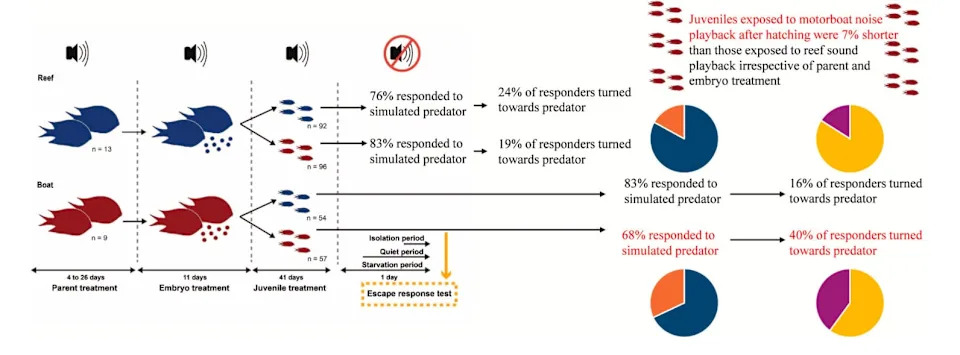
The study found that motorboat noise adversely impacted the chromis' growth and behavior.©Science Direct –Original/License
“Our results show that exposure to motorboat noise during early development can affect growth and disrupt the escape response of juveniles, even when the escape occurs in relatively quiet conditions,” said Sophie Nedelec of the University of Exeter.
Why This Matters
Sound is a primary sensory cue for many marine animals. The National Oceanic and Atmospheric Administration (NOAA) notes that acoustic signals help ocean species find food, avoid predators and communicate; anthropogenic noise can disrupt these functions. Reduced growth and impaired escape responses can compound predation risk and lower recruitment to adult populations, threatening reef resilience.
The authors link these laboratory results to previous field findings: a 2022 study by the University of Exeter and University of Bristol found that reducing boat numbers and speeds near breeding reefs increased offspring survival from 40% to 65%. Taken together, the work supports management measures such as restricting motorboat traffic or speed near critical breeding habitat during spawning seasons.
Publication and Funding
The study was published in the journal Environmental Pollution and received funding from the Natural Environment Research Council (NERC).
Help us improve.