The Maine PUC has closed a December 2025 RFP seeking at least 1,200 MW of renewable generation in Aroostook County plus the transmission needed to export it to New England. Key differences from prior efforts include early multistate cost sharing with CT, MA, RI and VT and closer regional planning. While northern Maine offers strong, winter-peaking wind potential, expensive transmission, landowner opposition and federal review delays remain major hurdles. Selected projects are unlikely to be operational before the 2030s in a best-case timeline.
'Different This Time': Northern Maine Poised for Wind Farms and Major Transmission Buildout

Blades rotate on a wind turbine on Maine's Stetson Mountain in July 2009. Photo by Robert F. Bukaty of the Associated Press.
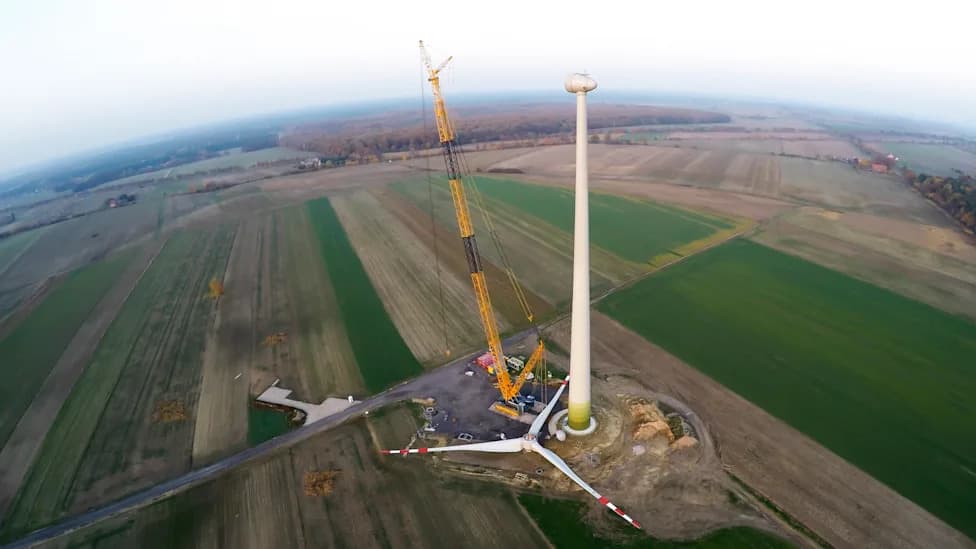
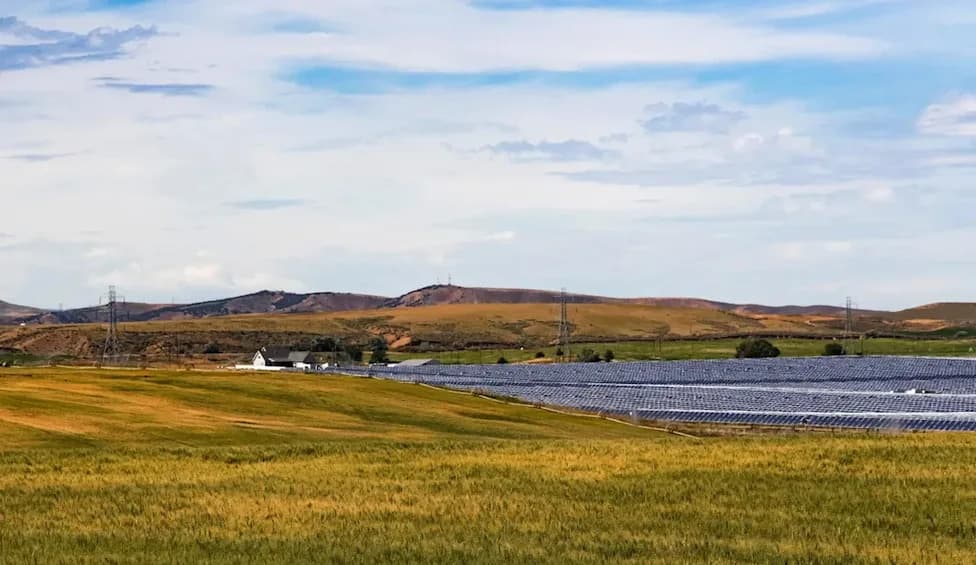
The Maine Public Utilities Commission (PUC) has closed a new round of bidding for large-scale renewable projects in Aroostook County and could begin awarding contracts this month. The December 2025 request for proposals (RFP) seeks both renewable generation—primarily wind and solar—and the transmission capacity needed to deliver at least 1,200 megawatts to the New England grid, enough electricity for hundreds of thousands of homes.
Why Northern Maine?
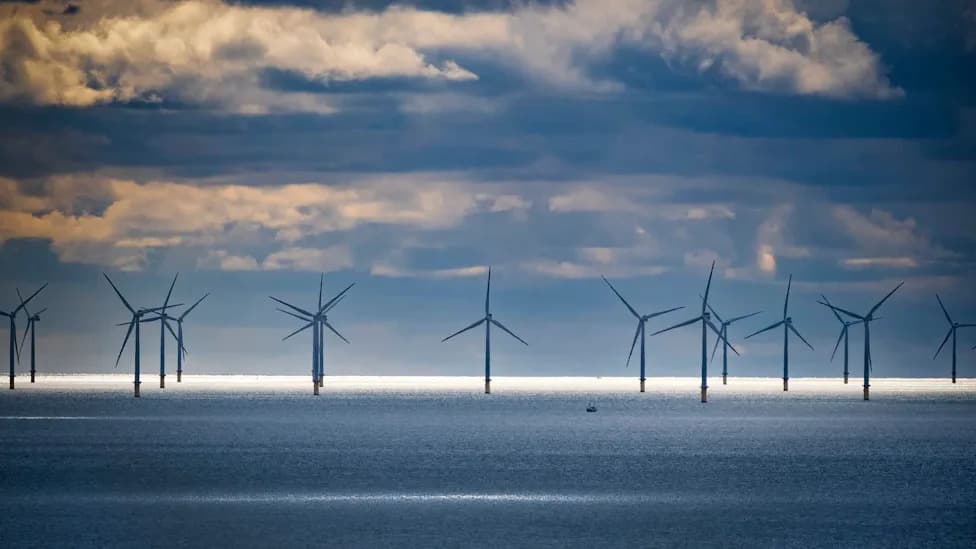
Northern Maine is widely regarded as one of the region's best wind resources. If developed and connected to the regional grid, that generation would help New England meet rising electricity demand and decarbonization goals, especially because wind output tends to be stronger at night and in winter when demand and wholesale prices are often highest.
Transmission Is The Key Challenge
Despite strong wind resources, Aroostook County lacks robust southbound transmission to export power. The area's electric network is currently linked to New Brunswick, Canada, not to the rest of Maine and New England, so new transmission infrastructure is essential to move large volumes of clean energy to regional markets.
Past Attempts And Costs
The PUC issued an earlier RFP in 2021 and made selections, but that procurement was halted in 2023 before final agreements were executed. The 2021 proposals were estimated to have a net cost to ratepayers of roughly $1.7 billion over 30 years (about $2.78 billion for transmission, offset by an estimated $1.08 billion in generation savings). Developers including LS Power and Longroad cited pandemic-related inflation and higher costs as drivers of the collapse of those deals.
What's Different This Time
Stakeholders and the PUC say two principal changes could improve the odds of success now: earlier regional coordination and cost sharing. Maine is partnering with Connecticut, Massachusetts, Rhode Island and Vermont so the expense and benefits of the transmission build can be spread across multiple states. ISO New England is also pursuing related transmission upgrades farther south through its separate solicitations.
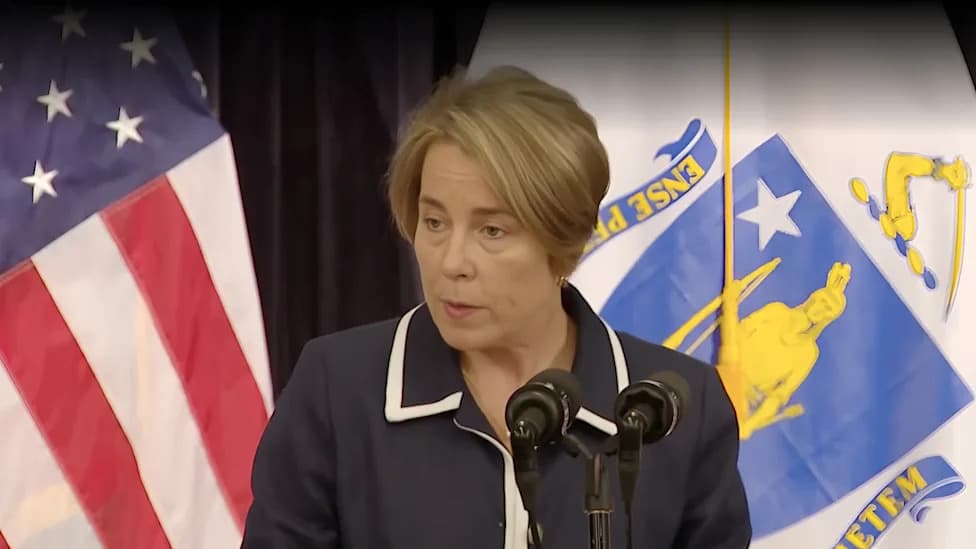
"This RFP builds on prior stakeholder input and regional transmission planning to move renewable energy projects in northern Maine from concept to reality," PUC Chair Philip Bartlett said in a December release.
Developers, Confidential Bids, And Local Concerns
The solicitation processes by the PUC and ISO New England remain confidential, so the specific projects under consideration are not public. Nevertheless, dozens of developers—from local firms to multinational energy companies such as Enel, Engie, Equinor and EDP—have signed up to follow the docket.
Landowner opposition previously played a major role in slowing progress. The earlier proposed 140-mile overhead transmission route drew strong objections from property owners worried about eminent domain and impacts on the rural landscape. Many stakeholders urged prioritizing existing corridors or exploring underground lines to reduce visual and environmental impacts.
Federal Reviews And Policy Headwinds
Federal processes have also affected the pace of project development. Required Federal Aviation Administration and Department of Defense reviews have delayed scores of wind projects in recent years, and policy shifts at the federal level—such as pauses on some offshore wind actions in past administrations—have created additional uncertainty. One proposed project in the region, EDP's Number Nine Wind Farm, has been submitted for FAA review.
Outlook And Timeline
Even if the PUC makes awards this month, construction would likely not begin for a few years. Stakeholders say the earliest practical timelines point toward facilities becoming operational in the 2030s under a best-case scenario. Key uncertainties remain: final cost allocation across states, the technical details of proposed transmission routes, local landowner acceptance, and outcomes of federal reviews.
Bottom line: Northern Maine has the wind resource to supply low-cost, winter-focused renewable energy to New England—but unlocking that value depends on building expensive transmission, securing multistate cost-sharing and addressing local and federal concerns.
Help us improve.