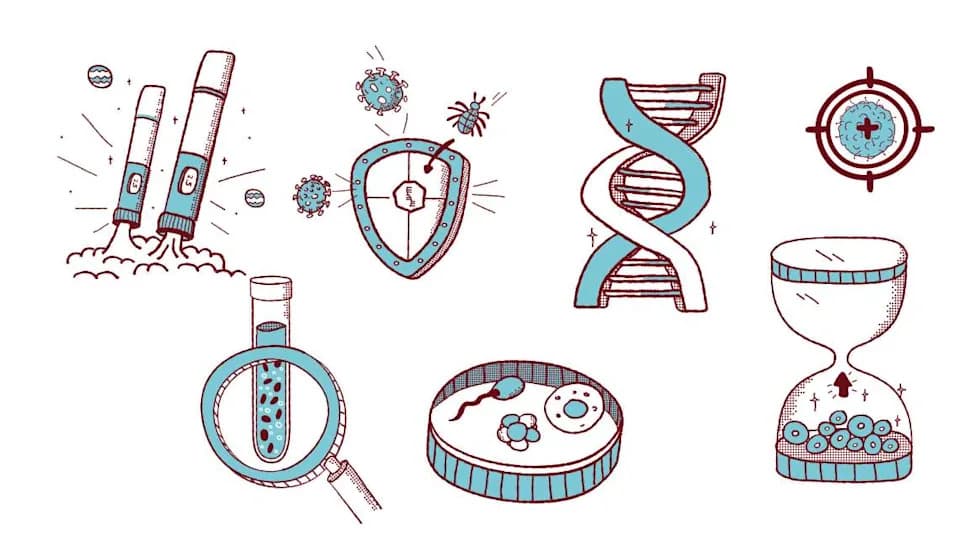
mRNA technology — proven by COVID-19 vaccines — is generating promising, durable responses in cancer trials, including a five-year melanoma control from a Moderna–Merck regimen and encouraging long-term pancreatic cancer outcomes from BioNTech-led personalized vaccines. More than 130 mRNA-focused studies were presented at ASCO, and multiple companies and academic centers are advancing programs. These scientific gains come as U.S. agencies cut roughly $500 million from some mRNA projects while the NCI–FNIH launches a $200 million partnership to sustain clinical trials.
Personalized mRNA Cancer Vaccines Show Durable Results Despite U.S. Funding Cuts

FILE PHOTO: U.S. Health and Human Services (HHS) Secretary Robert F. Kennedy, Jr. discusses the findings of the Centers for Disease Control and Prevention’s (CDC) latest Autism and Developmental Disabilities Monitoring (ADDM) Network survey, during a press conference at the Department of Health and Human Services in Washington, D.C., U.S., April 16, 2025. REUTERS/Elizabeth Frantz/File Photo
Treatments using the same mRNA technology that enabled rapid COVID-19 vaccines are now producing durable responses in some cancers and encouraging early signals in others once considered resistant to immune therapy. Presentations at major oncology meetings show progress across multiple tumor types, even as U.S. policy shifts introduce uncertainty for some public mRNA programs.
Clinical Advances
More than 130 studies focused on mRNA-based cancer approaches were presented at the American Society of Clinical Oncology (ASCO) meeting in Chicago, underscoring rapid growth in the field. At the forefront, Moderna and Merck reported that a combination of a potent immunotherapy agent and an individualized mRNA vaccine has kept melanoma under control for five years in trial participants — a milestone for personalized cancer vaccines designed to train the immune system to recognize tumor-specific mutations.
The companies are evaluating mRNA-based therapies across nine large and midsize trials in lung, kidney, bladder and pancreatic cancers, with early results from a large confirmatory melanoma study expected later this year.
Notable Pancreatic Cancer Findings
Academic work translated into company-led programs as well. A phase 1 study begun in December 2019 combined chemotherapy, Roche's Tecentriq (an immune checkpoint inhibitor), and a bespoke BioNTech mRNA vaccine tailored to each patient's tumor mutations. Of the eight pancreatic cancer patients whose immune systems responded to the vaccine, seven were alive up to six years later, researchers reported at the American Association for Cancer Research meeting. A 260-patient global phase 2 trial is underway to confirm those findings.
Technology And Delivery Improvements
Researchers are refining both the mRNA payload and its delivery. mRNA acts like the body's "software," directing cells to make proteins that can stimulate immune attacks on tumors or modulate unwanted inflammation. Teams at institutions including the University of Florida and Mount Sinai are designing lipid nanoparticles — the fat-based carriers that deliver mRNA into cells — to control tissue targeting and tune immune activation.
A study published in Nature Biotechnology in April suggests researchers can amplify or dampen mRNA activity to enhance immune responses or reduce harmful side effects. At the University of Florida, investigators are testing clustered lipid nanoparticles injected intravenously as a strategy to rapidly engage immunity against aggressive brain tumors such as glioblastoma. While treating glioblastoma remains exceptionally challenging, investigators say even modest advances could have broad implications for other cancers.
Funding And Policy Context
These scientific advances arrive amid mixed signals on U.S. funding for mRNA vaccine work. The Department of Health and Human Services (HHS), led by Robert F. Kennedy Jr., has cut roughly $500 million in mRNA vaccine projects and publicly questioned aspects of mRNA vaccine safety and effectiveness — positions that have generated controversy and criticism from many scientists. HHS did not respond to requests for comment.
At the same time, the National Cancer Institute (NCI) and the Foundation for the National Institutes of Health (FNIH) launched a $200 million public–private partnership to support trials of promising cancer vaccines, including mRNA-based candidates, providing a countervailing source of support for clinical development.
Outlook
Market analysts at Vision Research Reports forecast that the personalized cancer vaccine market driven largely by mRNA technology could reach about $8.5 billion annually by 2034. Scientists emphasize that continued collaboration, investment and regulatory clarity will be critical to translate early clinical promise into broadly available, safe and effective cancer therapies.
"We have to be able to innovate around technologies that are going to improve healthcare for all," said Dr. Elias Sayour of the University of Florida. "If we don't do it, other countries will."
(Reporting by Julie Steenhuysen in Chicago; Editing by Caroline Humer and Bill Berkrot)
Help us improve.