The biosciences are entering a period of rapid innovation, from powerful new weight‑loss drugs to therapeutic cancer vaccines and anti‑aging research. Experimental retatrutide produced average weight losses of ~70 pounds in early trials, while siRNA therapies can reduce dangerous Lp(a) cholesterol by 80%–94%. Other advances include broader mRNA flu vaccines, a promising Pfizer/Valneva Lyme candidate, early HIV vaccine trials, lab‑grown reproductive tissues, CRISPR embryo corrections and Yamanaka‑factor rejuvenation trials.
Cancer Vaccines, Anti‑Aging Breakthroughs and 6 More Biomedicine Milestones Shaping Medicine
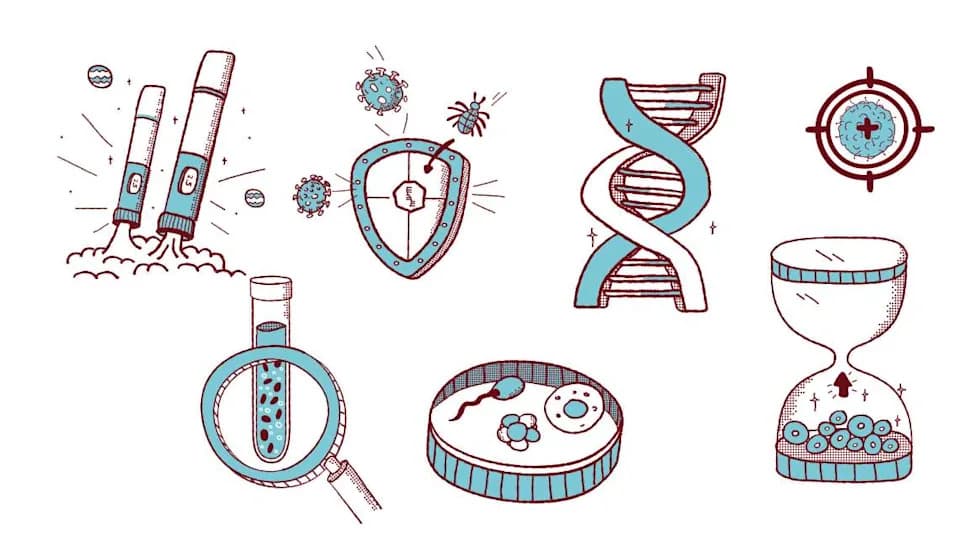
Illustrations: George Mussel/Fiverr
We are entering a fast-moving new era in the biosciences, driven by rapid advances in molecular biology, gene editing and vaccine platforms. From powerful weight‑loss drugs to experimental anti‑aging therapies and next‑generation vaccines, several developments promise to reshape prevention and treatment across medicine.
Transformative Metabolic Drugs
Retatrutide is an experimental drug that acts on three different receptors in the brain and body and appears more potent than earlier GLP‑1–based therapies. In preliminary trials, participants lost an average of about 70 pounds over 80 weeks. While GLP‑1 medications have already helped millions with diabetes and obesity and are associated with reduced heart‑attack risk, improved fatty‑liver disease, slower progression of chronic kidney disease and benefits for sleep apnea, retatrutide has not yet been reviewed or approved by the FDA. Reports also note that black‑market versions have circulated among biohackers, highlighting safety concerns.
Cardiovascular Risk: Lp(a) and New siRNA Therapies
Lipoprotein(a), or Lp(a), is a genetically determined form of cholesterol that roughly triples heart‑attack risk. About 20% of Americans have elevated Lp(a), but routine testing was uncommon because effective treatments were lacking. In April, medical authorities recommended a one‑time blood test to measure Lp(a). Promisingly, early clinical trials of small interfering RNA (siRNA) drugs that silence Lp(a) production in the liver have reduced levels by roughly 80%–94%.
Vaccines: Flu, Lyme, HIV and Cancer
An mRNA influenza vaccine designed for broader, cross‑strain protection could become available as soon as the next flu season if regulators agree. Lyme disease still infects many Americans each year; litigation delayed prior vaccine efforts, but Pfizer and Valneva report an experimental Lyme vaccine with about 70% efficacy in trials. For HIV, researchers at the La Jolla Institute for Immunology and Scripps have produced a vaccine that triggers broadly neutralizing antibodies in primates, and a preliminary human trial began earlier this year.
Beyond infectious disease prevention, therapeutic mRNA cancer vaccines are being developed to boost the immune system’s attack on tumors. A preliminary 2026 study of a pancreatic cancer vaccine reported that seven of eight responding patients were still alive four to six years after surgery. Researchers are also testing preventive vaccines aimed at eliciting immune responses to common cancer‑driving mutations; in an early preventive trial, none of the participants with genetic risk factors or worrisome cysts developed pancreatic cancer during the study period.
Genomics and Consumer Sequencing
Consumer genetics has advanced from genotyping chips to whole‑genome sequencing. In 2009, a typical genotyping test covered hundreds of thousands of SNPs—about 5% of common variants—whereas whole‑genome services today provide a complete sequence and can be compared against databases of tens of thousands of disease, trait and pharmacogenomic markers.
Reproductive Biology Advances
Several notable reports this year demonstrate rapid progress in reproductive science. In May, Paterna Biosciences reported growing functional human sperm entirely in the lab and using it to fertilize human eggs. In June, Conception described converting blood cells into "mini ovaries" containing millions of prospective egg cells. Also in June, a Columbia University team reported correcting a specific mutation in early‑stage human embryos using a precise CRISPR approach—an achievement that has rekindled ethical debates about genome editing and potential future uses alongside in‑vitro fertilization.
Cellular Rejuvenation and Anti‑Aging Research
Longevity research increasingly focuses on cellular rejuvenation. The Yamanaka factors—four proteins discovered by Nobel laureate Shinya Yamanaka—can partially reprogram aged cells toward a more youthful state. Life Biosciences plans a clinical trial using three Yamanaka factors to restore vision by resetting damaged cells’ gene‑expression patterns. Several startups (including Altos Labs, Retro Biosciences and Rejuvenate Bio) are pursuing similar approaches. Separately, experimental Klotho gene‑therapy efforts aim to raise levels of the Klotho protein, which extended lifespan and improved health metrics in mice; some clinics now offer experimental Klotho therapies outside major regulatory settings, which raises both scientific and ethical concerns.
Balancing Speed With Caution
These advances are exciting, but they also require careful, transparent validation and responsible regulation. Rapid progress can yield major public‑health benefits, yet safety, equity and ethical oversight remain essential as new technologies move from labs to patients.
None of us is getting any younger—scientists and clinicians alike hope these breakthroughs will translate into safer, more effective treatments and preventive tools in the years ahead.
Help us improve.