Prominent AI and life‑science leaders have signed an open letter warning that rapid AI progress could reduce barriers to creating biological weapons. They urge mandatory screening of synthetic DNA and RNA orders, verification of buyer legitimacy, and retention of synthesis records to aid tracing. The letter cites research showing some AI systems can outperform expert virologists on narrow lab questions but notes the implications for current biosecurity risks remain uncertain. Lawmakers are encouraged to act to prevent a patchwork of state rules.
AI Leaders Warn Rapid Advances Could Lower Barriers To Bioweapons — Urge Mandatory DNA/RNA Screening
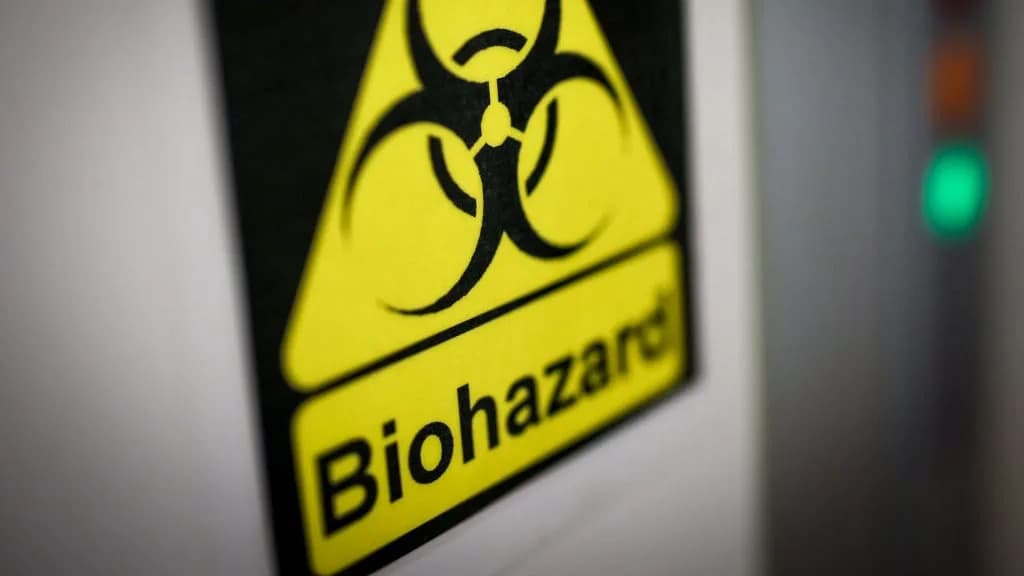
Biohazard DNA - Credit: Oliver Bunic/Bloomberg via Getty Images
An open letter signed by prominent figures across artificial intelligence and the life sciences warns that rapid advances in AI could erode the knowledge barriers that have historically made it difficult to develop biological weapons.
Signatories include OpenAI CEO Sam Altman, Anthropic CEO Dario Amodei, Demis Hassabis of Google DeepMind, professors from MIT, Stanford and the University of California, and two former US service secretaries. The letter calls for stronger, binding measures to reduce the risk that improvements in computational biology and generative AI could be misused.
The authors ask regulators to require mandatory screening of all orders for synthetic nucleic acids — the synthetic DNA and RNA used in research and biotech manufacturing — as well as the equipment used to synthesise them. Synthetic nucleic acids are commonly ordered online to enable experiments by small teams and independent labs, but the letter notes peer-reviewed research indicating that the same materials and knowledge could theoretically be repurposed for harmful biological agents.
Under the proposed rules, manufacturers of synthetic DNA and makers of synthesis machines would be required to:
- Screen synthesis requests for "sequences of concern" and other hazardous markers;
- Verify customer legitimacy before fulfilling orders;
- Retain records of orders and sequence data to support biosecurity investigations and enable tracing to potential sources of misuse.
The letter cites recent research suggesting that some AI systems can now outperform PhD-level virologists on highly technical, domain-specific laboratory questions. The authors also acknowledge that the evidence about what this means for real-world biosecurity risks is mixed and that further study is needed.
"Congress should act this session, and we applaud the legislative efforts currently underway," the letter reads.
The signatories urge a coordinated approach so states align with federal and industry guidelines and avoid a patchwork of conflicting laws. For context, two bills addressing synthetic nucleic acid synthesis are currently pending in Congress: a House bill introduced roughly a year ago that has not reached a floor vote, and a Senate bill that has remained in committee since its introduction in January.
While the proposals aim to strengthen biosecurity, they raise practical and privacy questions for researchers and suppliers. Industry stakeholders, lawmakers and scientists now face the challenge of balancing legitimate scientific openness and innovation with precautions to limit access to materials and know-how that could be misused.
Help us improve.