A Toulouse School of Economics study finds that sustained monitoring of desert locusts across Africa, the Middle East and South Asia can prevent large crop losses and downstream public-health harms. By analyzing nearly 30 years of surveillance data and applying machine learning to map swarm origins and movements, researchers estimate up to a 680-fold return per $1 invested through improved childhood nutrition alone. The paper links 2019 monitoring failures in Yemen to roughly 445,000 additional cases of childhood stunting and shows how local surveillance gaps can trigger regional food crises. Authors recommend modest investments in coordination, data systems and field teams to avert widespread agricultural and health impacts.
Researchers: Strengthened Locust Monitoring Could Avert Crop and Child Health Crises — A $680 Return Per $1 Invested
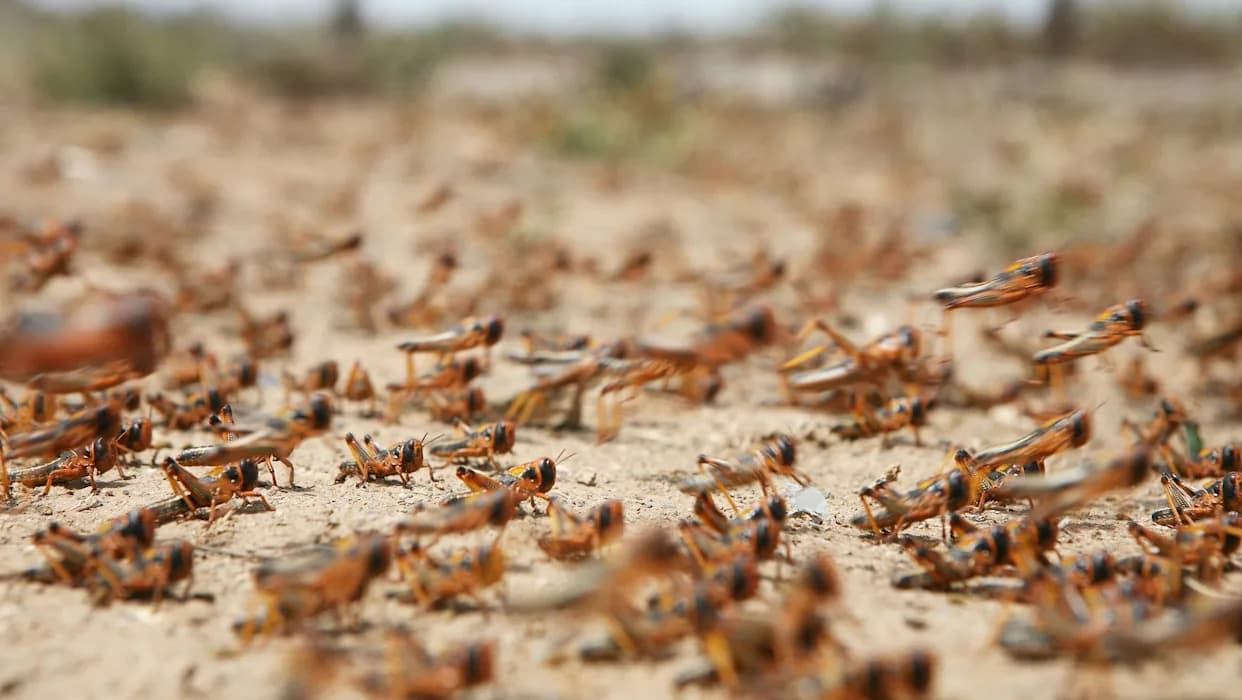
Photo Credit: iStock
A major new study from the Toulouse School of Economics finds that sustained early-warning systems for desert locusts can deliver outsized benefits for both agriculture and public health. By analyzing nearly three decades of surveillance across Africa, the Middle East and South Asia, researchers estimate that modest investments in monitoring could prevent regional crop devastation and reduce long-term harms to children.
What the Study Did
The authors examined one of the longest-running locust surveillance programs and focused on episodes when monitoring failed—often because conflict or other disruptions kept survey teams out of key breeding areas just as rains created ideal conditions for locust reproduction. Using machine-learning tools, they mapped where swarms originated and traced how they moved far beyond initial breeding zones, showing how local surveillance gaps can cascade into regional food crises.
Key Findings
The study highlights stark, quantifiable impacts:
- Huge cost-benefit: The researchers estimate that every $1 spent on surveillance can yield up to $680 in improved childhood nutrition alone, before counting direct gains in farm output.
- Massive food consumption by swarms: When swarms develop, they can consume as much food in a single day as the average daily needs of about 625,000 people, according to co-author Eyal Frank.
- Child health consequences: Prenatal exposure to food shortages driven by locust outbreaks raises the probability of stunted growth by roughly 18% and increases the risk of dying before age five.
- 2019 Yemen outbreak: The paper links monitoring gaps during Yemen's civil war to cross-border swarms that devastated crops; it estimates about 445,000 additional children experienced stunted growth because surveillance failed, with roughly 83% of those children living outside Yemen.
"When locust swarms develop, they destroy the crops and pastureland in their path — consuming as much food each day as about 625,000 people," said study co-author Eyal Frank.
Co-author Anouch Missirian noted a key challenge: effective monitoring often "leaves little to no damage" to report, which can make its benefits easy to overlook.
Policy Implications
The authors argue that relatively modest investments in coordination, data systems and field monitoring can protect harvests, stabilize vulnerable communities and improve early-life nutrition. While preventive funding may seem costly up front, the study shows that letting early-warning systems degrade risks far greater costs in lost crops and lifelong public-health harms.
Bottom line: Strengthening locust surveillance is a high-return preventive measure with measurable benefits for food security and child health across multiple regions.
Help us improve.