A new Nature study of 58,319 infection records across 32 diseases and 169 countries finds that access to health care—measured by travel time to facilities and built-up density—is the strongest, most consistent predictor of where outbreaks are recorded. After explicitly modelling surveillance effort, many previously reported environmental hotspots weaken, though mosaic landscapes and vector-borne diseases still show ecological signals. The authors recommend combining targeted, system-specific ecological measures with stronger local health systems to improve detection, treatment and prevention, while noting data remain sparse for pandemic-priority pathogens.
Detection, Not Deforestation, Shapes Where Outbreaks Appear — Global Study Finds Healthcare Access Drives Reported Spillovers
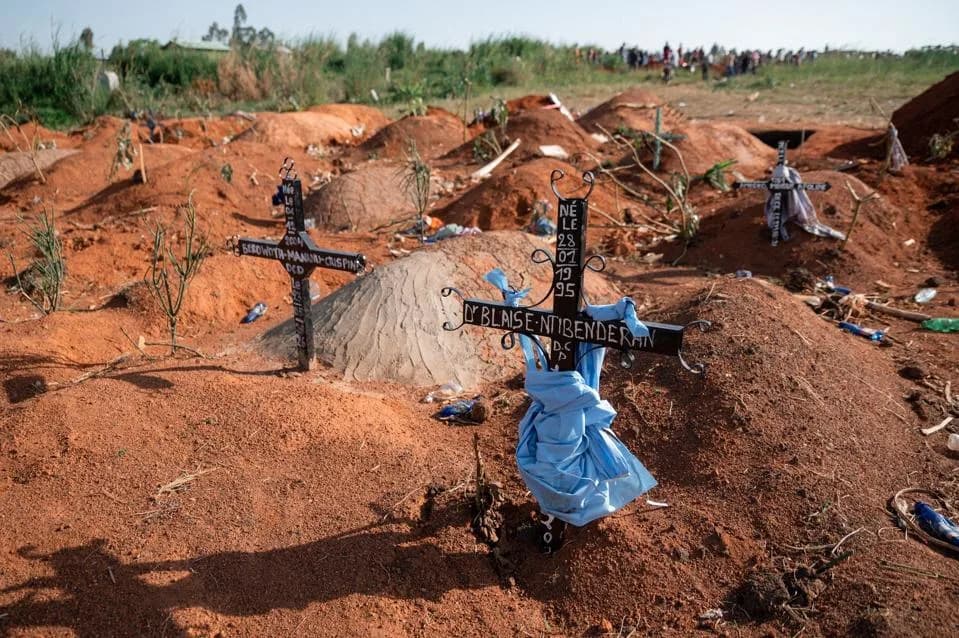
TOPSHOT - General view of Nyamurongo cemetery, located in Ndibakodu neighborhood, one of the burial sites receiving a large number of people who have died from Ebola virus disease since the beginning of the outbreak, in Bunia, Ituri Province, Democratic Republic of the Congo, on June 13, 2026. (Photo by Jospin Mwisha / AFP via Getty Images)AFP via Getty Images
A major new analysis challenges a simple story about pandemic risk: that clearing forests and disturbing wildlife consistently produces the next human pathogen. Published in Nature, the study assembled 58,319 infection records for 32 diseases across 169 countries to separate where infections actually occur from where they are simply seen by health systems.
The multinational team was led by Rory Gibb (University College London), Sadie Ryan (University of Florida), Colin Carlson (Georgetown) and 28 other authors, many linked to the Verena Institute—a National Science Foundation effort to bring quantitative rigor to viral emergence research. Their central innovation was to model the footprint of surveillance itself—using factors such as travel time to the nearest healthcare facility and built-up land density—and subtract that detection signal before testing ecological drivers.
How The Study Worked
The authors compared reported outbreak locations with population-weighted background samples and explicitly estimated detection effort across space. To reduce post-hoc interpretation, 25 of the 31 coauthors preregistered their predictions. By removing the influence of surveillance, the team aimed to reveal ecological patterns that are not simply artifacts of where people can access diagnosis.
Key Findings
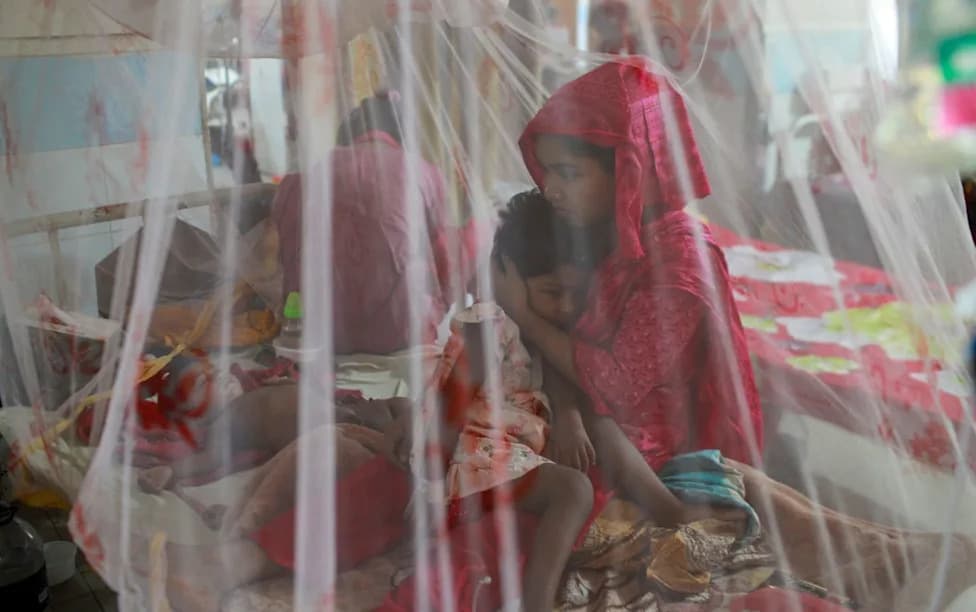
Detection dominates the recorded geography of outbreaks. After accounting for surveillance, the strongest and most consistent predictors of where outbreaks were recorded were infrastructural: proximity to hospitals and the density of built-up land. For the median disease in the dataset, the odds that an outbreak would be recorded fell by roughly one-third for each additional hour of travel time to the nearest health facility. For some diseases, such as MERS and Argentine hemorrhagic fever, odds dropped by 90 percent or more with increasing travel time.

Chagas Disease, Brazil, Rio De Janeiro, Oswaldo Cruz Institute, Research Into Chagas Disease, Rhoduius Prolixus feeding on blood, Chagas is an incurable disease transmitted by Triatominae bugs, (Photo by Universal Images Group via Getty Images)
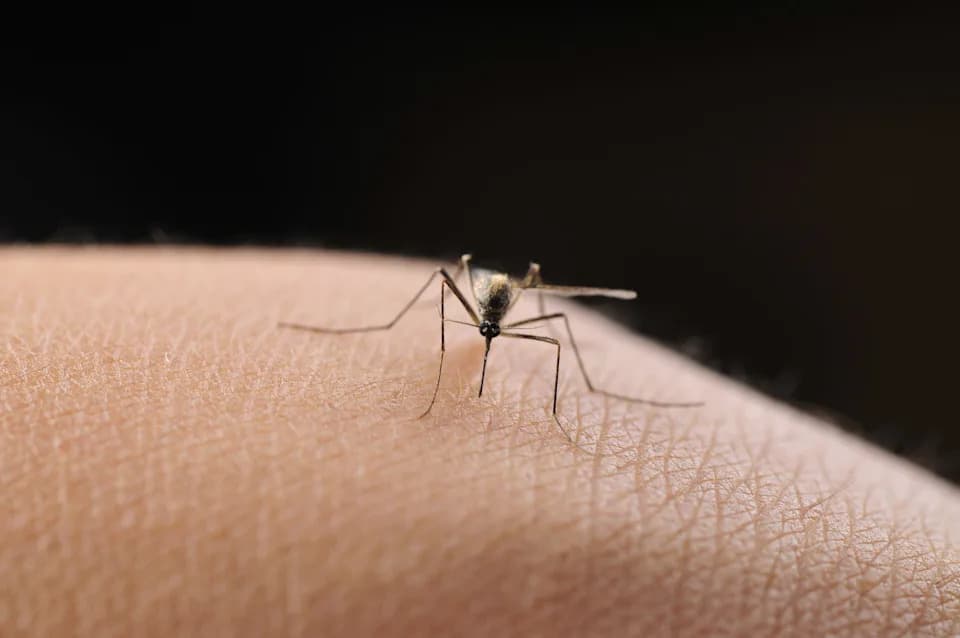
Environmental signals remain but are more specific. Correcting for detection does not erase ecological effects; it clarifies them. Outbreak risk was highest in mosaic landscapes—patchworks of forest, farmland and settlement—especially across the 17 vector-borne diseases in the set (for example, Chagas and yellow fever). The models also reproduced well-established relationships, such as intact biodiversity lowering Lyme disease risk and pig density predicting Japanese encephalitis.
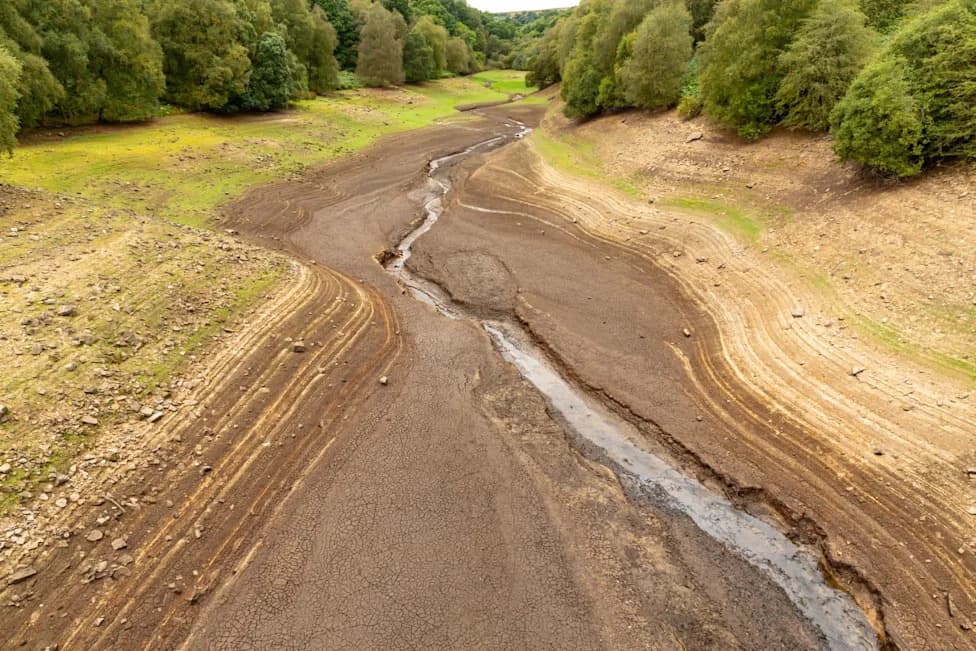
Climate findings were nuanced. The study found a repeated signal of long-term drying (decades-scale rainfall decline) predicting higher dengue outbreak frequency across the Americas, Africa and Asia. The authors suggest mechanisms like expanded urban water storage and abrupt dry-then-wet cycles that concentrate mosquito habitat, complicating simpler accounts that focus only on warming.
No Single Human Pressure Explains Emergence. Recent forest loss was a significant predictor in only 6 of 29 disease systems where it was judged plausible; long-term warming reached significance in 5 of 28. Directly transmitted zoonoses that worry pandemic planners—Ebola, Marburg, Nipah, MERS and mpox—shared few common environmental drivers and remain data-poor in this dataset.
Critiques And Limits
Not all experts accept the breadth of the study's interpretation. Jason Rohr (University of Notre Dame) argued the analysis conflates detection with true emergence because it counts any reported case in a place-year as an "outbreak," including single imported or diagnosed cases. He also warned that averaging long-term forest loss across places can mask short-lived but causal local effects.

AYUTTAYA, THAILAND - 2026/01/26: A fruit bat in a tree at Wat Khanon Tai. Thailand's Department of Disease Control remains on high alert following reports of 5 confirmed Nipah virus cases in West Bengal, India. At Wat Khanon Tai in Ayutthaya, where fruit bats have resided for over a century, local concerns have risen as the bats take flight at dusk. Health authorities reassure the public that "no human infections" have been detected in Thailand. While current surveillance shows a low 10% viral prevalence in local bats, the Ministry of Public Health has intensified airport screenings and implemented a "One Health" monitoring strategy. Residents are advised to "keep their guard up" by avoiding direct contact with bats, ensuring water containers are tightly sealed, and refraining from eating fallen fruit or those with visible bite marks. (Photo by Arnun Chonmahatrakool/Thai News Pix/LightRocket via Getty Images)
Raina Plowright (Cornell) noted that every record depends on a person being exposed, falling ill, reaching care and being diagnosed, so it is unsurprising that access to care emerges as a dominant correlate—global metrics may miss local ecological triggers that require bottom-up reconstruction.
Policy Implications
The practical takeaway is layered. Strengthening local health systems is high-return: it improves detection, enables timely treatment, and helps contain onward transmission. At the same time, ecological interventions remain important but should be targeted to particular disease systems rather than rolled out as a single global program against deforestation.
"It is also critically a question about inequality, about who is most likely to get sick, and why, and who can access healthcare, diagnostics and treatment at the point when they're most needed," Rory Gibb said.
The study does not demolish the forests-and-pandemics idea, but it shows that the narrative was too simple. Much of what the field had taken as the geography of emergence reflects the geography of observation. The paper provides the most systematic evidence yet that surveillance shapes the map—and it reframes priorities toward combining system-specific ecological action with investments in health infrastructure.
Limitations to Keep In Mind
- Data remain sparse for pandemic-priority pathogens; rare events yield wide uncertainty ranges for diseases like Marburg, Nipah and Ebola.
- Distance to care affects both detection and disease dynamics (treatment and containment), so the detection effect has epidemiological as well as observational consequences.
- Global metrics may miss fine-scale, system-specific drivers that require detailed, local study.
This improved account preserves the study's central evidence while clarifying methods, limits and policy relevance for an English-language audience interested in pandemic prevention and global health.
Help us improve.