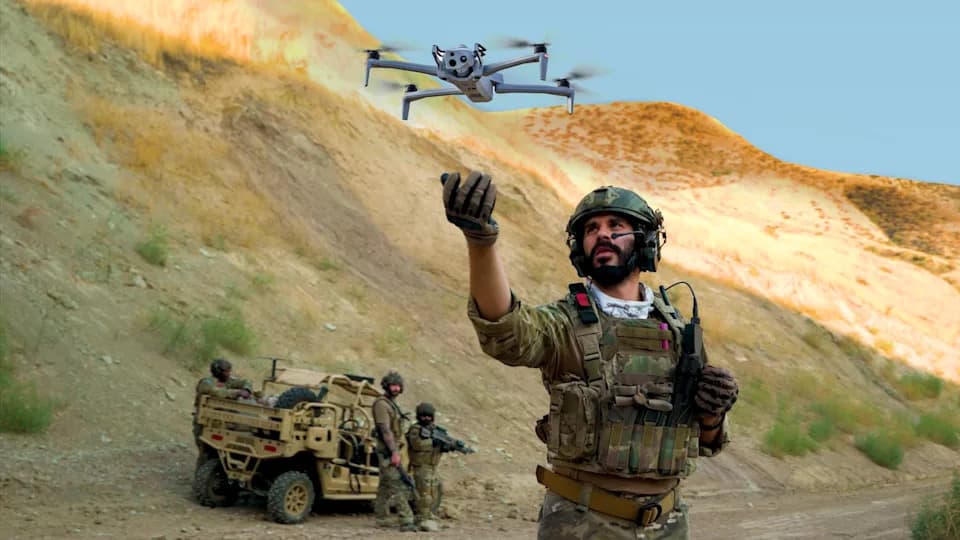
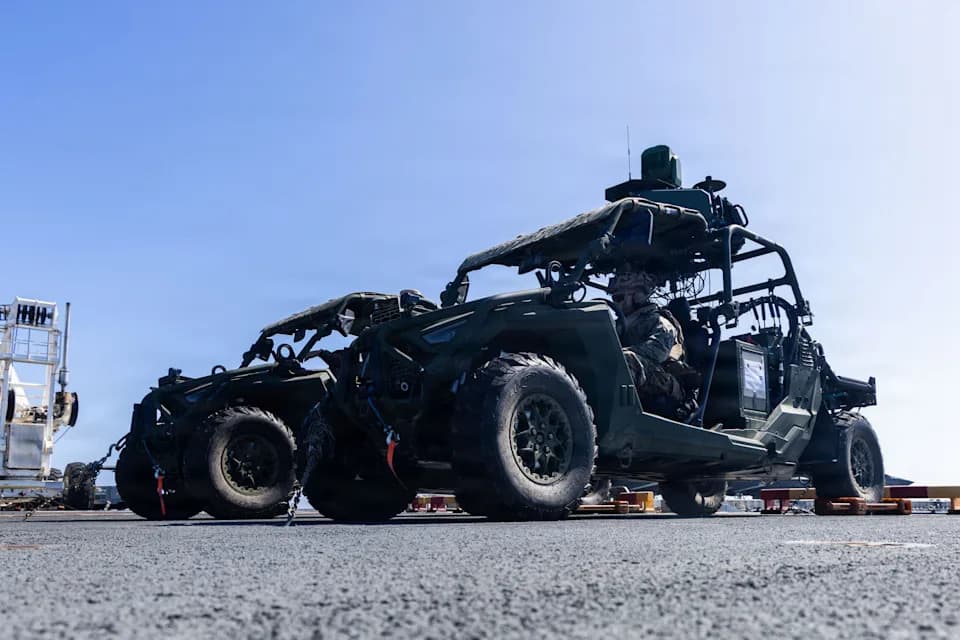
The Marine Corps plans to field about 40,000 additional small drones this year, creating major logistical and safety demands—especially for the lithium batteries that power them. Leaders warn improperly stored or maintained batteries can cause dangerous fires and that scaling battery-management procedures across a force of roughly 170,000 Marines will require more personnel and systems. Many current operators are "incidental" Marines without formal requalification requirements, and integrating at least six drone types from multiple manufacturers raises interoperability, certification and spectrum-management challenges.
Marines Brace for 40,000 New Drones — Battery Safety, Training and Interoperability Pose Biggest Hurdles
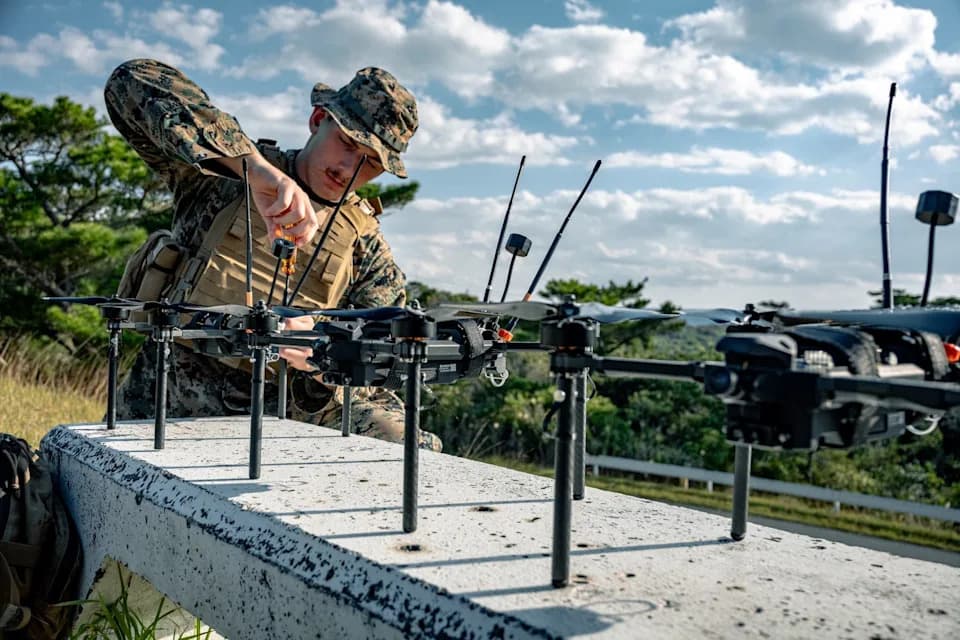
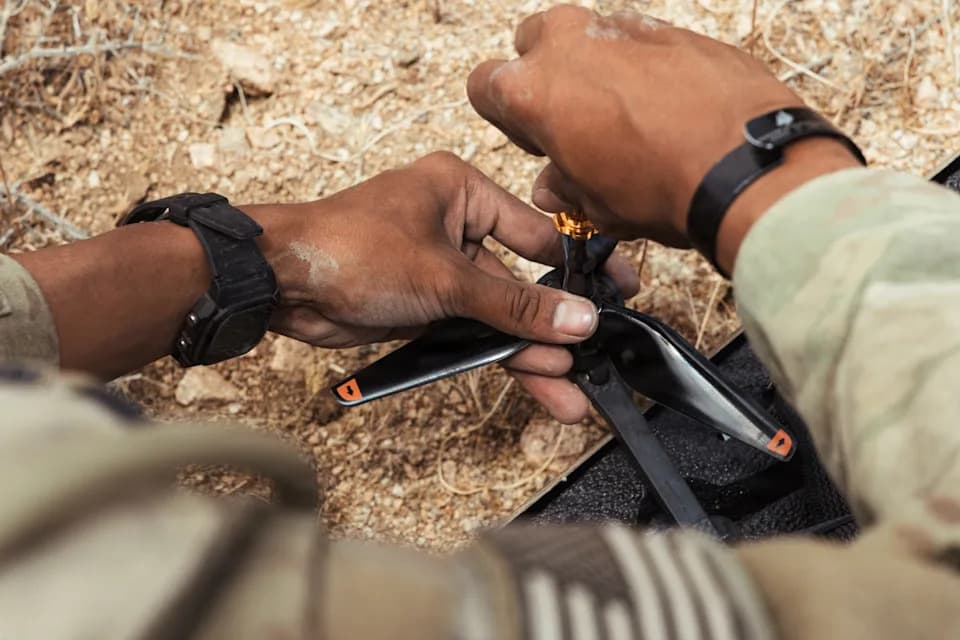
Marines must be trained and equipped to receive at least six different kinds of small drones.Cpl. Joaquin Dela Torre/US Marine Corps
The U.S. Marine Corps is preparing to field roughly 40,000 additional small drones this year — a move leaders say will reshape frontline capabilities but place heavy demands on logistics, safety systems and training.
Lithium Batteries: A Silent Risk
Much of the immediate burden centers on lithium-based batteries that power small unmanned systems. These cells require specialized storage, active monitoring and strict charging procedures to avoid degradation or ignition. Units currently use modified shipping containers and dedicated personnel to manage battery stocks, but scaling that approach across a force of about 170,000 Marines presents significant manpower and administrative challenges.
"If they get wet, they catch fire, and then you've got a runaway fire. You can't put it out with water because it's already wet," Col. Jeremie 'Hank' Hester, director of Combat Development and Integration Aviation Combat Element, said during the Modern Day Marine symposium in Washington, D.C.
While the service already handles lithium batteries in other platforms, the expected influx of thousands more small drones brings a new volume of volatile powerpacks that must be tracked, rotated, charged and—when required—safely disposed of under formal procedures.
Training, Certification And The Rise Of Incidental Operators
The Corps sees unmanned systems as essential for future conflicts: scouting enemy positions, probing defenses and even delivering supplies to isolated outposts. One current example is the Neros Archer, a remotely piloted quadcopter reported to carry about five pounds for missions reaching roughly 12 miles.
Many drone users today are "incidental operators" — Marines whose primary specialty is another field (infantry, mortars, etc.) but who also operate drones when needed. Those personnel generally lack formal recurring qualification requirements comparable to aviation pilots, and leaders say the Corps may adopt minimum-hour or refresher standards to ensure sustained proficiency.
Certification, Spectrum And Interoperability Challenges
Before small military drones can be widely deployed, they must be certified to operate in U.S. airspace and comply with federal rules governing the electromagnetic spectrum, which is shared with civilian cellular networks and aviation systems. Equipment from different manufacturers may use different radios, controls and battery chemistries, increasing maintenance complexity.
Under a Pentagon push to expand unmanned capabilities, the Corps expects to field at least six distinct small-drone types. That diversity creates technical hurdles when mixed systems must coordinate, share data and receive commands in real time.
Hester likened the need to a translation problem: the service needs a central "Rosetta Stone" hub that can interpret varied waveforms, translate digital messages and route commands so decision-makers get coherent, actionable information from a mixed fleet.
What This Means For the Force
Operationally, the rapid expansion of drone fleets promises new tactical advantages, but unlocking those benefits will require investments in battery safety and storage, designated personnel and formalized training, as well as technical work to certify and integrate disparate systems. Without those supports, leaders warn, the operational promise of thousands of additional drones could be undermined by avoidable logistical and safety failures.
Help us improve.