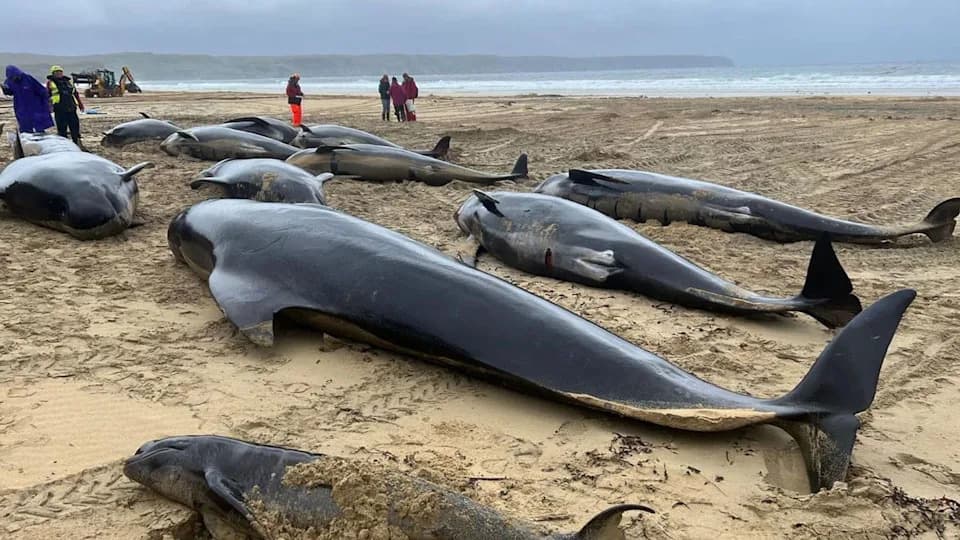
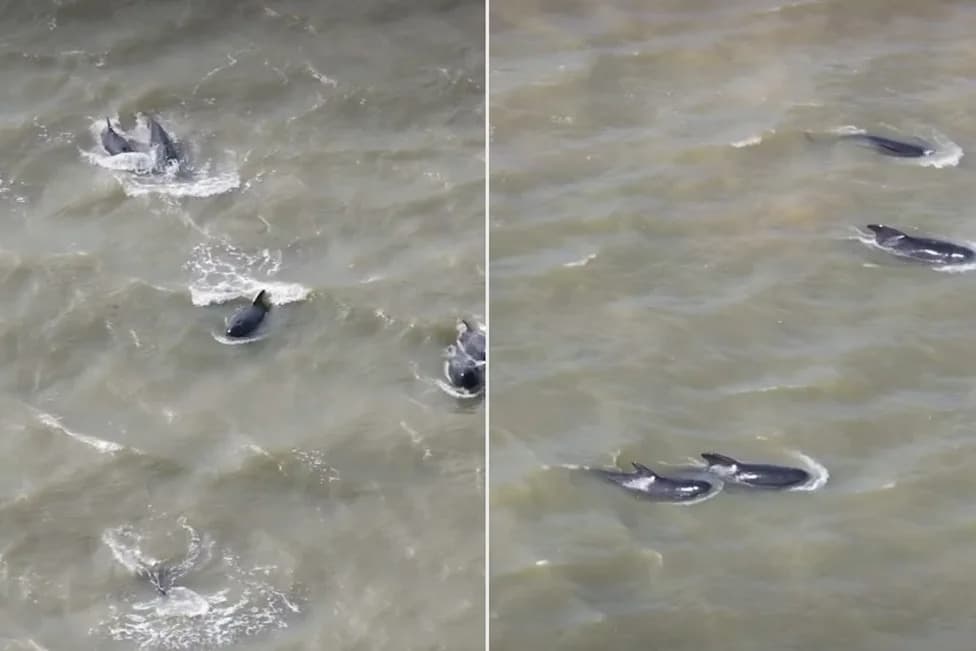
The July 2023 mass stranding at Tolsta Bay, Scotland, of 55 long‑finned pilot whales provided rare biological data on a deep‑water species that is difficult to study. Skin chemical signatures indicate the animals were healthy and likely foraging for fish and squid along the continental shelf shortly before the event. Researchers suspect a single distressed female during a difficult birth led the pod toward shallow water, where onshore winds and soft sand prevented refloating. The findings highlight the species' reliance on deep‑water food sources and underline the need to identify high‑risk areas and seasons for better conservation planning.
Mass Stranding of 55 Pilot Whales at Tolsta Bay Reveals Rare Deep‑Water Insights
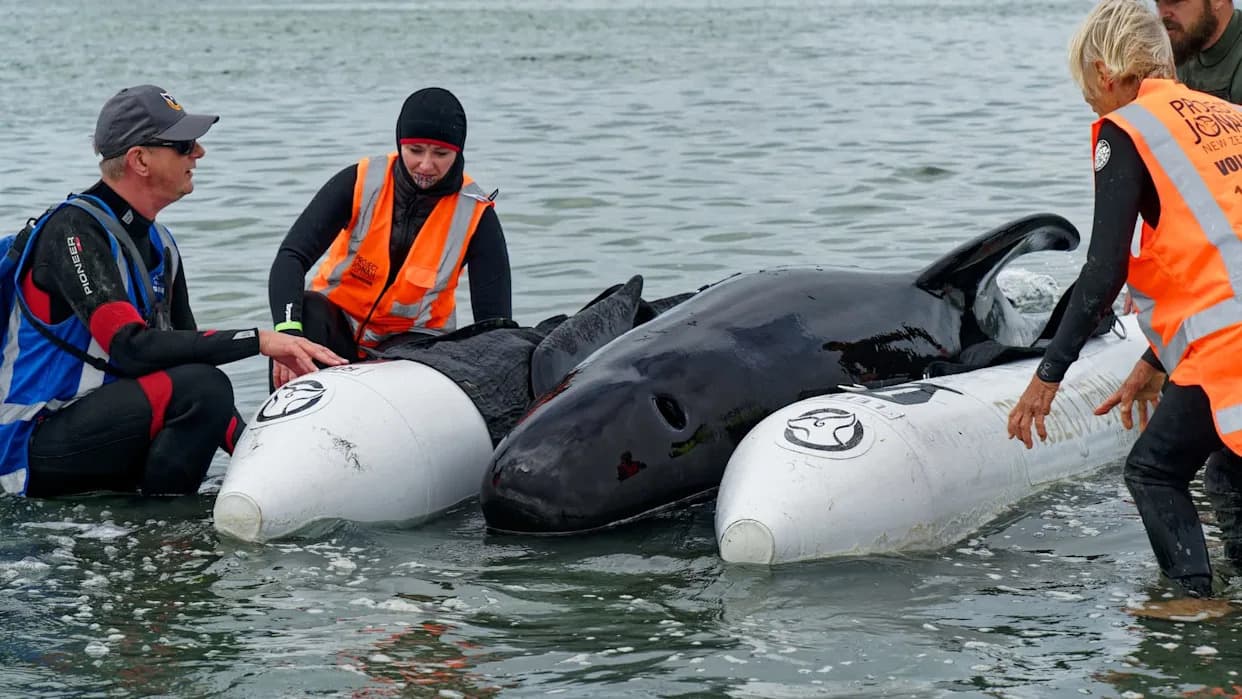
Photo Credit: iStock
In July 2023, 55 long‑finned pilot whales were found stranded and died in shallow water near Tolsta Bay, Scotland. The large number of animals provided researchers with an uncommon opportunity to examine a species that is typically hard to observe in its deep‑water habitat.
What Researchers Found
Analysis of skin tissue from the animals revealed distinctive chemical signatures indicating the whales were in good body condition and likely foraging for fish and squid along the continental shelf shortly before the stranding. Those findings suggest the pod was feeding in deep waters rather than suffering long‑term malnutrition or disease.
How the Stranding Likely Happened
Investigators suspect the event was precipitated by a single female in distress during a difficult birth. Long‑finned pilot whales form very strong social bonds, and pod members may have followed the distressed female toward shore.
"Once stranded, the animals were unable to refloat themselves due to a combination of surf generated by onshore winds and the soft sand substrate on the beach," scientists said, according to the BBC.
Researchers said the combination of onshore winds and the soft, shallow sand made it impossible for the animals to return to deeper water on their own.
Broader Implications
The study highlights two linked realities: long‑finned pilot whales rely on deep‑water food sources near the continental shelf, and that reliance—combined with tight social cohesion—can quickly put entire pods at risk when a single individual becomes distressed. Environmental changes such as shifting ocean temperatures, changes in prey distribution, and human activity may increase the likelihood of such incidents by disrupting navigation or feeding patterns.
Lead author Anna Kebke noted that these findings shed light on early spring–summer feeding behavior and emphasize the importance of identifying high‑risk locations and seasons to improve conservation and response strategies for vulnerable marine species.
Studies arising from events like the Tolsta Bay stranding help scientists target protective measures, inform monitoring efforts, and guide rapid response planning to reduce future losses.
Help us improve.