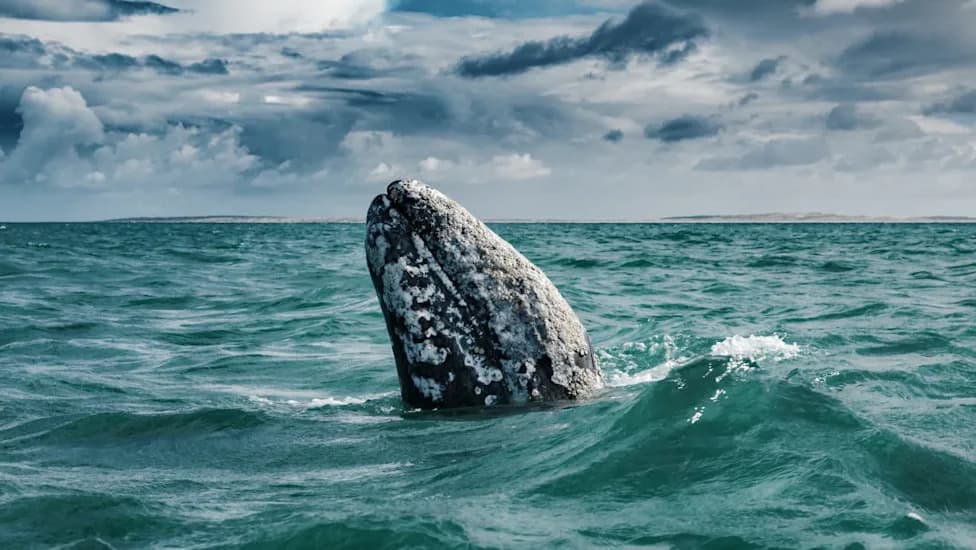
NOAA Fisheries confirmed that a 57.5-foot adult male fin whale was found dead on the bulbous bow of a cruise ship in Sitka, Alaska, on Sept. 17. Local teams towed the whale to a nearby beach after it could not be beached at sea because it was not buoyant. NOAA is coordinating with the Alaska Marine Mammal Stranding Network to assess a possible necropsy while its law enforcement office investigates; the public is asked to keep a safe distance and report information to the stranding hotline.
Endangered 57.5‑Foot Fin Whale Found Dead On Cruise Ship Bow In Sitka — NOAA Investigating
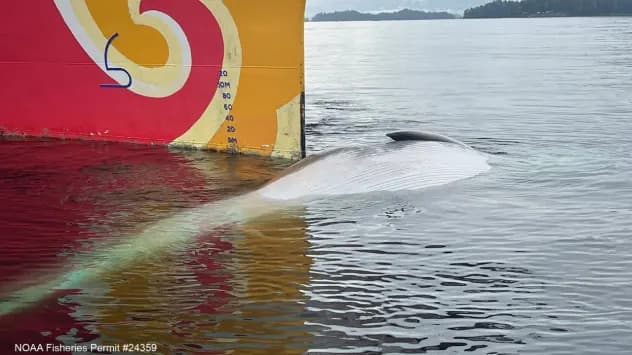
Image of a 57.5-foot adult male fin whale that was found on top of a cruise ship's bulbous bow in Sitka, Alaska, on Sept. 17, 2026. (Credit: NOAA Fisheries Permit #24359)
A 57.5-foot adult male fin whale was discovered dead atop the bulbous bow of a cruise ship after the vessel arrived in Sitka, Alaska, on Thursday, Sept. 17, NOAA Fisheries Alaska reported.
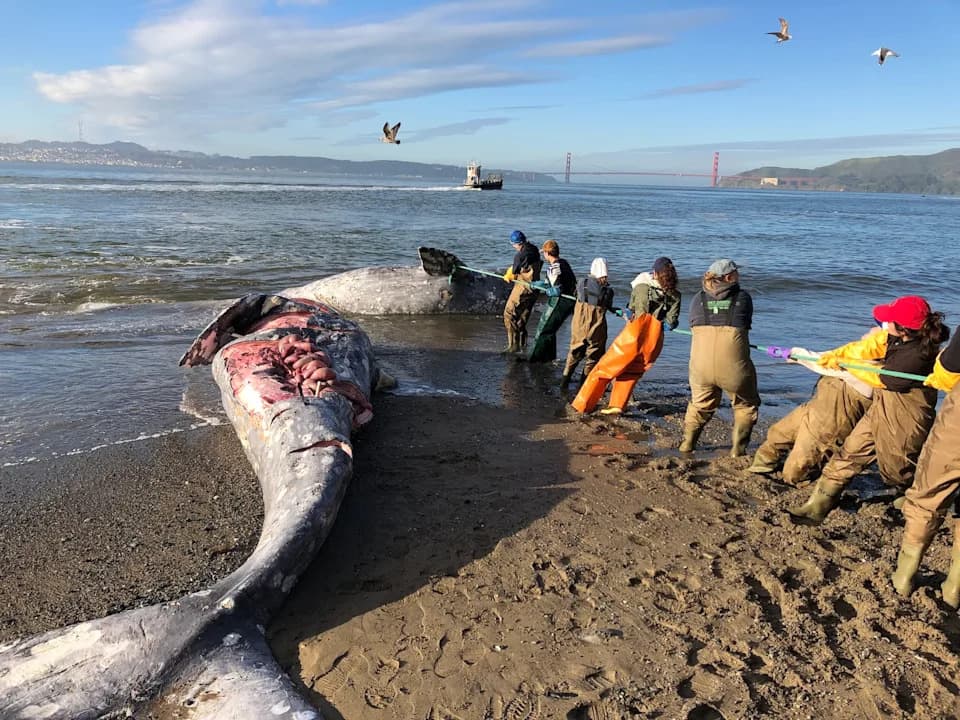
Local responders towed the carcass to a nearby beach where it has been secured. Teams said they were unable to beach the whale at sea because the animal was freshly dead and not sufficiently buoyant to be floated ashore intact.
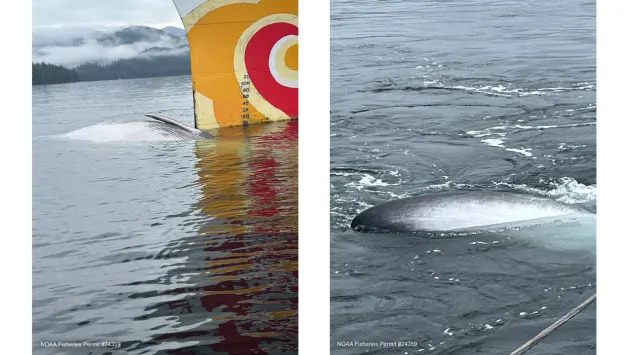
Images of the male fin whale that was found dead on a cruise ship in Sitka, Alaska, on Sept. 17, 2026. (Credit: NOAA Fisheries Permit #24359)
Investigation and Possible Necropsy
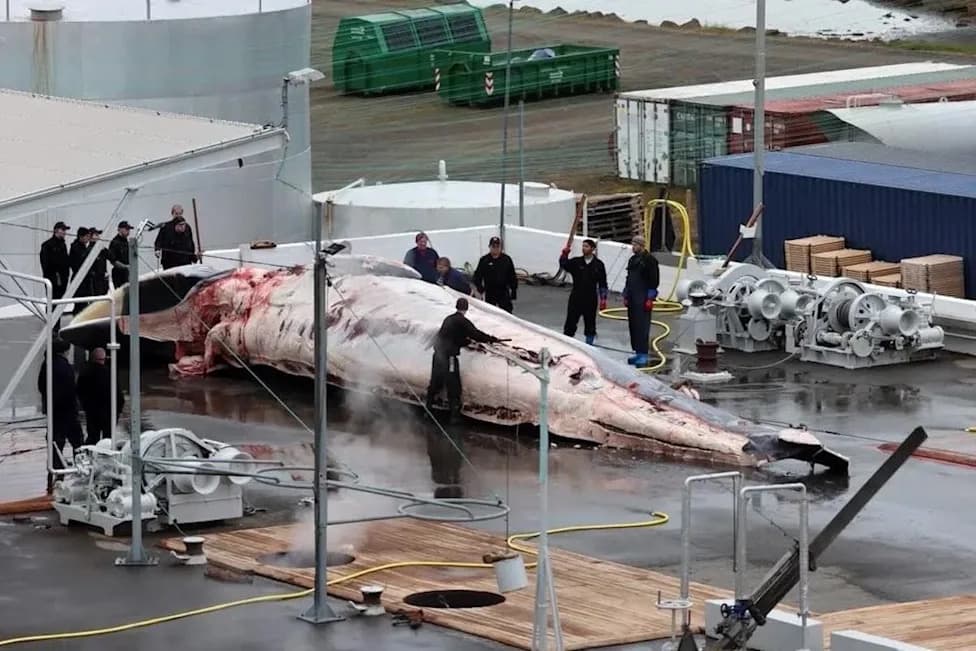
NOAA is coordinating with partners in the Alaska Marine Mammal Stranding Network to determine whether a necropsy (an animal autopsy) can be performed to establish the cause of death. The NOAA Fisheries Office of Law Enforcement is also investigating the incident and asks anyone with information to contact its 24-hour enforcement hotline.
"We ask the public to maintain a safe distance from the whale," NOAA said in its statement.
Second Similar Incident This Year
This is the second time in 2026 that a fin whale was found on the bow of a cruise ship in Alaska. In late June, a 61-foot pregnant female fin whale was discovered on a cruise ship after it docked in Seward. Examination of that animal revealed blunt-force trauma to the ribs, spine and jaw consistent with a vessel strike, though laboratory testing to confirm the cause of death can take months. Staff from the Alaska SeaLife Center conducted a necropsy on the June whale on June 20, 2026.
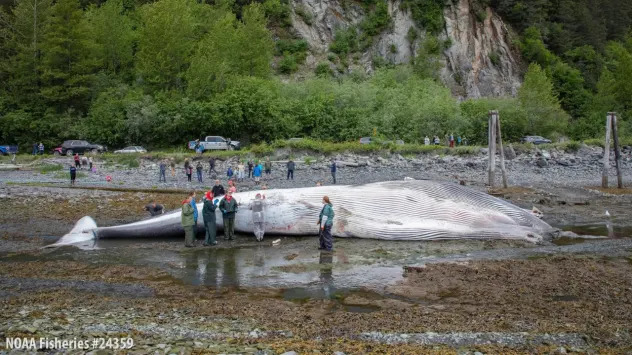
Alaska SeaLife Center staff perform a necropsy on a deceased fin whale in Seward, Alaska on June 20, 2026. (Credit: Alaska SeaLife Center/Kaiti Grant, NOAA Fisheries Permit #24359)
Species Status And Threats
Fin whales are listed as endangered under the Endangered Species Act and classified as depleted under the Marine Mammal Protection Act. The species is the second-largest whale on Earth and is named for the small dorsal fin located just ahead of the tail. Fin whales reach physical maturity around age 25 and can live up to about 90 years; they typically inhabit deep offshore waters of the world's major oceans and are less common in tropical regions.
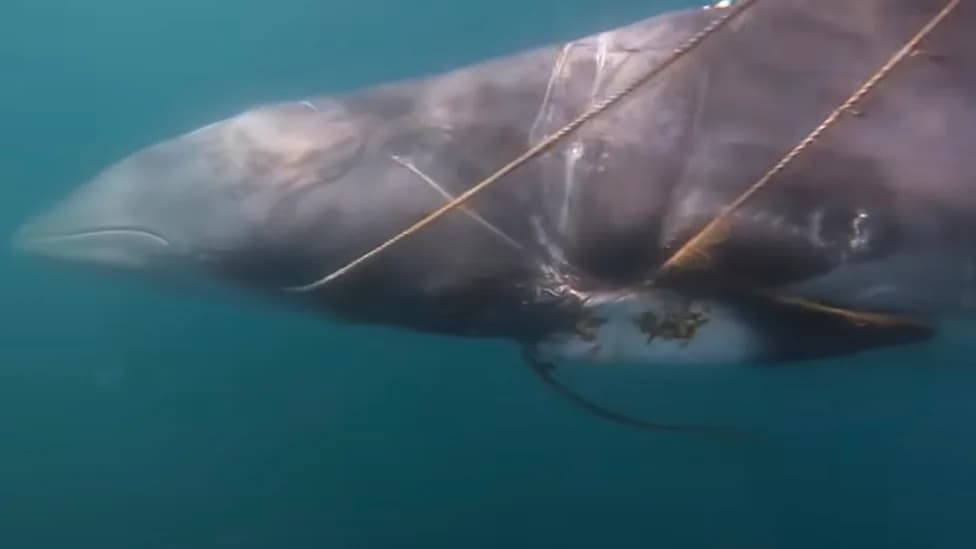
NOAA identifies vessel strikes as one of the greatest immediate threats to fin whales, making them among the species most vulnerable to ship collisions after North Atlantic right whales. Other pressures include ocean noise, entanglement in fishing gear and climate-driven shifts in habitat and prey availability.
Public Guidance
The agency reminded the public that it is illegal to collect tissue, baleen or any parts of a whale unless an Alaska Native is collecting parts for subsistence or for traditional handicrafts. Anyone who observes a stranded, entangled, injured or dead marine mammal is urged to call the NOAA Fisheries Alaska Statewide 24-hour Stranding Hotline.
Image credit: NOAA Fisheries (Permit #24359). Additional photos and updates are being provided by NOAA Fisheries Alaska.
Help us improve.