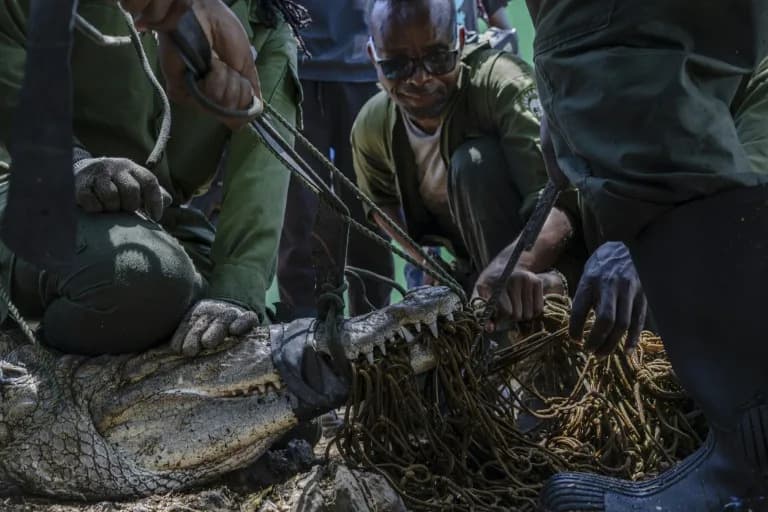
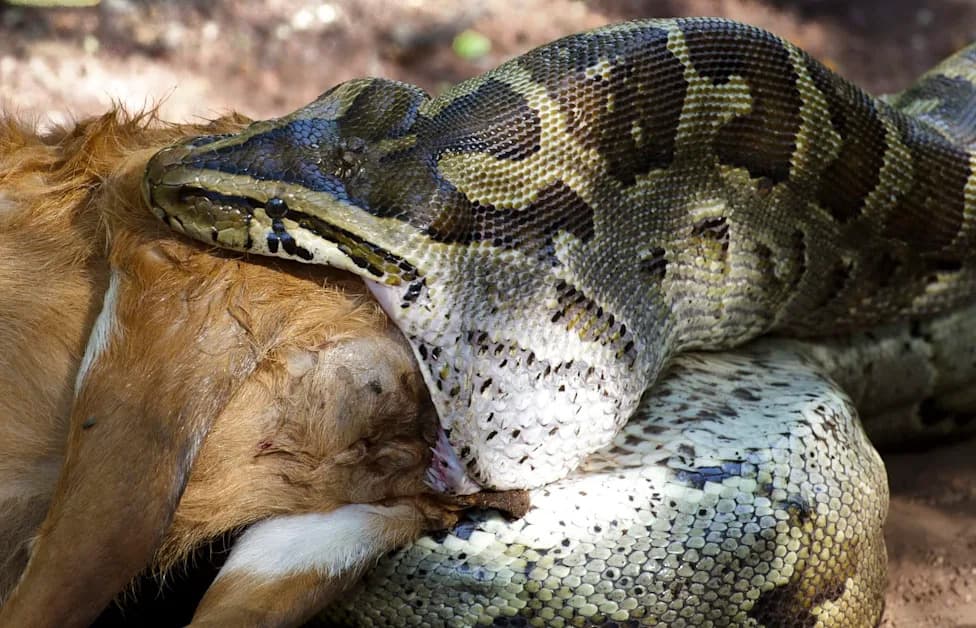
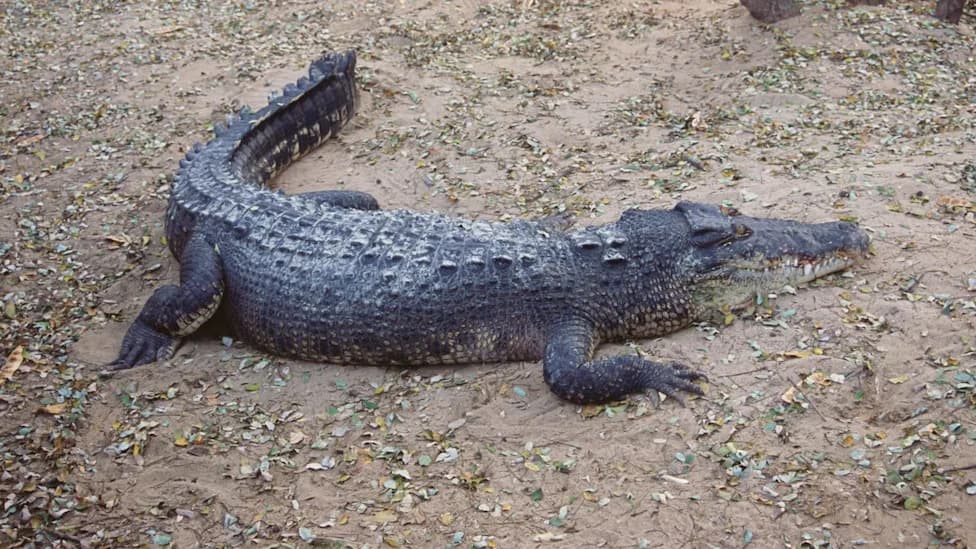
India s Border Security Force reportedly asked units to study deploying crocodiles and venomous snakes in riverine gaps along the 4,096 km India–Bangladesh border to deter undocumented crossings where fencing is impractical. The proposal has provoked alarm from human rights groups and wildlife experts, who warn it would endanger local communities, violate ethical and legal norms, and disrupt fragile ecosystems. Critics say animals cannot distinguish nationality and that humane, lawful alternatives should be pursued.
India's Controversial Plan to Use Crocodiles and Snakes Along the Bangladesh Border Sparks Outcry
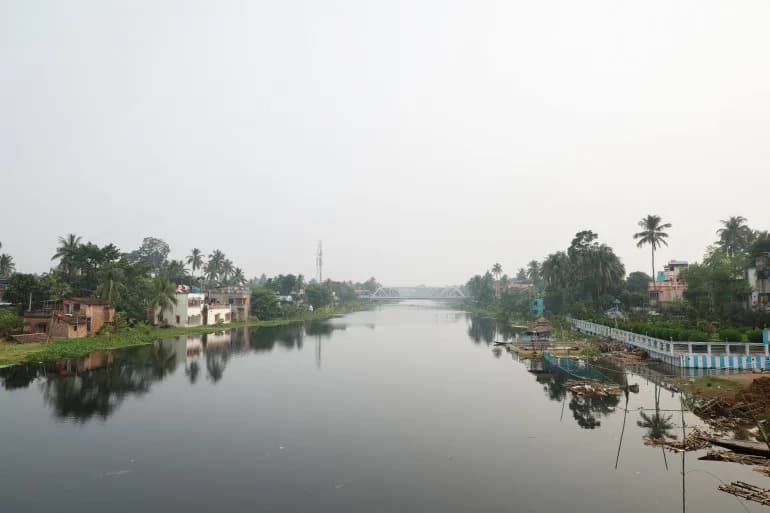
A view of the river flowing through Petrapole, close to the India-Bangladesh international border, in India on October 16, 2024 [Sahiba Chawdhary/Reuters]
Indian security officials have proposed deploying apex predators such as crocodiles and venomous snakes in riverine stretches of the India–Bangladesh frontier as a natural deterrent to undocumented crossings and smuggling where building physical fencing is impractical. The idea, referenced in an internal Border Security Force communication dated March 26, has drawn sharp criticism from human rights advocates and wildlife experts.
What Was Proposed
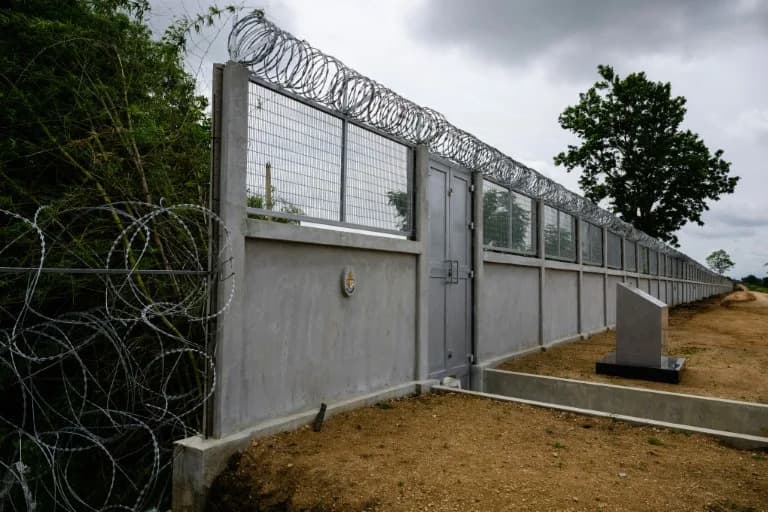
The Border Security Force (BSF), which secures India s borders with Bangladesh and Pakistan, asked eastern and northeastern units to study "the feasibility of deploying reptiles in vulnerable riverine gaps" and to report back on action taken. India s 4,096 km (2,545 mile) border with Bangladesh traverses marshes, rivers, hills and valleys; nearly 3,000 km of it is already fenced, while swampy and riverine sectors remain unfenced because erecting barriers there is difficult.
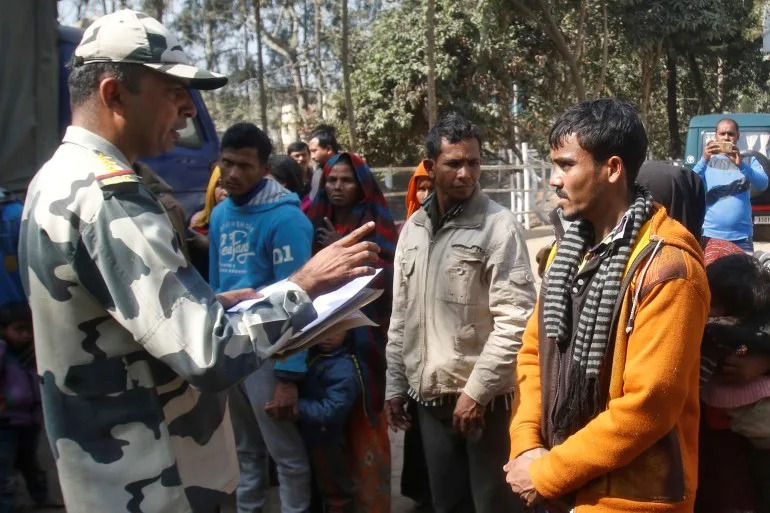
A Border Security Force (BSF) official registers the names of Muslim-majority Rohingya after they were detained while crossing the India-Bangladesh border from Bangladesh, at Raimura village on the outskirts of Agartala, on January 22, 2019 [Jayanta Deyon/Reuters]
Human Rights and Political Concerns
Critics say the proposal is ethically fraught and fits into a broader pattern of harsh measures against suspected undocumented migrants. Activists point out that such measures risk harming Indian citizens as well as foreign nationals, and that they cannot substitute for due process, legal repatriation agreements or bilateral diplomacy.
This would be peak cruelty and a new way of weaponising nature against people, whether Indian or Bangladeshi.
— Angshuman Choudhury, researcher on northeastern and eastern border states
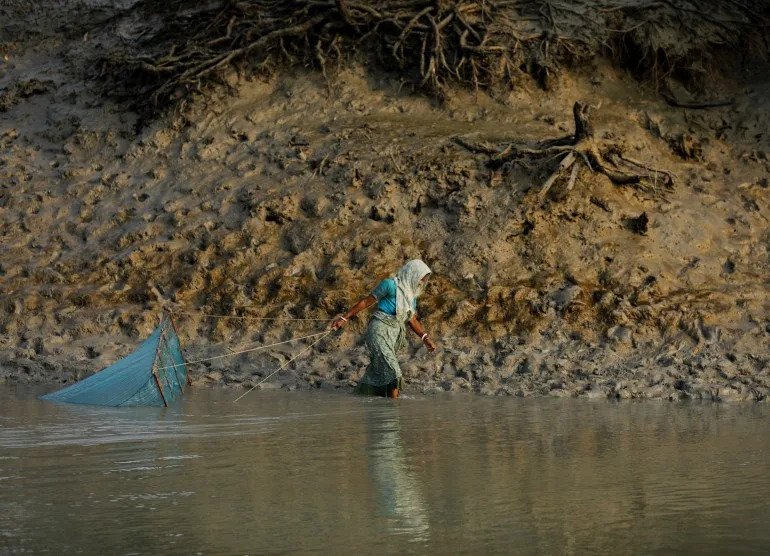
A woman fishes along the banks of a river near the island of Satjelia in the Sundarbans, India, on December 16, 2019 [Anushree Fadnavis/Reuters]
Ecological and Practical Problems
Wildlife experts warn that moving predators outside their natural ranges is both inhumane and ecologically risky. Rathin Barman of the Wildlife Trust of India noted that crocodile populations in India are concentrated in the Sundarbans and some restricted wetlands in Assam, far from many border sectors. Translocating animals into new river systems where they are not adapted could lead to high mortality, ecological disruption and unpredictable human-wildlife conflict.
First thing you know, they end up dead soon. Manipulating the natural distribution of species can disrupt the entire ecosystem and harm other creatures that have equal rights to live in these habitats.
— Rathin Barman, Wildlife Trust of India
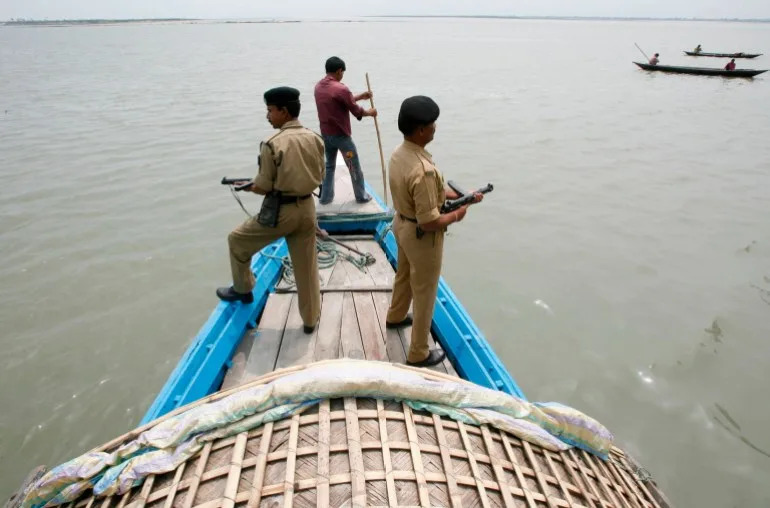
Indian Border Security Force (BSF) soldiers patrol on a boat in the river Brahmaputra near the border with Bangladesh at Dhubri, west of Guwahati, the major city of India’s northeastern state of Assam, on April 22, 2009 [Rupak De Chowdhuri/Reuters]
Flood-prone, swampy borderlands could also carry snakes and other animals into nearby villages, increasing the danger to fishing communities and other residents. Conservationists emphasize that predators released in open, flowing rivers are unlikely to remain in place or function as a selective deterrent.
Legal, Ethical And Operational Risks
Human rights campaigners argue animals cannot perform administrative tasks such as identifying an undocumented migrant, and that relying on predators would expose civilians on both sides of the border to serious harm. There is no modern precedent for deliberately weaponising wildlife to secure an international boundary, and such a measure would likely raise domestic and international legal issues as well as humanitarian concerns.
Observers have also drawn comparisons to extreme ideas once reported in other countries, including media stories about deterrent proposals during the U.S. political debate and the controversial 2025 South Florida detention facility nicknamed Alligator Alcatraz because of its remote, swamp-like site. Those examples underline how terrain and wildlife can be invoked to justify harsh border practices, often with heavy social and environmental costs.
Conclusion
Authorities face a difficult management problem in riverine border sectors, but experts and activists urge that solutions respect human rights, follow law, and protect fragile ecosystems. Most analysts argue that diplomacy, legal processes, properly trained border personnel, targeted technology and community engagement are safer and more effective alternatives than attempts to weaponise wildlife.
Help us improve.