Key takeaway: A large coordinated assault left several Malian towns seized and Defence Minister Sadio Camara dead, while Russia's Africa Corps says it provided air support and withdrew from Kidal in coordination with Bamako. The episode has dented Moscow's credibility in the Sahel, raised rights concerns, and deepened uncertainty about the region's security.
Kidal Falls and Mali’s Defence Minister Killed — Is Russia’s Africa Corps Losing Credibility in the Sahel?
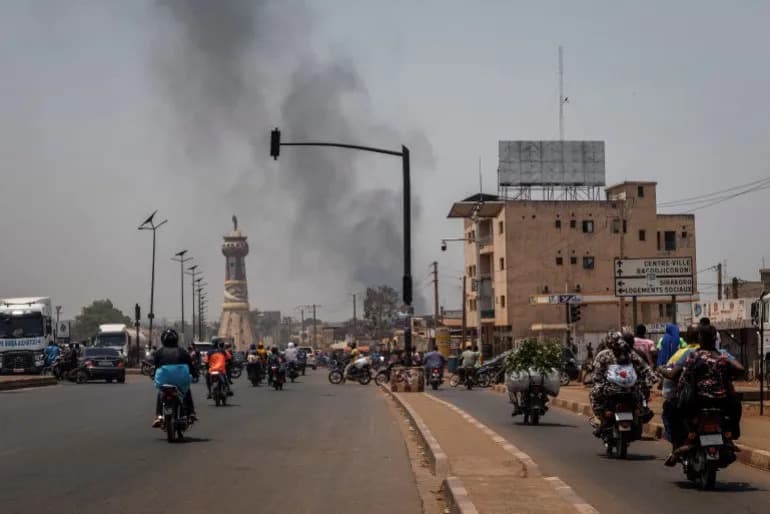
A column of black smoke rises above buildings as traffic passes the Tower of Africa monument in Bamako on April 26, 2026 [AFP]
Days after coordinated armed groups launched large-scale attacks on Malian military positions, transitional leader Assimi Goita said the situation was "under control" and that Russian units provided air support to blunt attempts to capture key sites, including the presidential palace in Bamako. Yet the security picture in Mali remains volatile, with the government struggling to regain control of towns seized by Tuareg and al-Qaeda-linked fighters.
What Happened
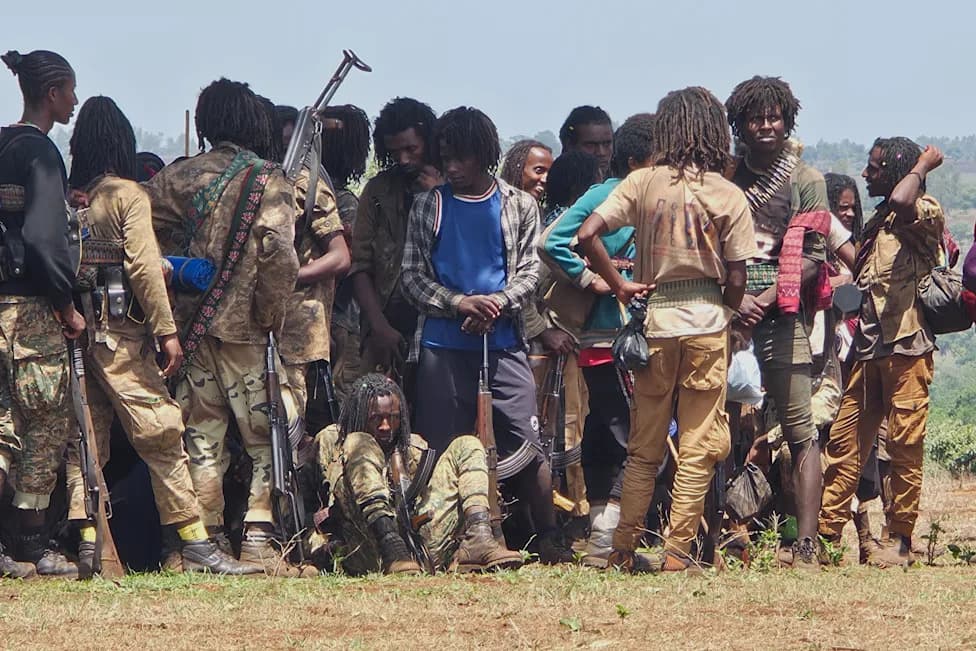
The weekend offensive — described by authorities as one of the largest in recent years — hit multiple cities, including Bamako, Kidal, Gao, Sévaré and Kati. Mali's defence minister, Sadio Camara, was killed during the fighting. Malian authorities said they killed more than 200 attackers, while insurgents seized several northern towns, most notably Kidal.
Russia's Role and the Kidal Withdrawal
About 2,000 Russian fighters have been operating in Mali since 2021 following the drawdown of French and UN forces. These personnel initially served under the Wagner Group but were reorganised as the Africa Corps and placed under the Russian Defence Ministry after Wagner's leadership change in 2023.
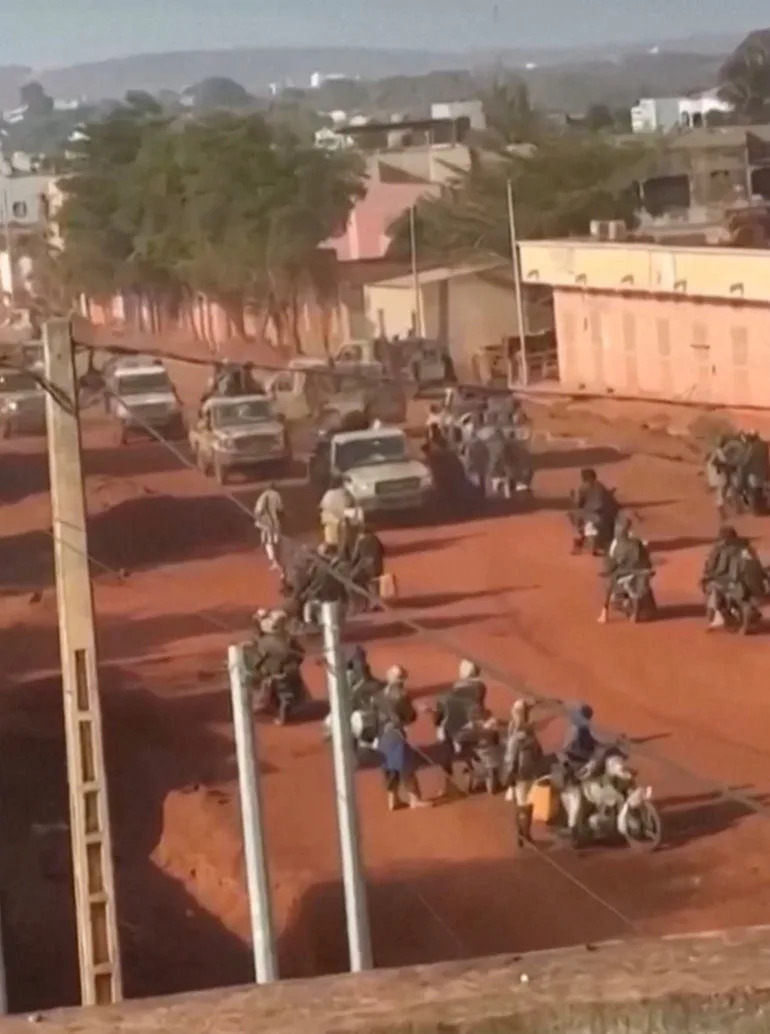
Vehicles move through a group of armed men on motorbikes on a street in Kati, near the capital, Bamako, in this screengrab obtained from a social media video released on April 25, 2026. Mali’s army said unidentified groups attacked several positions in the capital and elsewhere in the country on April 25 [Reuters[
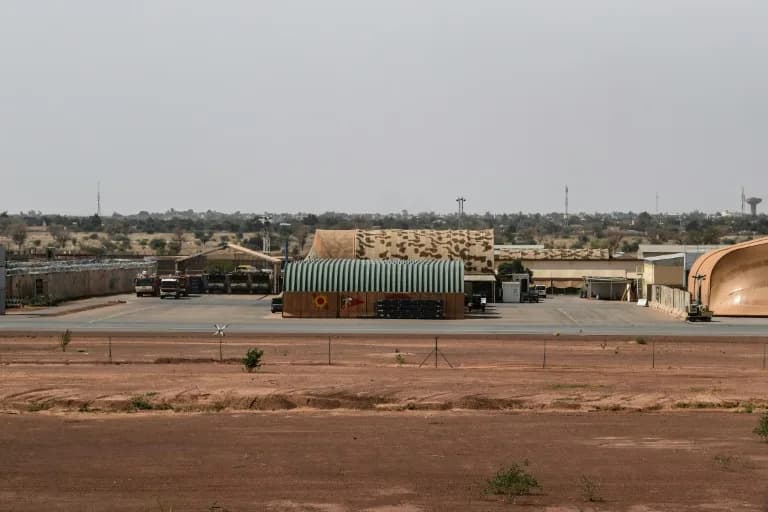
Africa Corps confirmed it withdrew from Kidal in a Telegram statement, saying the pullout was a joint decision with Malian authorities and that wounded personnel and heavy equipment were evacuated first. Conflict analysts and many Malians, however, question whether the withdrawal was coordinated in advance and whether Russian forces showed the expected resolve during the assault.
Tactics, Accountability and Allegations
Analysts note a tactical shift: where Wagner forces were often described as aggressive and willing to take risks, Africa Corps has tended to adopt a more defensive posture. Human rights groups accuse Russian fighters, Malian forces and armed groups of operations that have harmed civilians and could amount to war crimes.
The Russian Defence Ministry claimed without evidence that roughly 12,000 attackers were trained by Ukrainian and European mercenaries. Africa Corps and the Russian ministry also released footage claiming strikes against insurgent positions and said they provided air support to Malian troops during the attacks.
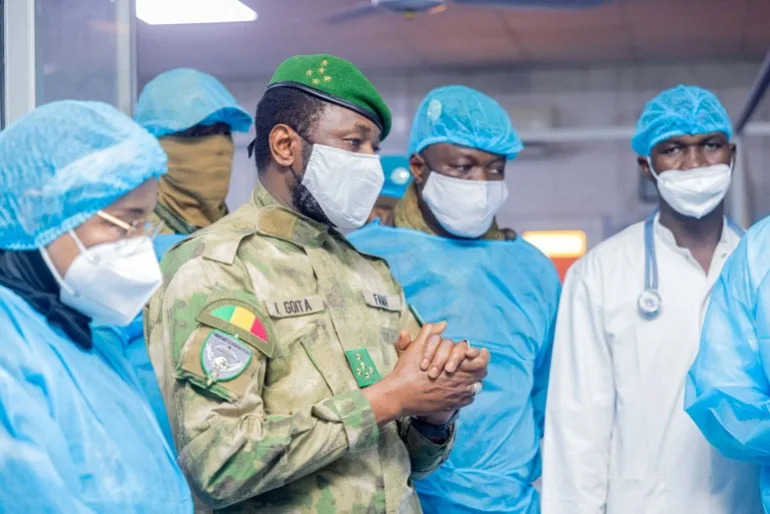
Military ruler Goita visits wounded civilians and military personnel in Bamako on April 28, 2026 [Handout/Mali Presidency via Reuters]
Regional Implications
The events have renewed doubts about Moscow's ability to offer reliable security guarantees across the Sahel. Mali, Burkina Faso and Niger formed the Alliance of Sahel States (AES) after leaving ECOWAS; Russia maintains a smaller presence in Niger and Burkina Faso, roughly 100 to 300 personnel, often in advisory roles.
Observers warn the fall of Kidal and the killing of Defence Minister Camara — a central figure in the Russia-Mali partnership — represent a reputational blow for Russia's Sahel strategy. Analysts say this setback could make it harder for Moscow to attract new security clients in Africa.
Outlook
With JNIM declaring a siege on Bamako and remaining Malian forces reportedly withdrawing from Kidal to Gao, the immediate security outlook is uncertain. Russia continues to assert its operations are ongoing, but the episode has raised questions about the effectiveness and credibility of the Africa Corps in the region.
"Africa Corps has really lost credibility," said Ulf Laessing of the Konrad-Adenauer Stiftung, reflecting wider concerns that the unit did not resist the assault decisively and left behind equipment that undercuts its reputation.
Help us improve.