Thousands of Velella, small deep‑blue colonial hydrozoans nicknamed "by‑the‑wind sailors," washed ashore near San Francisco’s Golden Gate on April 27. These surface‑dwelling organisms use a tiny triangular sail to catch wind and can be driven onto beaches during wind shifts or storms. Although they have stinging cells on their tentacles, their stings are rarely harmful to humans; observers are advised not to handle them bare‑handed. Similar strandings were reported along much of California’s coast earlier in April.
Thousands of Bright Blue 'By‑The‑Wind Sailors' Wash Ashore Near San Francisco's Golden Gate
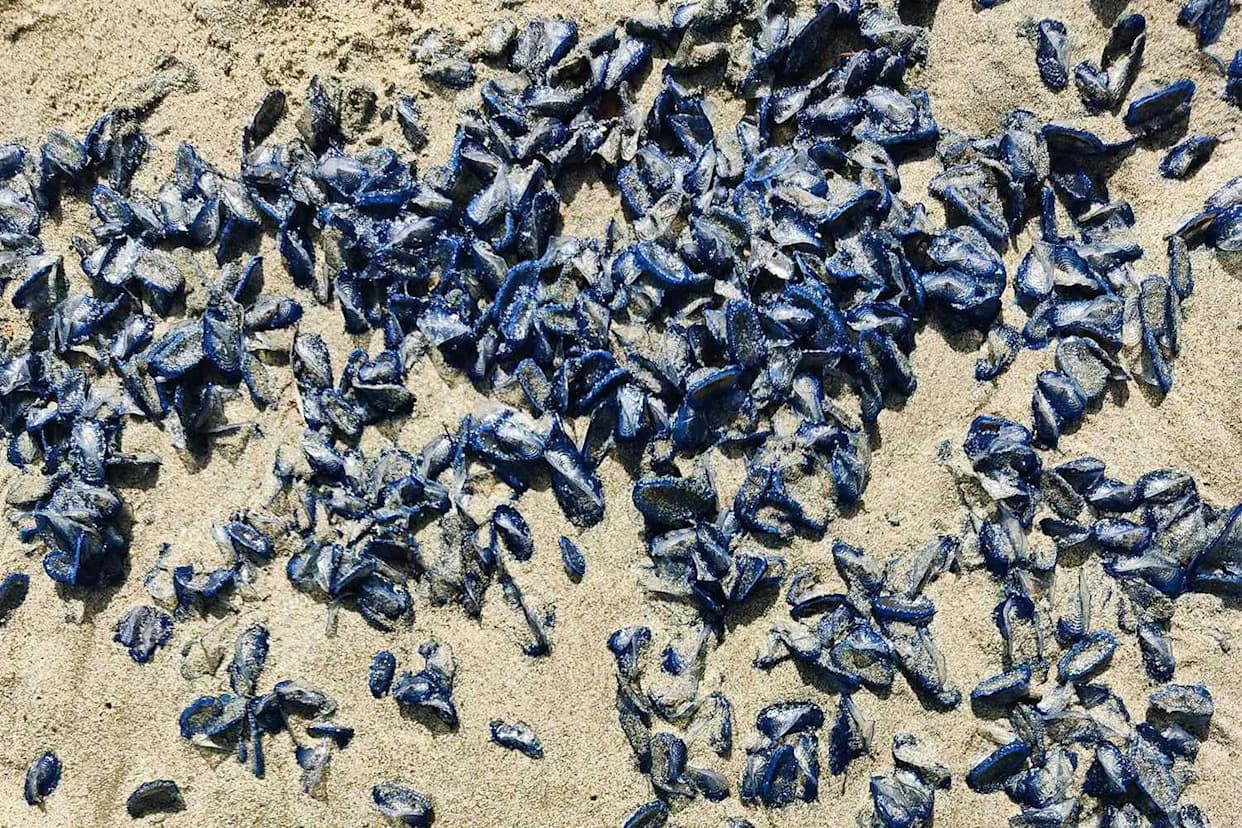
Stock image of Velella jellyfishCredit: Getty
Thousands of bright blue marine animals identified as Velella (commonly called "by‑the‑wind sailors") were found washed up along Baker Beach beneath San Francisco’s Golden Gate Bridge on Monday, April 27, according to local media and eyewitness posts.
What Are Velella?
Velella velella are colonial hydrozoans related to jellyfish, sea anemones and corals. Often described as "jellyfish‑like," each individual is a raft of tiny polyps rather than a single animal. They have a firm, flat, oval body roughly four inches (about 10 cm) long with a small stiff triangular sail about two inches (5 cm) high that protrudes above the water and catches surface winds.
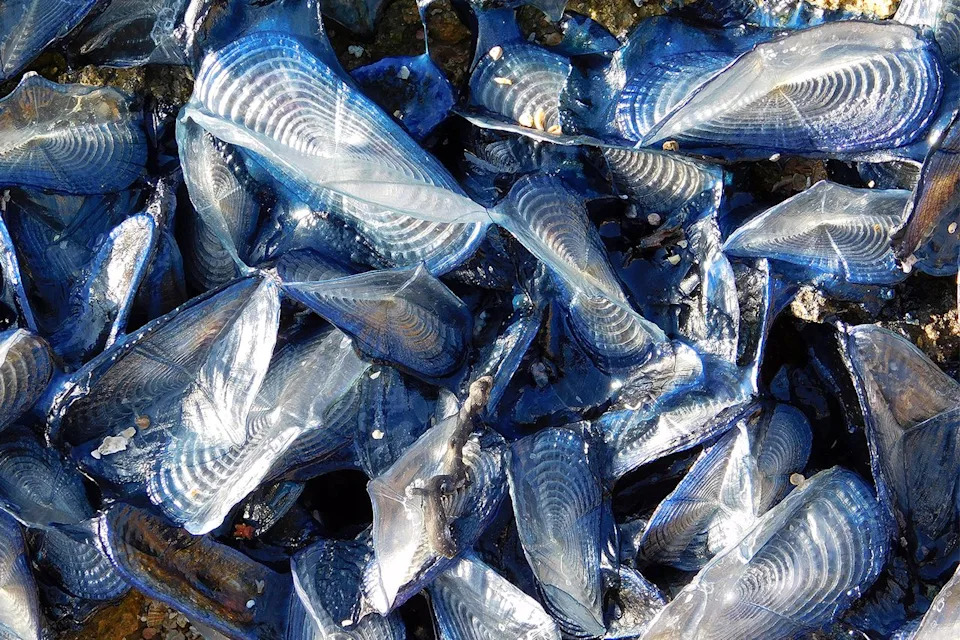
Velella jellyfish (stock image)Credit: Getty
Where And When They Were Seen
Witnesses reported large numbers of Velella piled along Baker Beach under the Golden Gate Bridge on April 27. Similar strandings were reported earlier in April at multiple California locations, stretching from Del Norte County in the north down to San Diego County, including San Luis Obispo, La Jolla, Pacific Beach and Coronado.
Why They Wash Ashore
These animals normally drift on the open ocean surface. According to the National Park Service and marine researchers, changes in prevailing winds—especially during storms or wind shifts—can blow Velella toward coastlines, where they often become stranded in large numbers.
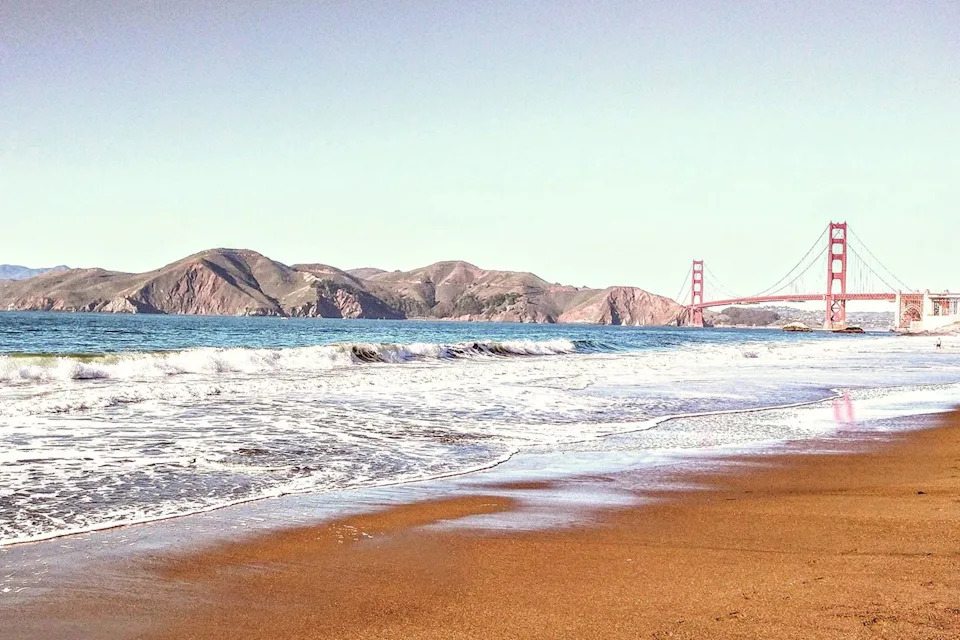
Baker Beach in San FranciscoCredit: Getty
Are They Dangerous?
Velella have numerous blue tentacles that contain stinging cells (cnidocysts, also called nematocysts) used to subdue small prey. The National Park Service and marine experts say Velella stings are rarely harmful to humans, although some people with sensitive skin may experience mild irritation. As a precaution, avoid handling them with bare hands.
Safety Tip: If you encounter stranded Velella, admire them from a distance. Use gloves or a shovel if you must move them, and keep pets from sniffing or stepping on them.
The unusual influx attracted curiosity from beachgoers and local media. PEOPLE has reached out to the National Park Service for comment. Photographs shared on social media captured long stretches of blue along the tide line, offering a striking reminder of how wind and ocean currents shape marine life along our shores.
Help us improve.