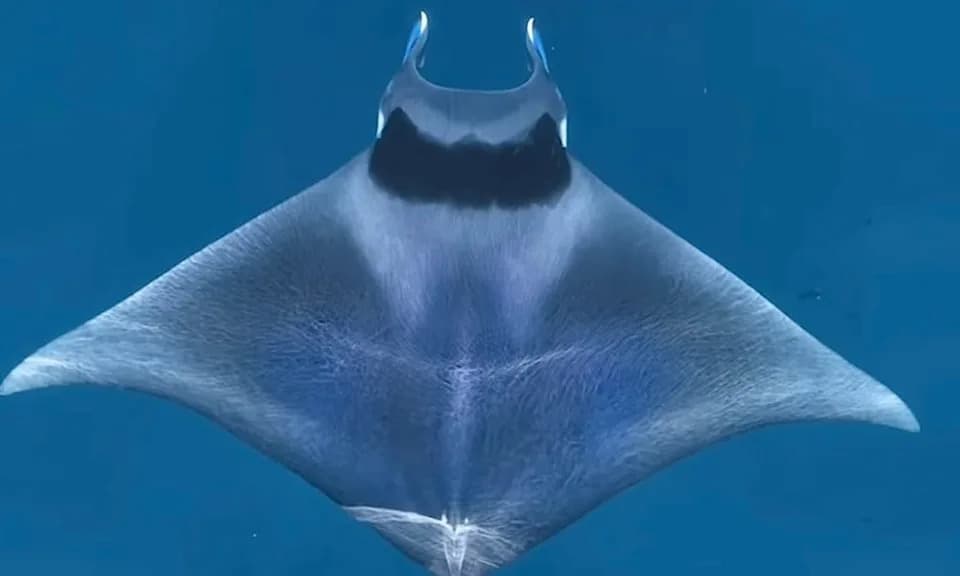
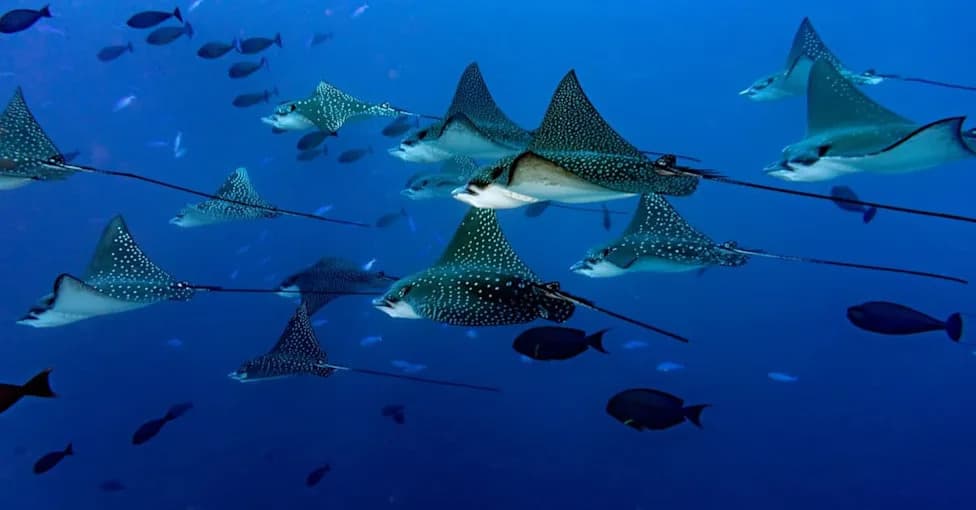
Roughly a dozen spinetail devil rays were filmed near the Nine Mile Bank off San Diego, a rare northern appearance for this warm‑water species. Scientists link the sighting to unusually warm coastal temperatures and El Niño conditions that are driving tropical species northward. Spinetail devil rays are filter feeders (krill, zooplankton, small fish) and are not considered dangerous to people. The observation highlights how warming oceans are changing marine distributions.
Rare Spinetail Devil Rays Spotted Off San Diego as Pacific Waters Warm
Rare Spinetail Devil Rays Cruise Off San Diego As Pacific Boils (Video)
Southern California's increasingly warm waters produced an unexpected sight: roughly a dozen spinetail devil rays cruising near the Nine Mile Bank off San Diego. Dramatic video shared by whale‑watching captain Ryan Lawler and spotter pilot Carl Sbarounis shows the rays moving together through clear blue water — a rare appearance for a warm‑water species this far north.
What Was Seen
Lawler described it on Instagram as his "first‑ever encounter with this Southern California exotic: a 'spinetail devil ray!'" Sbarounis added a playful note, saying the animals looked "on their way to dinner with their bowties," a nod to the dark markings on their heads.
Why It Matters
Scientists link the sighting to unusually warm coastal temperatures and El Niño conditions that are reshaping Southern California's marine environment. "In the near future, we may expect to see an increase in tropical or warm subtropical species," Nate Jaros, vice president of animal care for fish and invertebrates at the Aquarium of the Pacific, told the Los Angeles Times. Scripps Institution of Oceanography has also documented repeatedly high coastal temperatures in 2026, with record daily readings along California.
About the Species
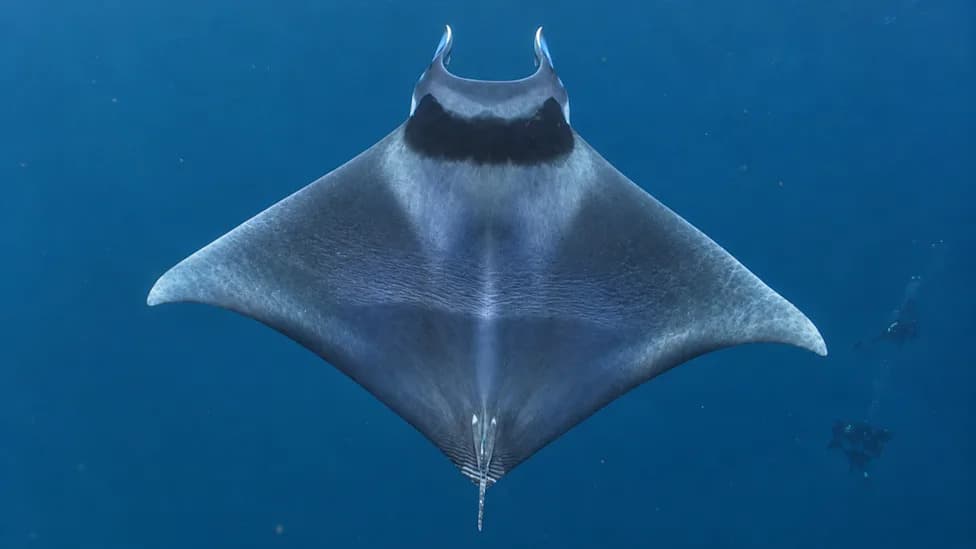
Spinetail devil rays (Mobula mobular) are pelagic, circumtropical animals more commonly found in warmer waters farther south, including summer aggregations in the Gulf of California. They are filter feeders that primarily consume krill, zooplankton and small fishes. Although they carry the dramatic "devil ray" name and have a small tail spine (unusual among mobulids), they are not considered aggressive toward swimmers or surfers.
Broader Context
Researchers note that tropical species have historically pushed north into Southern California during major warm‑water events. This sighting underscores how warming oceans and El Niño patterns can alter species distributions, bringing tropical animals into regions where they were previously uncommon.
Originally published by Surfer on Sep 11, 2026.
Help us improve.