A family visiting Crystal Cove State Beach on Sept. 11, 2026, found a sluggish sea snake they later learned might have been a highly venomous yellow‑bellied sea snake. Jackie Aguilar recorded the rescue attempt and only discovered the species' dangerous reputation after researching it. Experts say rare sightings north of Baja California are often linked to warmer waters and shifting currents from El Niño, and they warn a strong El Niño year could bring more unexpected marine arrivals. Authorities advise beachgoers to avoid handling unfamiliar wildlife and to notify local officials.
Highly Venomous Yellow‑Bellied Sea Snake Washes Ashore at Crystal Cove — Family Escapes Injury
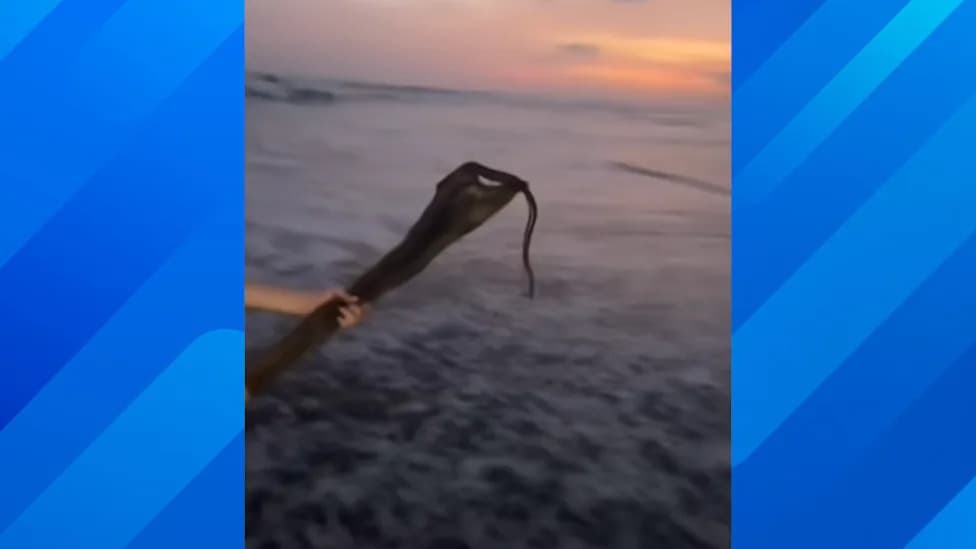
Image Credit: CBS News Los Angeles/YouTube
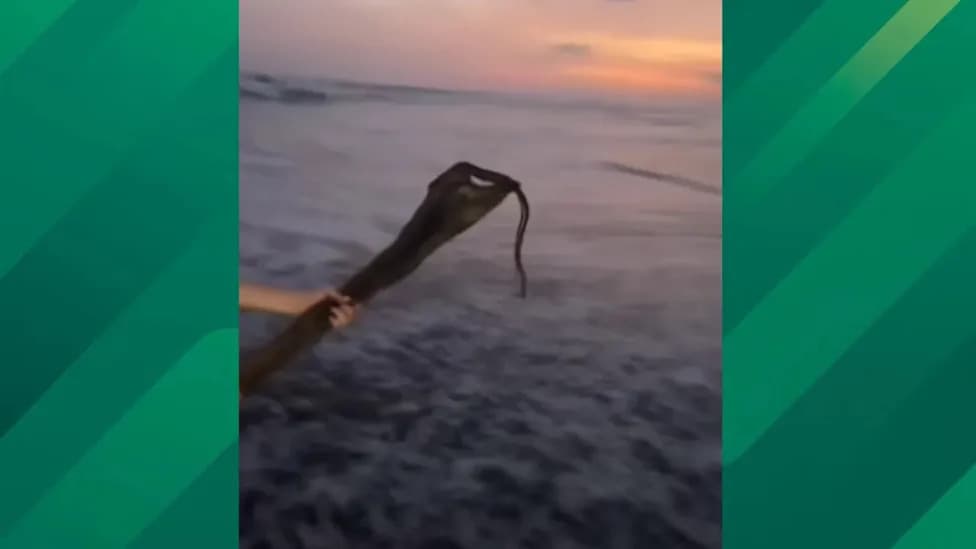
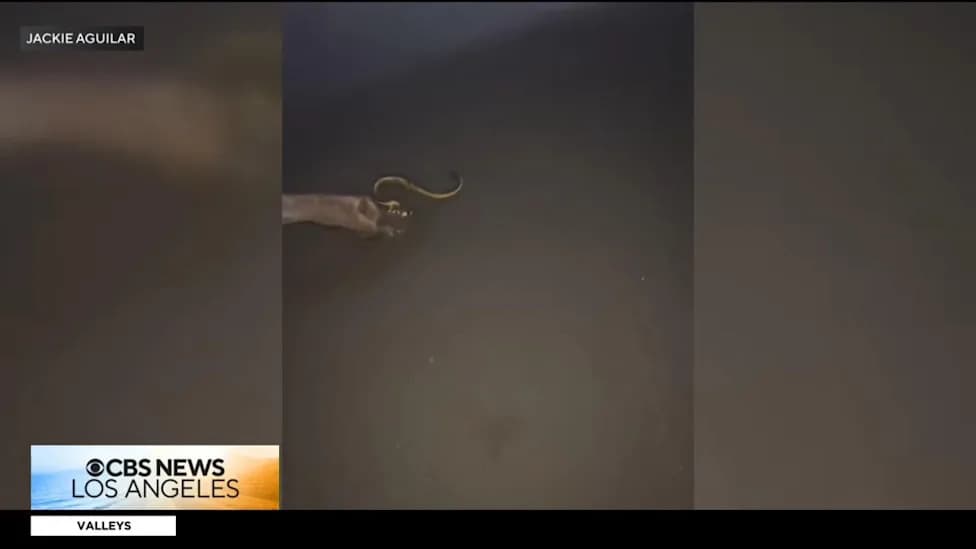
An ordinary family outing at Crystal Cove State Beach turned into a close call on Sept. 11, 2026, when Jackie Aguilar and her relatives found a "sluggish" sea snake stranded on the sand. The family recorded grainy cellphone video of the incident and attempted to return the animal to the water using a long palm frond.
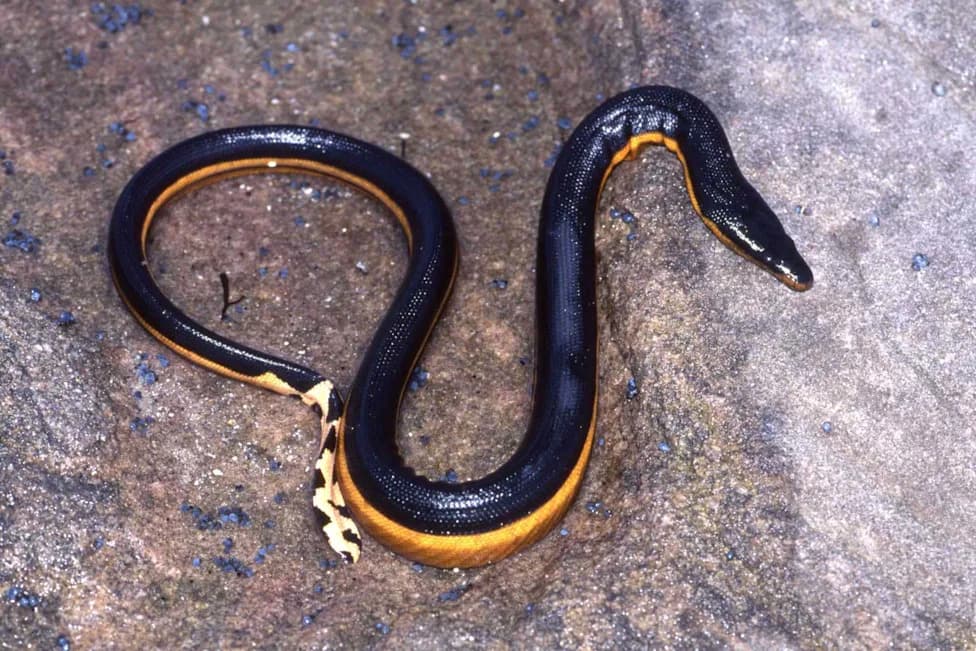
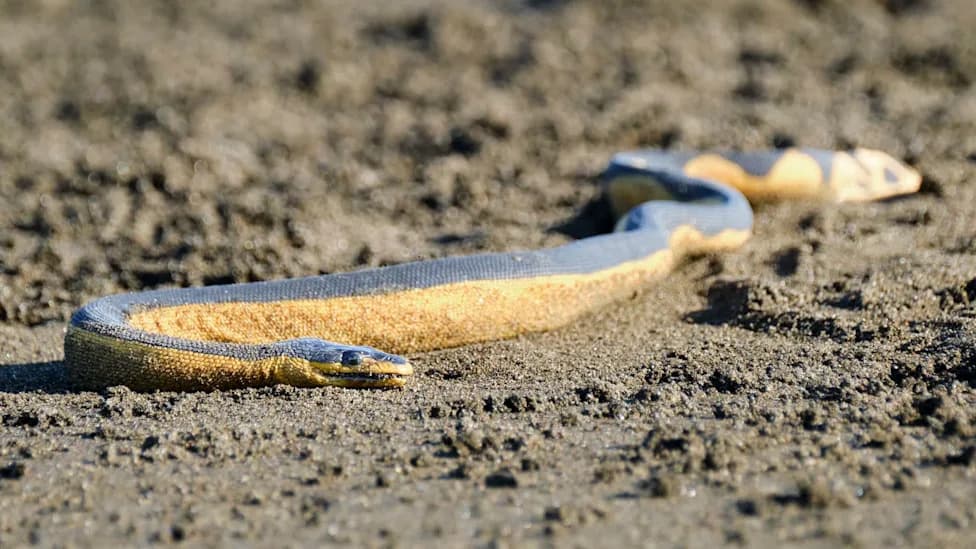
Only after the encounter did Aguilar learn the snake may have been a yellow‑bellied sea snake (commonly Hydrophis platurus), a species described by the Australian Museum as "highly toxic." The snake is easily recognized by its distinctive yellow belly and a flattened tail adapted for swimming.
What Happened
Aguilar's footage shows the family gently nudging the animal back toward the surf. Fortunately, no one was bitten and the family left the scene unharmed. Later, after researching the species, Aguilar realized the potential danger of the animal she had handled with a palm frond.
"They're all telling me like it's one of the most poisonous ones. And then I started researching it, and I found out it was like the yellow belly one,"
— Jackie Aguilar, as told to CBS News Los Angeles
Why This Matters
Sightings of yellow‑bellied sea snakes north of the tip of Baja California are rare. In 2015, Greg Pauly, assistant curator of herpetology at the Natural History Museum of Los Angeles, noted there were only a handful of documented observations in that region. Researchers have linked unusual appearances of subtropical and tropical marine species to changes in ocean temperature and currents associated with El Niño.
UC San Diego's Scripps Institution of Oceanography explains that El Niño can alter ocean temperatures and currents, transporting warm‑water species into areas where they are not normally found and potentially changing local ocean chemistry.
Advice and Context
Experts warn that a forecasted strong El Niño year could bring more unexpected marine wildlife to California beaches. Beachgoers should keep their distance from unfamiliar animals, avoid handling wildlife, and contact local park rangers or wildlife authorities if they encounter stranded or distressed marine animals.
In this instance, the encounter ended without injury, but it serves as a reminder to exercise caution and respect for wildlife—especially species that are uncommon in the region and capable of delivering medically significant venom.
Help us improve.