Researchers in Seville and Madrid found that agrivoltaics — growing tomatoes beneath solar panels — can raise combined land-use efficiency and improve water productivity. Fully irrigated plots delivered the highest yields, but tomatoes under panels produced more fruit per unit of water. A Land Equivalent Ratio above 1 at both sites showed co-locating energy and agriculture outperformed separate uses. Cutting irrigation by 50% reduced yields by about 20%, suggesting precision irrigation could preserve output while saving water.
Tomatoes Under Solar Panels: Agrivoltaics Boosts Water Efficiency and Land Productivity
Photo Credit: iStock
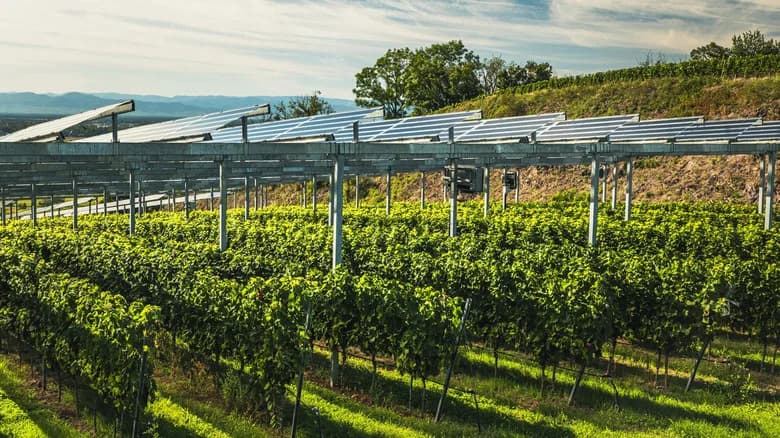
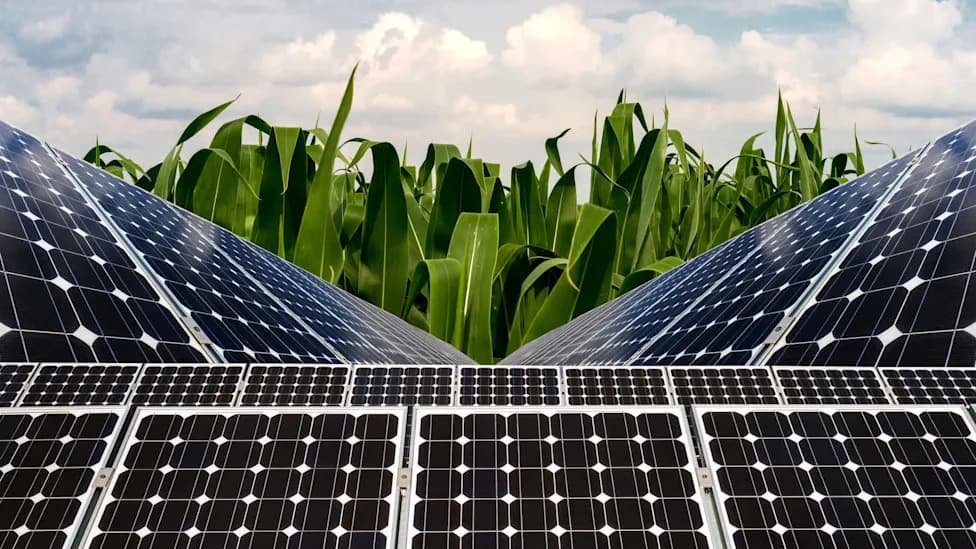
Researchers from the University of Seville and the Polytechnic University of Madrid report that agrivoltaics — growing crops beneath photovoltaic panels — can improve combined land-use efficiency while cutting water use. Their experimental study, published in the journal Agricultural Water Management, tested tomato production under multiple irrigation regimes with and without solar panels.
What the Study Tested
The teams compared three main scenarios: fully irrigated tomato plots (control), plots with reduced irrigation grown in the open field, and plots with reduced irrigation grown beneath solar panels. The aim was to measure crop yield, water productivity and the joint value of food and energy production on the same land.
Key Findings
Reducing water availability lowered tomato yields, as expected, while fully irrigated plots produced the largest harvests. However, tomatoes grown under panels used water more efficiently — producing more fruit per unit of water applied than comparable open-field plots.
To capture combined benefits, the researchers developed a Land Equivalent Ratio that integrates energy output, water use and crop yield. Both study sites (Seville and Madrid) recorded ratios well above 1, indicating that co-locating solar arrays and agriculture used land substantially more efficiently than separating the two activities.
When irrigation was cut by roughly 50%, average tomato yields fell by about 20%. The authors argue that improved monitoring and precision irrigation could reduce that penalty, making lower-water agrivoltaic systems even more attractive.
Broader Benefits
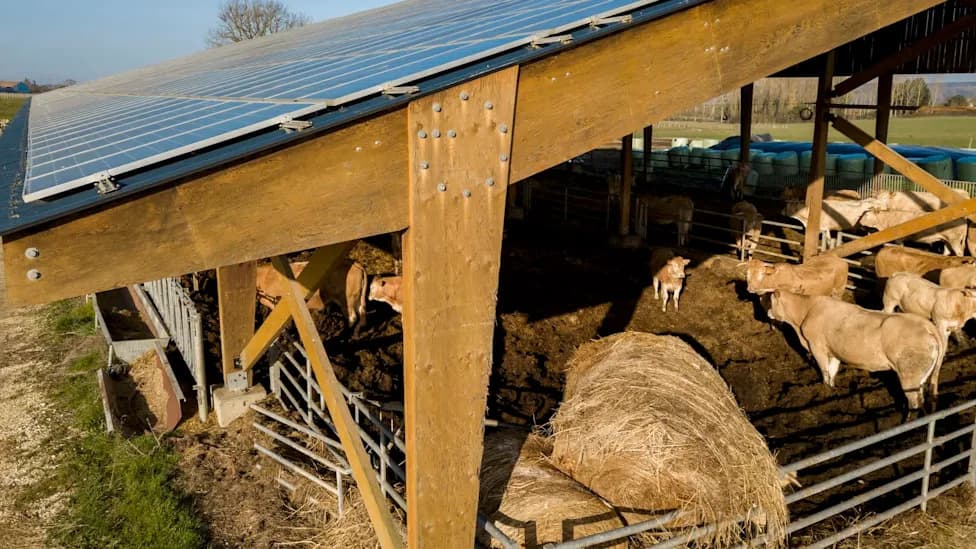
Though tomato yields dipped modestly under panels and with reduced watering, other crops (for example, olives) often benefit from the additional shade. The panel shade can also improve working conditions for laborers and provide shelter for livestock. Meanwhile, electricity generation creates a passive revenue stream for farmers and advances clean-energy goals.
Implications and Recommendations
With droughts increasingly threatening agriculture, agrivoltaics appears to be a promising strategy to simultaneously produce clean energy and preserve farm productivity. The researchers recommend refining irrigation management — including newer sensor technologies and precision irrigation — to maintain yields while lowering water use.
Conclusion: The study demonstrates that agrivoltaic systems can improve overall land-use efficiency and water productivity. With careful irrigation management and crop selection, solar-powered farming could help farms become more resilient, sustainable and profitable.
Help us improve.