AI-guided Forecasts Cut Contrails on Transatlantic Flights. A Jan–May 2025 trial of an AI contrail-forecasting tool covered about 2,400 U.S.–Europe flights; 112 flights that accepted avoidance options produced 62% fewer contrails and an estimated 69% reduction in related climatological warming. The partners reported no statistically significant fuel penalty and plan larger trials and broader software integration to scale the approach.
AI Cuts Contrails on Transatlantic Flights — 62% Fewer Trails, 69% Less Estimated Warming
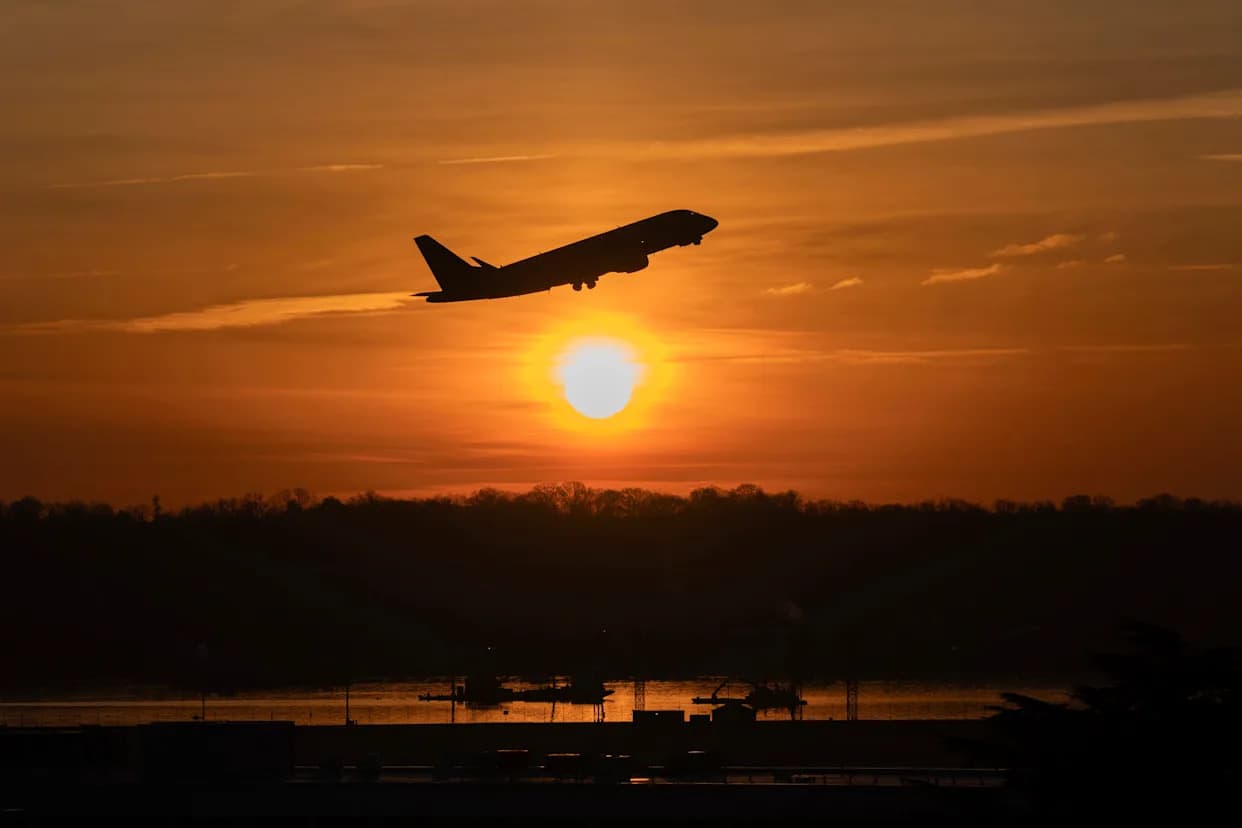
FILE - An airplane lifts off from Ronald Reagan Washington National Airport as the sun rises Feb. 3, 2025, in Arlington, Va. (AP Photo/Jose Luis Magana, File)
American Airlines and Google say an AI-driven forecasting tool helped pilots avoid contrail-forming conditions on a subset of transatlantic flights, substantially reducing cloud trails that trap heat.
How Contrails Affect Climate
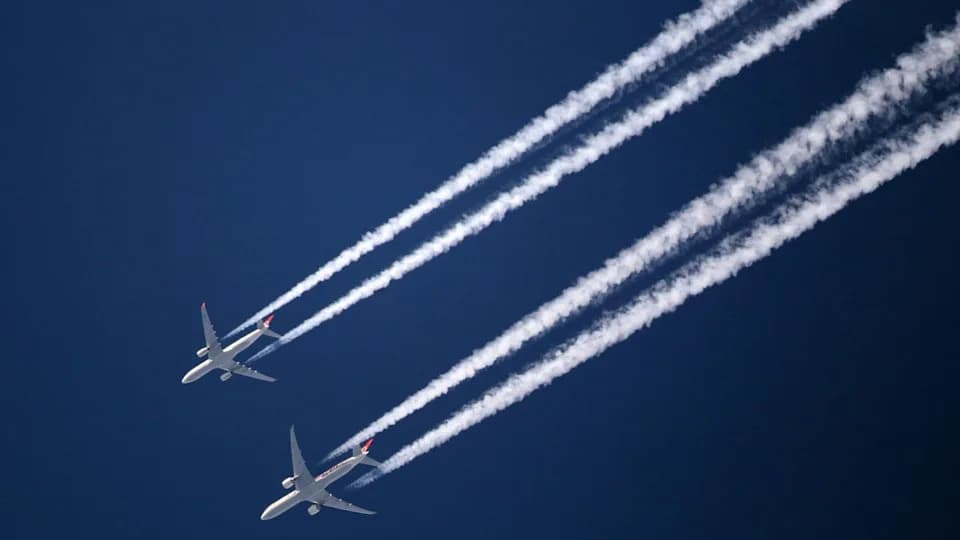
Contrails form when aircraft fly through very cold, humid air and ice crystals develop around soot and other engine emissions. These thin cloud streaks can trap outgoing heat and contribute to global warming. Research groups estimate contrails are responsible for roughly 1%–2% of global warming, making them a meaningful target for climate mitigation.
The Trial
From January through May 2025, Google, American Airlines, Flightkeys, Contrails.org and Breakthrough Energy ran an operational trial covering about 2,400 U.S.–Europe flights. Google supplied an AI-based forecast identifying airspace likely to produce persistent contrails. Roughly half the flights were offered alternate routing or altitude options to avoid those regions; 112 flights accepted and flew the avoidance option.
Results
The flights that flew the avoidance option produced 62% fewer contrails than the control group. Researchers estimated that the reduction corresponded to about a 69% decrease in the climatological warming attributable to those specific flights. Importantly, the trial found no statistically significant increase in fuel burn for flights that used avoidance options.
“Aviation is one of the hardest sectors to decarbonize,” said Dinesh Sanekommu, who leads Google’s contrails work. “We think AI can help make that a reality by generating data and operational evidence to inform decisions.”
Operational and Policy Challenges
Although the results are promising, scaling contrail avoidance faces practical hurdles: coordinating altitude and routing changes across international airspace, accommodating air-traffic control requirements, and ensuring alternatives are safe and economical. Thomas Walker of the Clean Air Task Force noted some resistance from airlines during coordination discussions, while American Airlines’ sustainability lead, Jill Blickstein, said dispatchers and pilots found the alternative filings manageable.
Next Steps
The partners plan larger trials, broader collaboration with other flight-planning software providers, and studies across different routes and times of day to refine forecasts and operational procedures. Contrail avoidance could be a cost-effective complement to long-term solutions such as sustainable aviation fuels, which are still much more expensive.
Bottom line: Early operational evidence suggests AI-guided contrail avoidance can substantially reduce contrail formation — and the warming they cause — with little or no detectable fuel penalty in this trial. Further testing and wider industry participation will determine whether the approach can be deployed at scale.
Credits: The Associated Press contributed reporting. Trial partners included Google, American Airlines, Flightkeys, Contrails.org and Breakthrough Energy.
Help us improve.