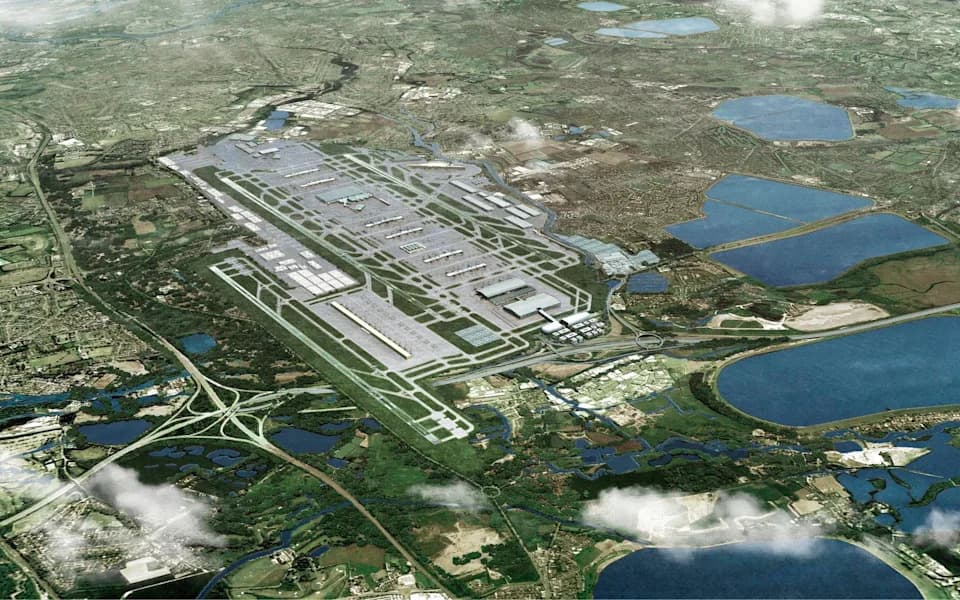
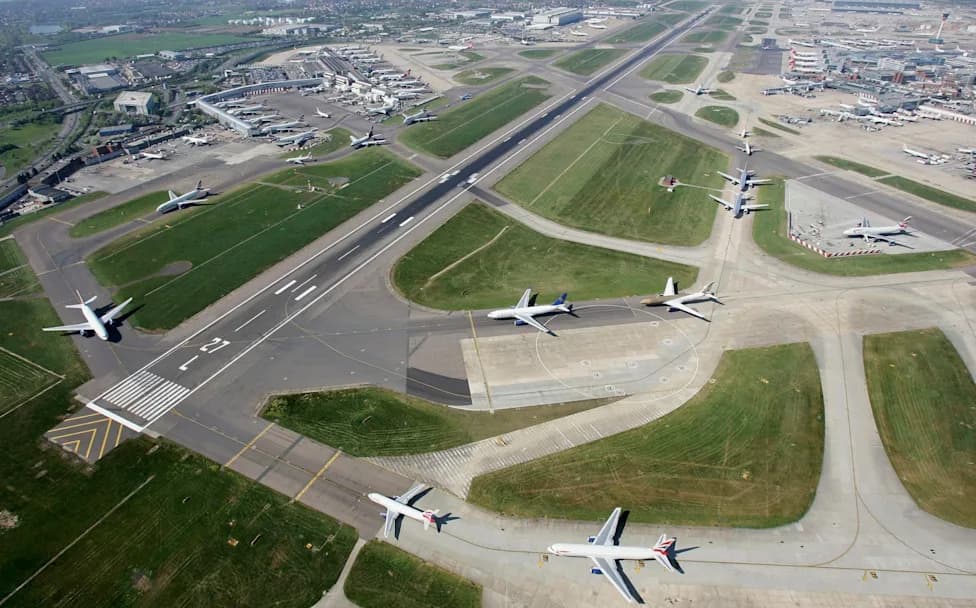
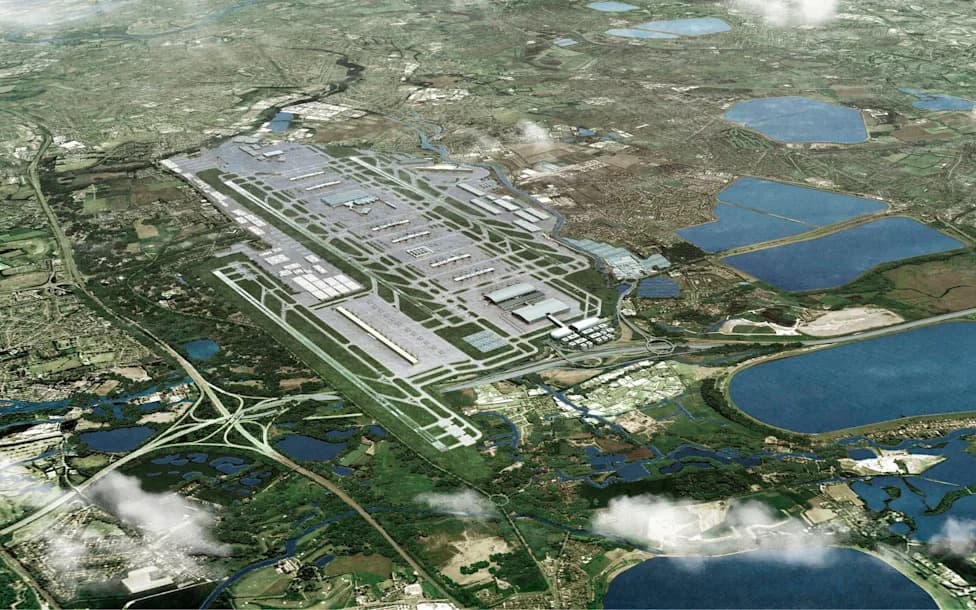
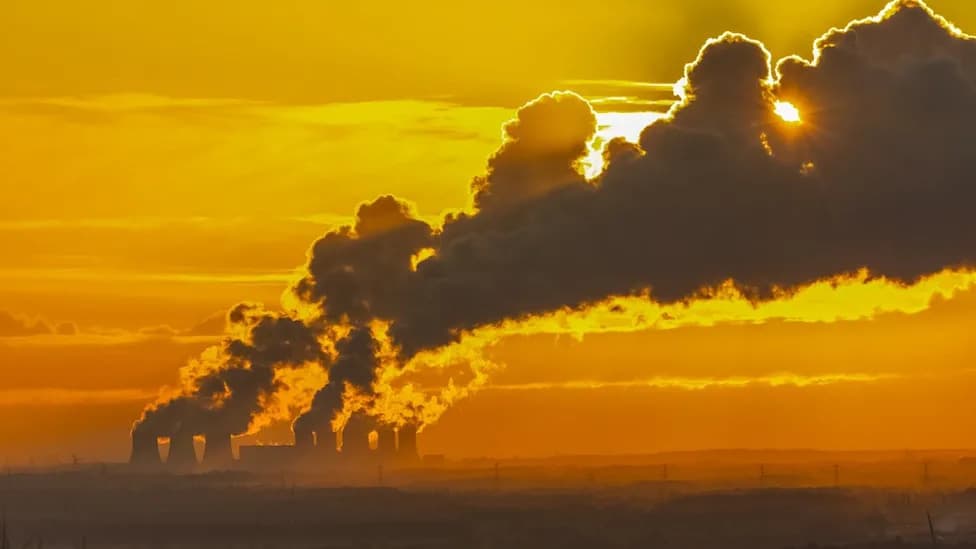
The U.K. has lowered expectations for carbon cuts from aviation as a potential third runway at Heathrow approaches a final planning decision. June forecasts now project 31.0 million tons (28.1 million tonnes) of CO2e from aviation by 2050 under a technology-driven scenario — far above the 2022 Jet Zero target. Officials have reduced assumptions for SAF deployment, efficiency gains and electric aircraft, weakening the climate case for expansion and raising concerns that higher aviation emissions could jeopardize the U.K.'s legally binding carbon budgets.
UK Scales Back Clean-Flying Hopes as Heathrow Third Runway Nears Decision
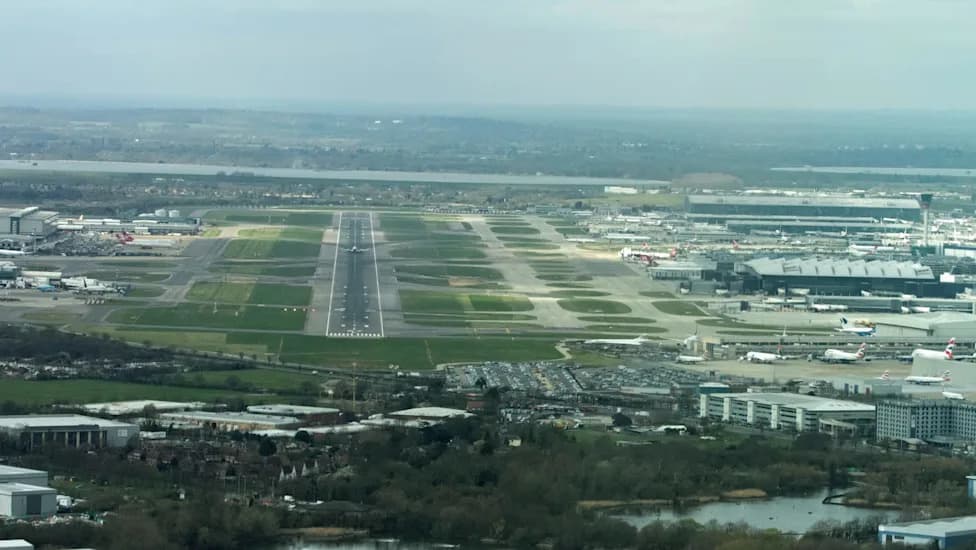
Photo Credit: iStock
The U.K. government has sharply reduced its expectations for cleaner aviation just as a long-running decision over a third runway at Heathrow moves toward a final planning stage. Updated forecasts published in June show significantly lower hopes for sustainable fuels, efficiency gains and electric aircraft — a shift that could change the climate case for airport expansion.
Key Forecast Revisions
Even under the government’s “technology development” scenario, aviation is now forecast to emit 31.0 million tons (28.1 million tonnes) of carbon dioxide equivalent (CO2e) in 2050, according to the June update — well above the 21.3 million tons (19.3 million tonnes) target set out in the 2022 Jet Zero strategy, as reported by Carbon Brief.
Officials have reduced their expectations for new solutions: sustainable aviation fuels (SAFs) are now expected to supply about 30% of aviation fuel by 2050 (down from a previous 50% assumption), annual fuel-efficiency improvements have been cut from 2% to 1.3%, and prospects for battery-powered aircraft have been downgraded.
Implications For Heathrow And UK Climate Goals
Those revisions weaken a central climate argument used to justify airport growth. Labour supports building a third runway at Heathrow and a final planning decision is expected by 2029. Using government data, the Aviation Environment Federation (AEF) estimates the third runway would add roughly 3.9 million tons (3.5 million tonnes) of CO2e per year by 2050 — with emissions likely to continue rising after the 2050 net-zero deadline.
Tim Johnson, director at the Aviation Environment Federation: “These figures present a more honest and realistic vision of what’s possible in the next 24 years. Less reliance on cleaner technology and fuels reopens the debate about greenhouse gas removals and how to manage a projected 50% growth in air travel demand.”
University of Manchester researcher Dr. Lois Pennington warned expansion should no longer be approved on the promise of future technology alone, saying it would risk busting the U.K.’s legally binding carbon budgets.
Wider Context: Technology, Policy And Demand
Cleaning up aviation is uniquely difficult because aircraft need energy-dense fuels; alternatives to conventional jet fuel remain limited, costly or immature. Under the government’s “ambitious carbon abatement” pathway, sector emissions would fall by only about 25% over the next two decades. In a “current trends” scenario, aviation emissions could rise to 45.3 million tons (41.1 million tonnes) by 2050 — roughly double the level recommended by the Climate Change Committee (CCC).
The forecasts already assume expansion at several U.K. airports and project passenger numbers will be at least 50% higher by 2050. Technology advances are underway — for example, Oxford-based OXCCU is scaling a new fuel process, Maeve Aerospace in the Netherlands is developing a hybrid-electric regional plane, and France has increased levies on short-haul flights to encourage rail — but scaling these solutions fast enough remains uncertain.
What This Means
If aviation emissions remain higher for longer, the country may have to compensate through deeper cuts in other sectors, major tree-planting drives, or costly carbon-removal programs. The trade-offs are now sharper: governments and planners must weigh the economic benefits of airport expansion against clearer, more modest prospects for emission reductions from technology alone.
Help us improve.