New fieldwork in the Cuvette Centrale shows that Lake Mai Ndombe, Lake Tumba and the Ruki River are emitting CO2 that contains peat carbon aged 2,170–3,500 years. High‑precision spectrometry revealed that a large fraction of inorganic carbon in sampled waters comes from ancient peat, contradicting assumptions that waterlogged peat is permanently preserved. The Cuvette Centrale stores roughly 33 billion tons of peat carbon, and researchers are racing to determine whether observed emissions reflect natural peat dynamics or climate‑driven destabilization that could flip these peatlands from carbon sinks to sources.
Congo Basin 'Blackwater' Lakes Are Releasing Millennia‑Old Carbon — Could Peatlands Flip From Sink To Source?
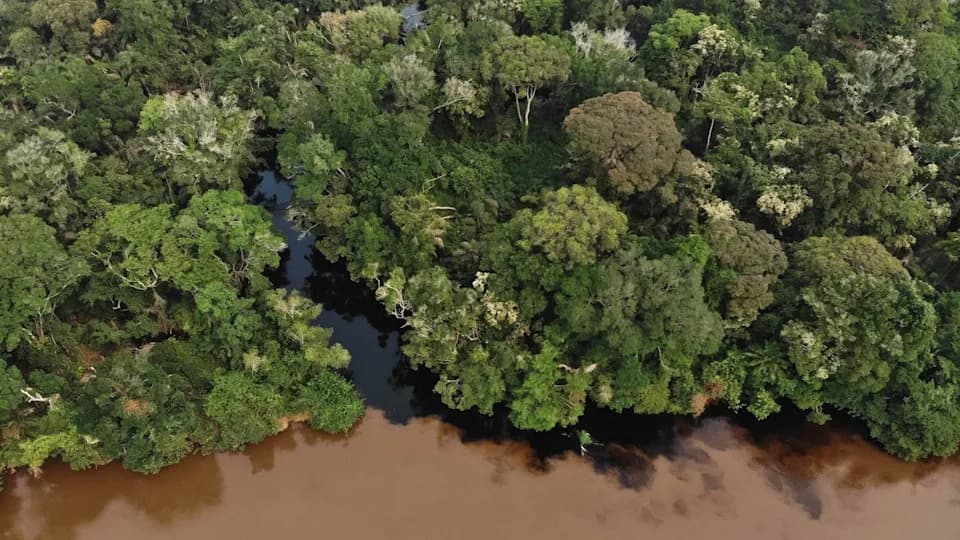
Blackwater lakes and rivers in the central Congo Basin are releasing carbon that is up to 3,500 years old. | Credit: Matti Barthel / ETH Zurich
New research shows that blackwater lakes and rivers in the Cuvette Centrale of the Congo Basin are emitting significant amounts of ancient carbon previously thought to be locked in peat. The discovery, published Feb. 23 in Nature Geoscience, challenges the long‑held view that waterlogged peat remains permanently preserved and raises the prospect that large tropical peatlands could become net sources of CO2.
Where and what was studied
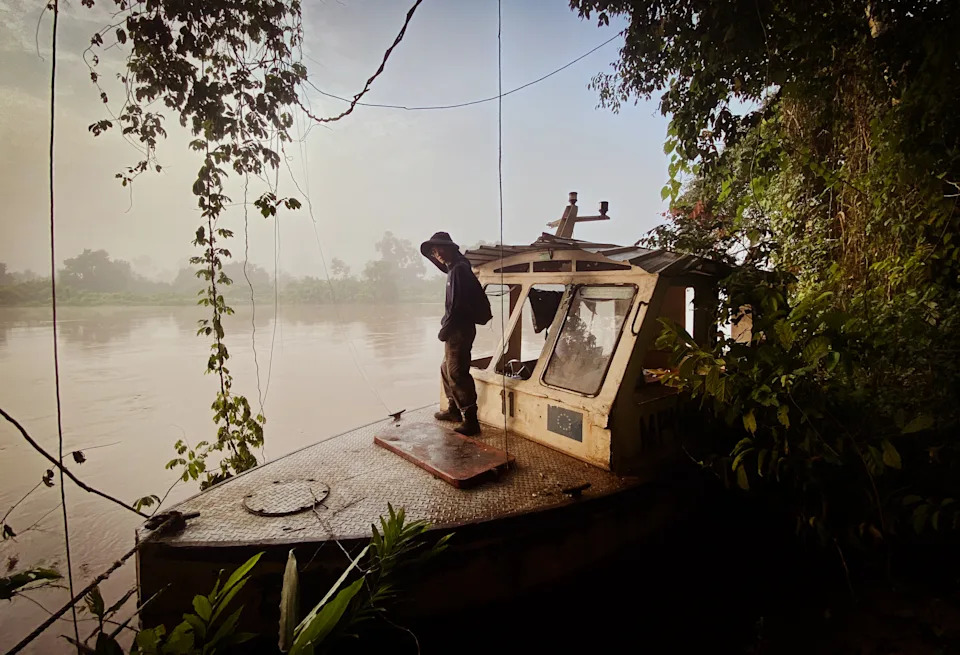
Scientist Pengzhi Zhao gets ready for another day of sampling. Most locations are almost impossible to reach by land. Therefore, small dinghy boats were used to access these remote sites in the central Congo Basin. | Credit: Matti Barthel / ETH Zurich
Researchers led by Travis Drake, a carbon biogeochemist at ETH Zurich, completed three field campaigns between 2022 and 2025 to sample Lake Mai Ndombe, Lake Tumba and the Ruki River within the Cuvette Centrale — a roughly 56,000‑square‑mile (145,000 km2) region of forest and swamp that contains the largest known tropical peatland complex on Earth.
How the team reached their conclusion
The team measured sediments, dissolved organic carbon (DOC), dissolved inorganic carbon (DIC) and greenhouse gases, then used high‑precision spectrometry to separate modern plant carbon from ancient soil and peat carbon. An initial sample from Lake Mai Ndombe showed that about 40% of inorganic carbon was millennia old, prompting more extensive analyses across both lakes and the Ruki River.
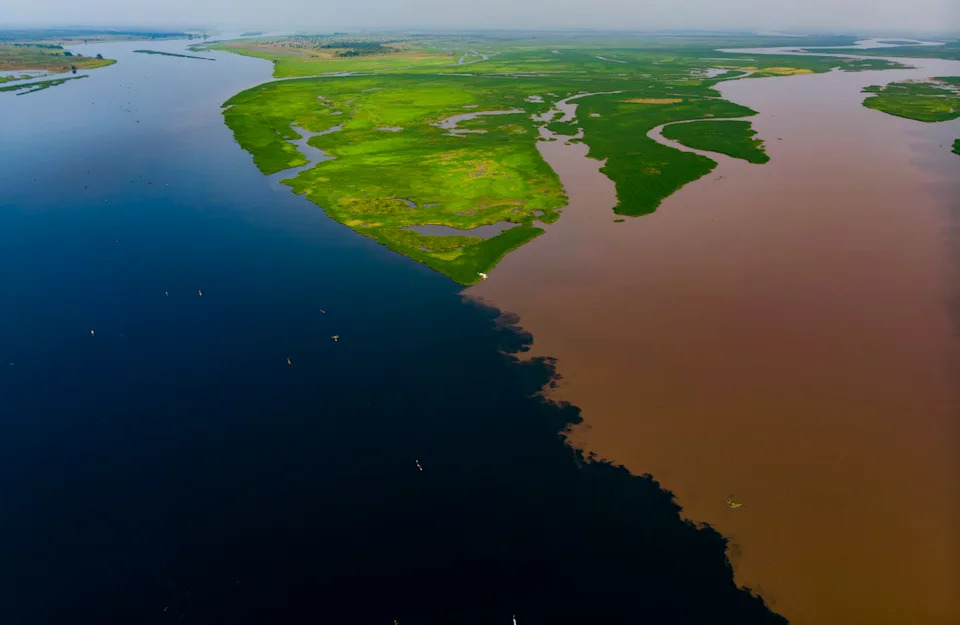
At the confluence of the Fimi and Kawai rivers in the Congo Basin, dark water from forest landscapes meets rust-colored water tinted by iron oxides from the savannas. | Credit: Matti Barthel / ETH Zurich
Key findings
Across the sampled blackwater systems the researchers found that a substantial portion of CO2 emitted to the atmosphere is derived from peat carbon aged between 2,170 and 3,500 years. The results imply microbial oxidation of buried peat to CO2 and methane, which then escape via waterways and surface emissions.
“We were very surprised because we fully expected the carbon dioxide to be modern,” said Travis Drake. “We are now faced with a 30‑million‑tonne question: we need to determine if this is just a small, natural leakage of ancient carbon, or the onset of broadscale destabilization.”
Why it matters
The Cuvette Centrale is estimated to hold roughly one‑third of the carbon stored in global tropical peatlands — about 33 billion tons (30 billion metric tons). If the export of ancient peat carbon is part of a natural cycle of peat formation and loss, the net climate impact could be limited. But if climate change or other disturbances are destabilizing these deposits, the peatlands could shift from long‑term carbon sinks to significant carbon sources, especially if droughts or other stressors accelerate microbial oxidation.
Next steps
The team plans to analyze water trapped in peat layers to test whether microbial activity is mobilizing ancient carbon across a wider area, and to quantify oxidation rates. Those measurements will be critical to determine whether the detected leakage is a baseline process or an early warning of large‑scale peatland destabilization.
Context and caution: Field sites remain relatively undisturbed, with few scattered settlements, and the research is limited to several sites in the Cuvette Centrale. Further, the findings do not yet quantify a basin‑wide carbon balance — additional sampling and long‑term monitoring are needed to understand the trends and climate implications.
Help us improve.