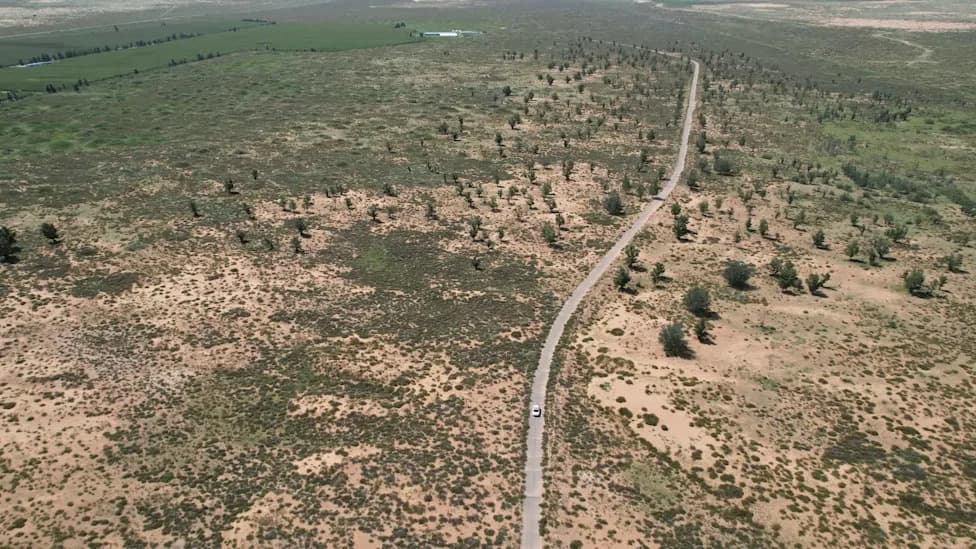
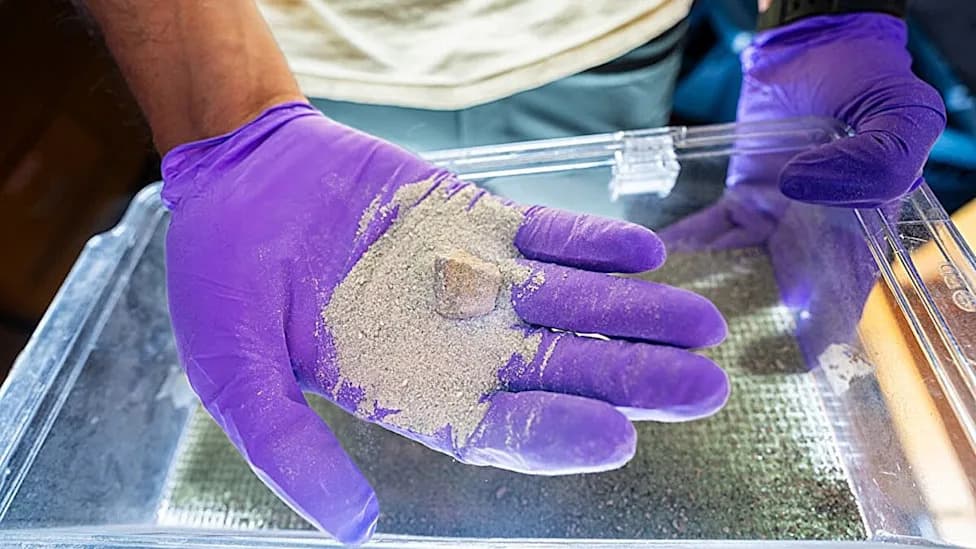
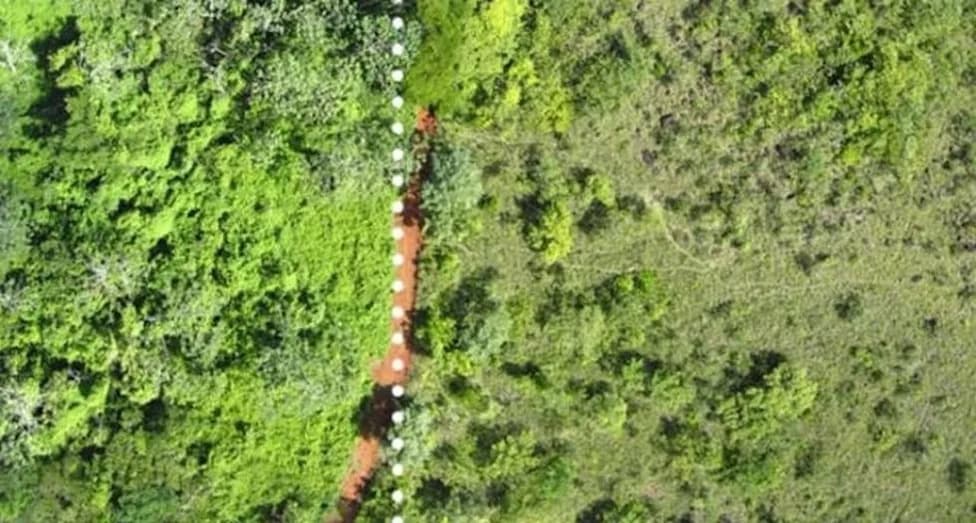
Chinese researchers have spent about 60 years developing induced biological soil crusts (IBSCs) to restore desertified land. The technique uses cyanobacteria, lichens and mosses to bind sand grains, add nutrients (notably nitrogen) and create conditions for plants to establish. Studies show that adding cyanobacteria can shorten crust formation from decades to around two to three years, reducing dust storms and halting further erosion. The approach offers a promising, biologically based tool for large-scale land restoration, though scaling requires careful management.
China’s 60-Year Strategy: Using Microbial Crusts to Turn Desert Sand into Soil
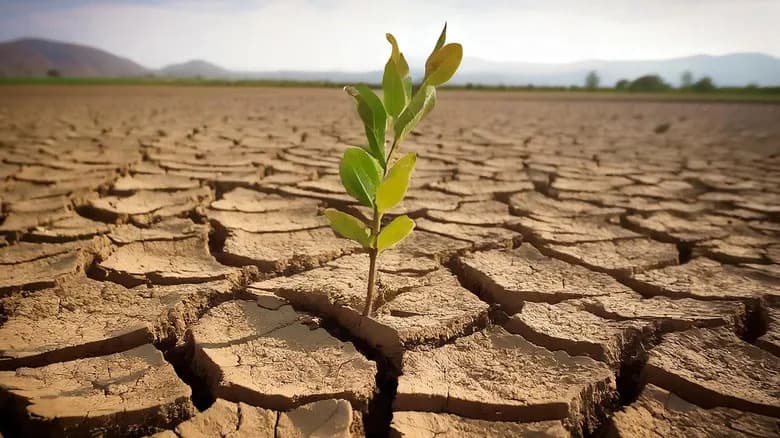
new plant growth sticking out of cracked, dry desert-like muddy area - Calvin Chan Wai Meng/Getty Images
For roughly six decades, Chinese researchers have refined a practical approach to halt desertification by converting loose desert sand into soil capable of supporting plants. The program—tested most intensively in the Tengger and Kubuqi deserts—uses induced biological soil crusts (IBSCs) to bind surface grains, add nutrients and create a stable substrate for vegetation.
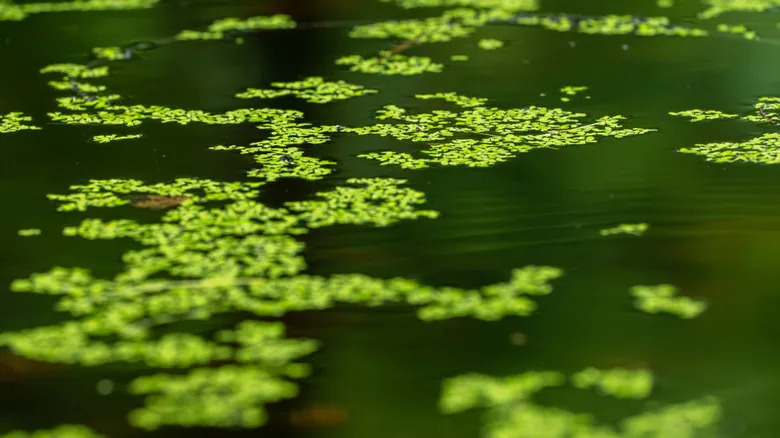
cyanobacteria on top of a watery surface, close-up - Ray Hugo Tang/Shutterstock
How It Works
IBSCs are thin living layers made from lichens, mosses and cyanobacteria. Practitioners begin by applying a prepared soil "seed": an engineered mixture that promotes crust formation on loose sand. Cyanobacteria are especially important because they secrete sticky polysaccharides that glue particles together and they fix atmospheric nitrogen, enriching otherwise nutrient-poor surfaces.

landscape view of the desert sand dunes, clear sky in the background - Dynamoland/Getty Images
Results and Benefits
Once established, the induced crusts perform several functions at once: they trap and retain nutrients, reduce wind erosion, and create conditions where seeds can germinate and roots can anchor. Roots further stabilize the surface, while lichens and mosses can develop later to form even more resilient crusts. Researchers reported that adding cyanobacteria to microbial layers can accelerate what is naturally a decades-long process into roughly two to three years.
Evidence and Context
A 2020 study published in Soil Biology and Biochemistry examined cyanobacteria-based restorations alongside lichen and moss crusts and found marked improvements in crust formation and soil stability. These results are part of a broader effort to reduce dust storms and stop productive land from turning into drifting sand—an outcome made more urgent as climate change increases aridity in many regions.
Challenges and Outlook
While the method shows promise, scaling it across large desertified regions requires careful planning: water availability, local climate, long-term ecological effects and maintenance must be considered. Continued monitoring and adaptive management help ensure treated areas develop sustainable plant communities rather than temporary fixes. Still, the combination of microbes and plants offers a low-cost, biologically based tool that could complement other restoration and climate-adaptation strategies worldwide.
Bottom line: Induced biological soil crusts—especially those seeded with cyanobacteria—can rapidly transform barren sand into more fertile, erosion-resistant soil, reducing dust storms and enabling vegetation to take hold.
Help us improve.