China launched its secretive Shendong ("Divine Dragon") spaceplane for the fourth time on February 7 from Jiuquan. Official reports say the flight will verify reusable spacecraft technologies, while earlier missions released small, unidentified objects in orbit that were tracked by the U.S. Space Force and amateurs. Analysts note the vehicle could be similar in size to the U.S. X-37B and may be used to practice rendezvous and proximity operations, a capability with both civilian and military implications.
China’s Secretive 'Divine Dragon' Spaceplane Returns to Orbit — Mission Still Unclear
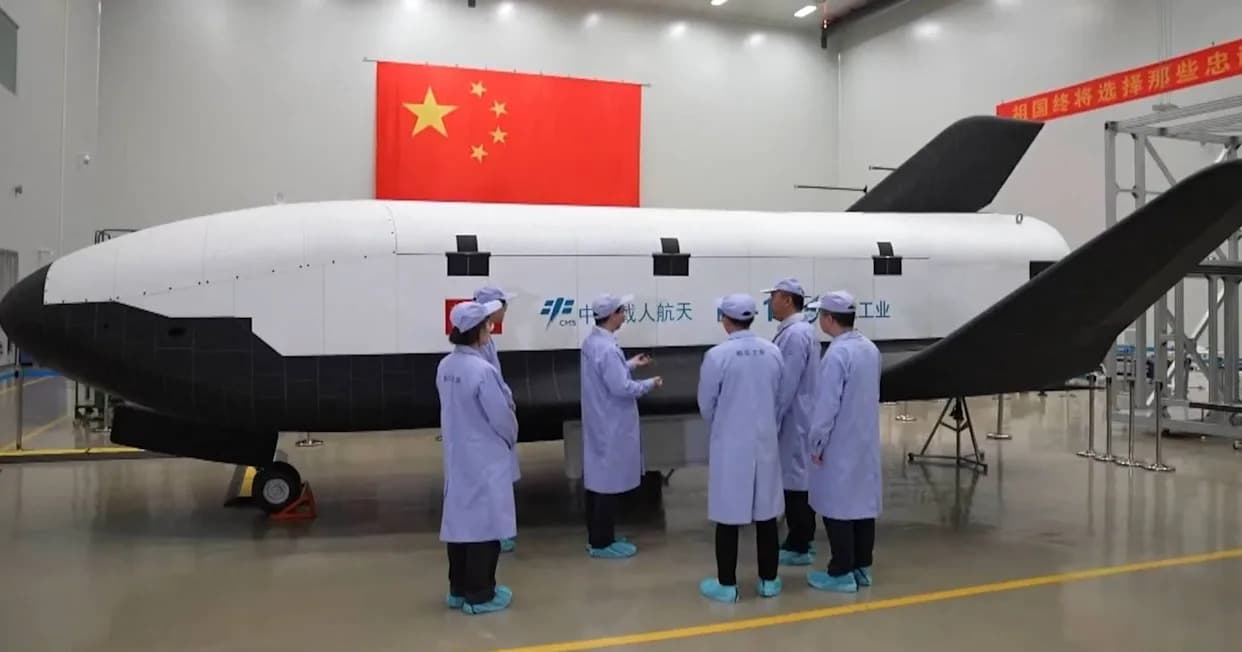
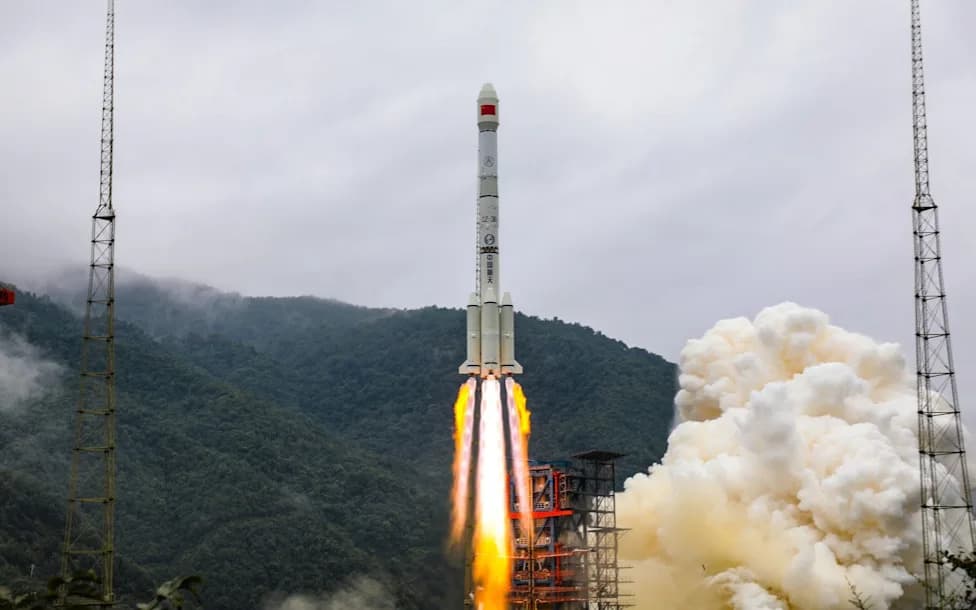
China's secretive space plane, dubbed Shendong, or "Divine Dragon," launched for the fourth time on February 7.
China's secretive reusable spaceplane, Shendong ("Divine Dragon"), lifted off for its fourth known flight on February 7 from the Jiuquan Satellite Launch Center. Beijing has released only limited information, saying the vehicle "will conduct technological verification for reusable spacecraft," according to state-run Xinhua.
What We Know
The Shendong program follows a pattern similar to the United States' classified Boeing X-37B, which the U.S. Space Force has operated for more than a decade. Two X-37B variants have flown seven missions over the past 15 years, accumulating thousands of days in orbit. Like the X-37B, Shendong appears to be a small, winged reusable vehicle launched on a conventional rocket and capable of autonomous reentry and runway recovery.
On its third mission, Shendong remained in orbit for 267 days before returning in September 2024. Chinese statements described that flight as a success that "demonstrates the growing maturity of China’s reusable spacecraft technologies." The February 7 launch used a Long March 2F rocket, whose payload capacity has prompted analysts to suggest Shendong could be similar in size to the X-37B.
Observers have noted a striking pattern from earlier Shendong flights: the release of small, unidentified objects—likely miniature satellites—while the vehicle was in orbit. Those objects have been tracked by both the U.S. Space Force and by amateur skywatchers, but their exact purpose and capabilities remain unconfirmed.
Possible Purposes And Concerns
Experts propose several benign and dual-use explanations for the program, including development of reusable spaceflight hardware, on-orbit experiments, and deployment or inspection of small satellites. Another leading hypothesis is that Shendong provides a platform to practice rendezvous and proximity operations (RPOs): close approaches, inspections, or maneuvers near other spacecraft.
"This is a skill set that they’re obviously interested in, as is Russia, as is the United States," Victoria Samson, chief director of space security and stability at the nonprofit Secure World Foundation, told Space.com.
RPO capabilities can support legitimate activities such as satellite servicing and debris removal, but they also raise concerns because the same techniques can be used to interfere with or surveil other nations' space assets. The limited public detail about both Shendong and programs like the X-37B fuels uncertainty about intent and capability.
Why It Matters
Reusable spaceplanes and RPO skills are strategic technologies with both civilian and military applications. The development and testing of such systems by major spacefaring states reflect a broader competition for technical advantage in Earth orbit. Greater transparency, norms of behavior, and confidence-building measures in space operations could reduce misunderstandings as these capabilities mature.
For now, the exact goals and payloads of Shendong's missions remain unconfirmed. Analysts, military trackers, and amateur observers will continue monitoring the vehicle's activities for further clues.
Help us improve.