A recent cluster of sinkholes in Phillipsburg, New Jersey, swallowed a dump truck and left nearby residents facing water outages and structural inspections. Scientists link the global rise in sinkholes to heavy rainfall, leaky water mains, and soluble karst bedrock, with climate change amplifying these processes. Monitoring tools such as InSAR, LiDAR and ground-penetrating radar can detect subsidence early and guide mitigation. Improved infrastructure maintenance and planning are essential to reduce future risk.
Sinkholes on the Rise: How a Phillipsburg Collapse That Swallowed a Dump Truck Signals a Growing Risk
Sinkholes Are More Frequent and More Dangerous NowHearst Owned
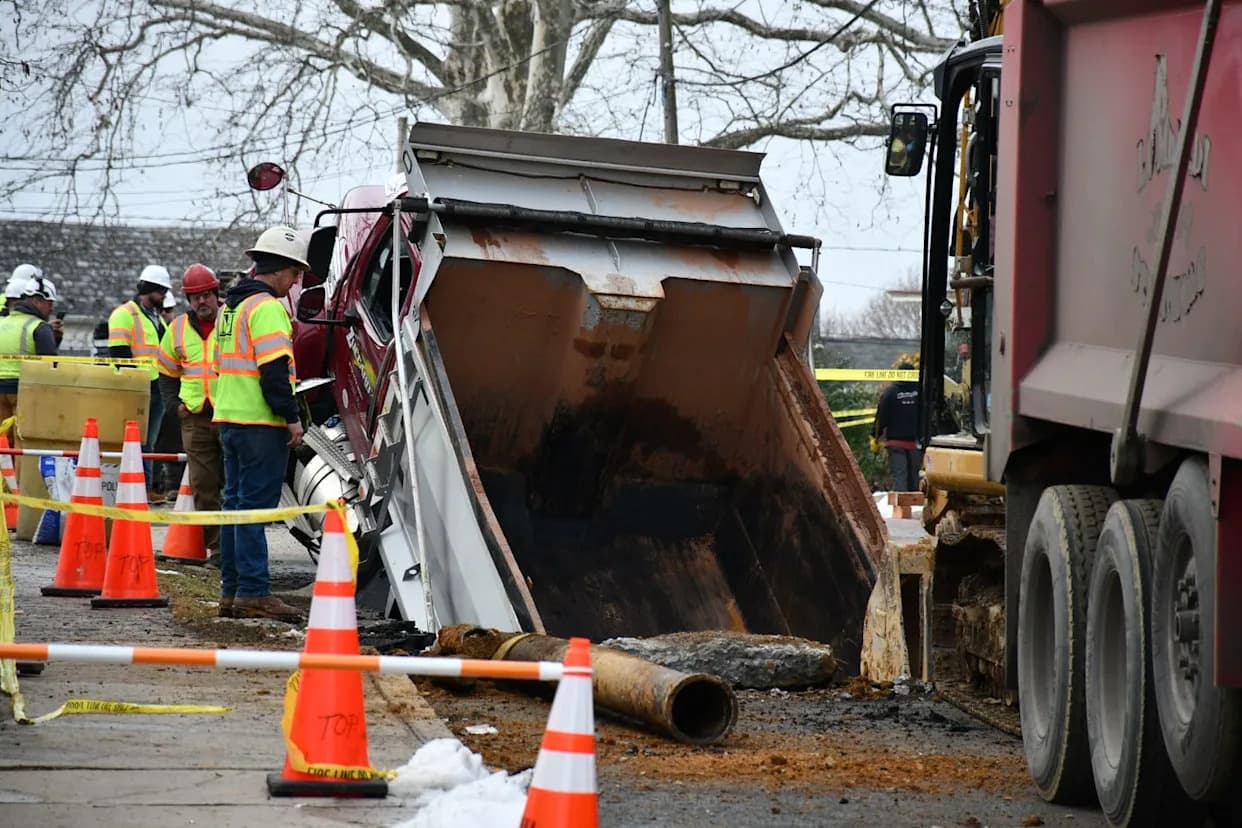
Sinkholes are appearing more frequently in populated areas around the world—and a recent collapse in Phillipsburg, New Jersey, that swallowed a dump truck near the Popular Mechanics offices is a stark example of how quickly these events can disrupt communities.
What Happened In Phillipsburg?
Earlier this week a network of sinkholes opened on a quiet residential street in Phillipsburg, consuming a parked dump truck and forcing emergency crews to cordon off affected blocks. Firefighters, police and excavation teams responded immediately. Many residents learned they would likely be without municipal water for an extended period; firefighters and volunteers went door to door distributing bottled water. Structural engineers were dispatched to inspect nearby houses to determine whether any must be condemned as unsafe because of ground instability.
Why Sinkholes Are Increasing
Scientific research points to a combination of natural geology and human activity as the primary drivers of recent rises in sinkhole frequency and severity. A 2025 paper in Nature Geoscience summarized the prevailing explanation: heavy rainfall and aging, leaky water mains interact with water-soluble bedrock (karst such as limestone or gypsum) and subsurface soils covered by impermeable surfaces (asphalt, concrete), producing voids and unstable ground that can collapse suddenly.
Examples: Last year a large sinkhole opened in Surrey, England, after sandstones beneath a road were eroded by a burst water main. Recently in Wales, rapidly rising groundwater during heavy rain swallowed a road sweeper. The Phillipsburg event follows the same pattern of water-driven subsurface failure.
How Climate Change Amplifies The Risk
Climate change modifies the hydrologic cycle and can both increase and intensify sinkhole hazards. Mechanisms include:
- Stronger, more frequent heavy rainfall: leads to rapid infiltration, erosion, and rising groundwater that can carve subsurface voids.
- Prolonged drought: lowers groundwater, creating unsupported cavities that later collapse when water returns or when surface loads increase.
- Higher temperatures: can accelerate the chemical dissolution of limestone and weaken soils.
Localized studies illustrate these links: in Winkler, Texas, a modest rise in average annual temperature between 1980 and 2015 was associated with increased subsidence at some sites, and research from northeast Spain has documented higher sinkhole activity during drought periods.
Detection, Assessment, And Mitigation
There are practical steps that cities and engineers can take to reduce sinkhole risk and improve early warning:
- InSAR (Interferometric Synthetic Aperture Radar): satellite-based monitoring that detects subtle surface deformation and early subsidence over wide areas.
- LiDAR: high-resolution elevation models that help map vulnerable terrain and small changes in topography.
- Ground-Penetrating Radar (GPR): effective in urban and shallow subsurface settings to image voids and pipes.
Engineers are currently using ground-penetrating radar and other tools to assess the Phillipsburg site and determine the stability of nearby infrastructure and homes. Longer-term mitigation also depends on better maintenance of aging water mains, targeted mapping of karst-prone areas, and integrating subsurface risk into urban planning.
What Residents Should Know
If you live in an area underlain by soluble bedrock or with aging water infrastructure, stay alert to signs of subsidence (sudden depressions, cracked pavements or walls, doors that no longer close properly). Report suspicious leaks or road deformation to local utilities and authorities. Community preparedness, combined with improved monitoring and infrastructure upkeep, can greatly reduce the human cost of sinkhole events.
Bottom line: The Phillipsburg sinkhole is a vivid reminder that the intersection of geology, aging infrastructure, and changing climate is producing more frequent and severe sinkhole hazards—many of which are preventable with timely monitoring, maintenance and planning.
Help us improve.