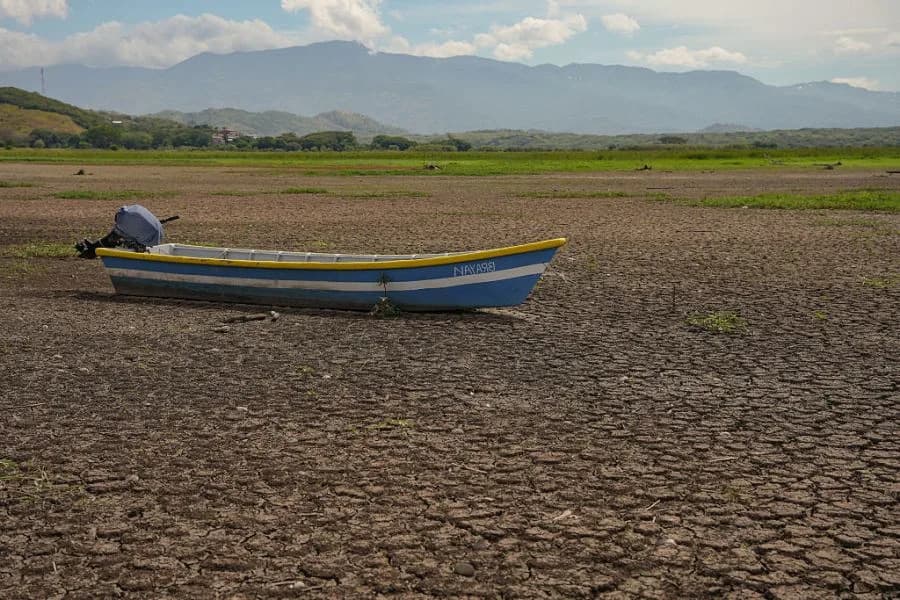
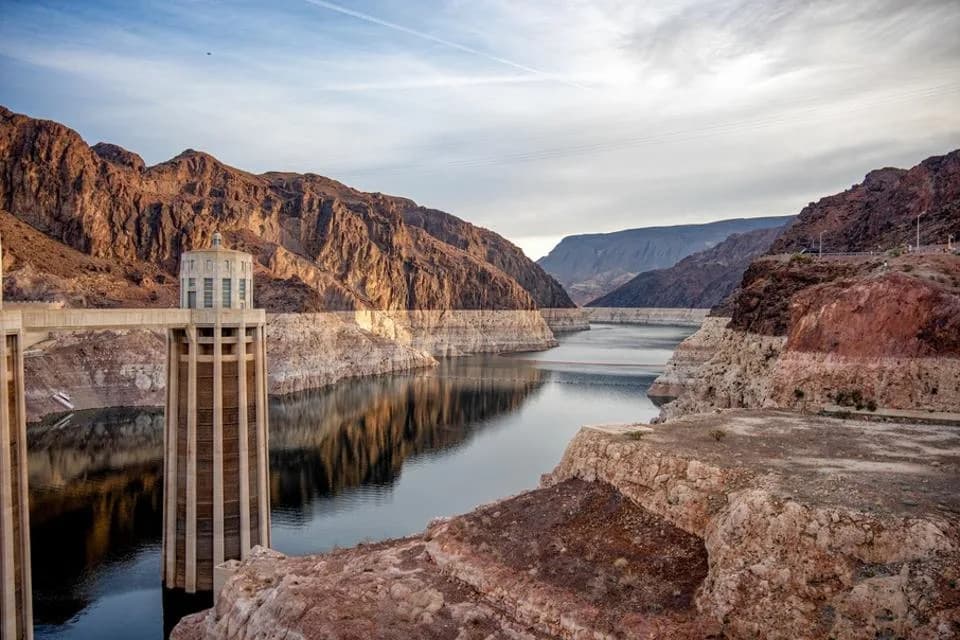
Key points: The Southern Plains entered a sixth consecutive year of drought by 2026, forcing mass cattle sell-offs, widespread crop failures and fueling wildfires across Texas, Oklahoma and Kansas. Rising temperatures, repeated La Niña winters and depleted water supplies—combined with incomplete recovery from the 2010–2015 drought—are the main drivers. Major reservoirs and groundwater sources, including the Edwards Aquifer, reached record lows, while Rio Grande reservoirs were critically low in early February 2026. Although El Niño could bring relief later in 2026, spring and summer conditions are likely to worsen before recovery becomes possible.
Southern Plains Enter Sixth Year Of Drought: Ranchers Sell Herds, Wildfires Spread and Water Supplies Plummet
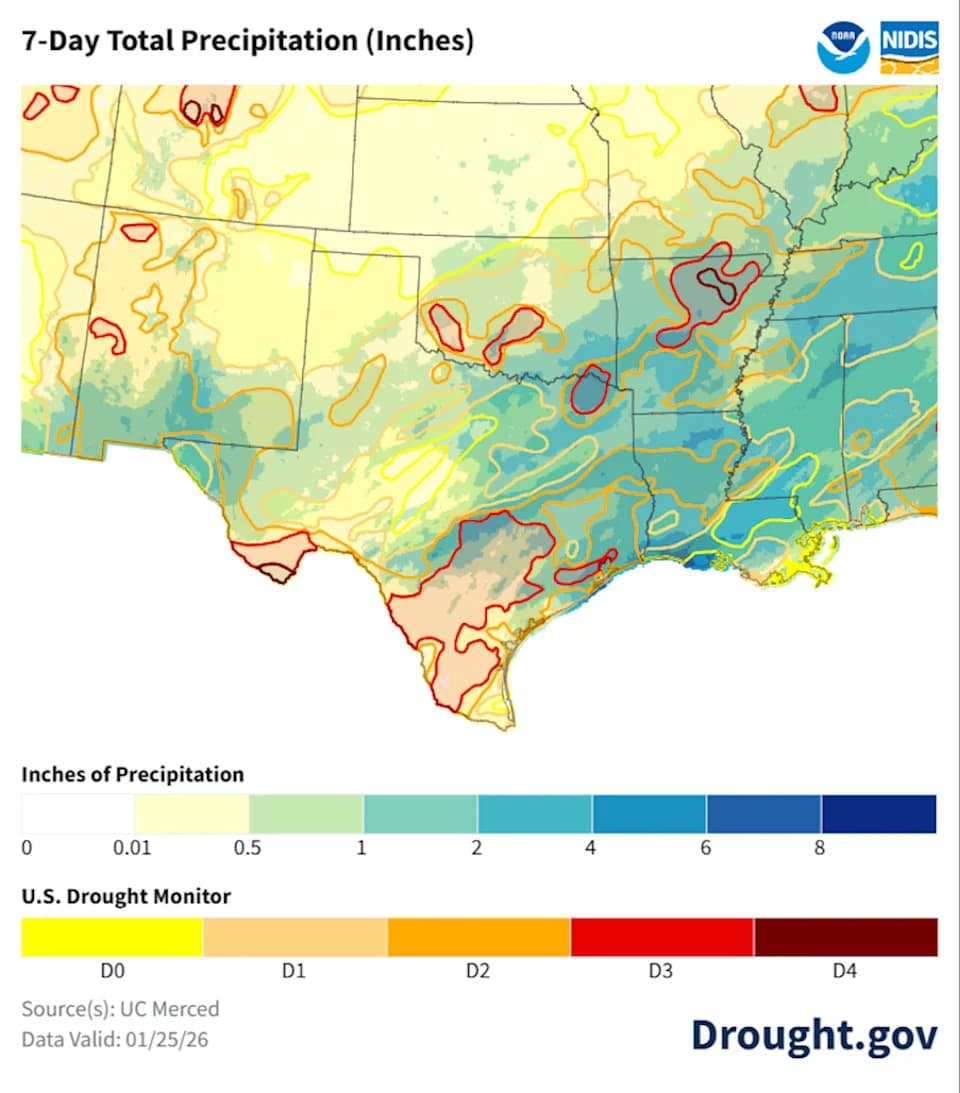
Precipitation from a severe winter storm in late January 2026, shown in blue and measured in inches, largely missed the areas with the worst drought conditions, indicated by red contour lines.UC Merced, NDMC
In June 2022, more than 4,000 cattle were sold in a nearly 24-hour auction in Texas Lake Country as ranchers scrambled to cope with shrinking water supplies and parched pastures—about 200 animals an hour. That desperate sale occurred at the peak of a drought that began in 2020 and, by 2026, had stretched into its sixth consecutive year across the Southern Plains.
Widespread Agricultural and Economic Damage
The drought inflicted severe economic harm across Kansas, Oklahoma and Texas. From 2020 through 2024, losses from failed crops, higher feed costs and large-scale livestock liquidation are estimated at US$23.6 billion. In 2022—the region's worst year—many crops failed or were abandoned: 25% of Texas corn planted was not harvested, 45% of soybeans were abandoned, and 74% of the expected cotton crop was lost, cutting its value from a projected $2.4 billion to roughly $640 million.
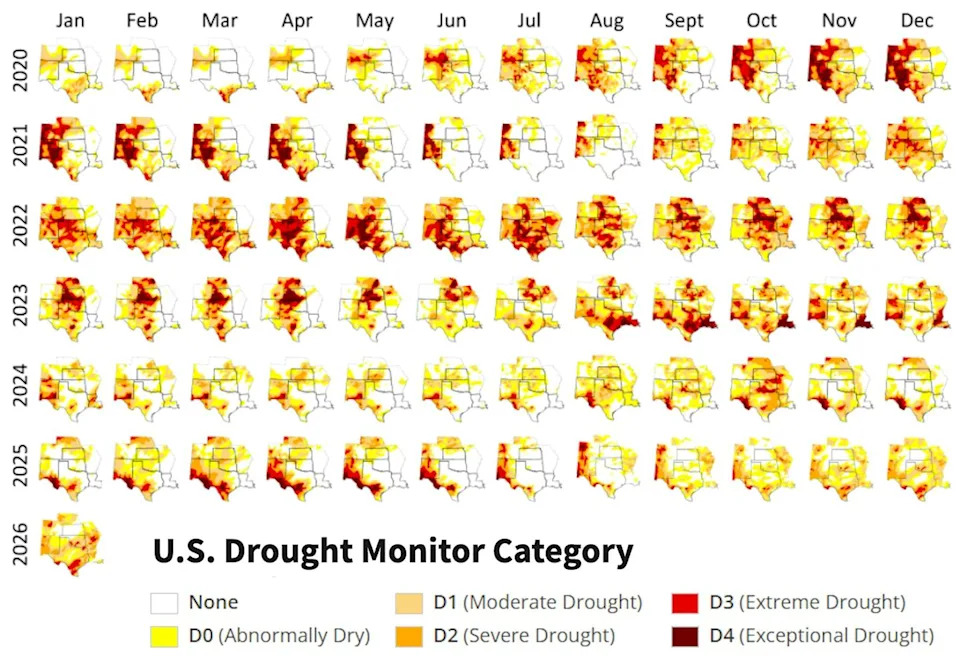
The U.S. Drought Monitor’s monthly updates from January 2020 through January 2026 show how drought moved around in the Southern Plains over those years but never let go. Darker colors reflect the intensity of drought in each location.Joel Lisonbee; compiled from U.S. Drought Monitor
Repeated Rapid Onset 'Flash Droughts' and Climate Drivers
Researchers documented at least five "flash drought" episodes—periods of rapid drought onset or intensification—across the Southern Plains from 2020 to 2025. Two major factors helped sustain the dry conditions: rising temperatures and a run of La Niña winters. Five of the past six winters displayed La Niña patterns, which typically bring warmer, drier conditions to the region and likely contributed to drought persistence into 2026.
Water Supplies Under Strain
Heat and sustained dryness since 2020 have pushed many rivers, reservoirs and groundwater reserves well below normal. San Antonio reservoirs and the Edwards Aquifer—which supplies roughly 2.5 million people—fell to record lows in 2024 and 2025 and remained severely depleted into 2026. Rivers that depend on mountain snowmelt were also compromised: Colorado experienced a winter "snow drought" in 2026, reducing the snowpack that feeds the Rio Grande. In early February 2026, the Rio Grande reservoirs Elephant Butte, Amistad and Falcon were approximately 11%, 34% and 20% full, respectively.
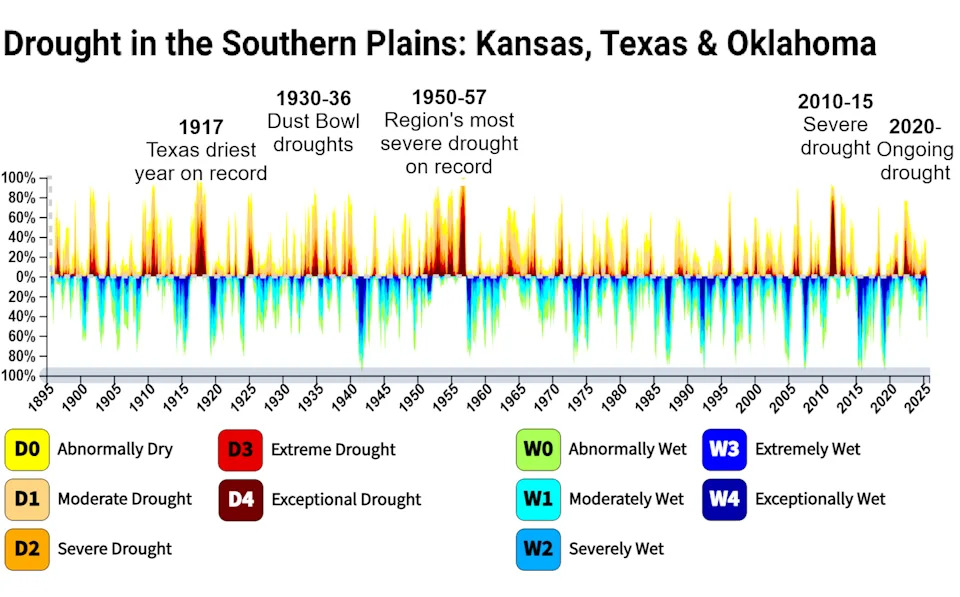
The percentage of land in different levels of drought or wetness for each month based on the nine-month Standardized Precipitation Index leading up to the selected date. Reds indicate drier conditions; blues indicate wetter conditions.National Integrated Drought Information System, NOAA Drought.gov
Economic Recovery Is Slow
Recovery from drought is not instantaneous when rains return. Many producers and landscapes had not fully recovered from the 2010–2015 drought before the 2020 event began. Texas ranchers sold roughly 20% of the statewide herd during 2010–2015; rebuilding herds and pastures takes years. Between 2020 and 2024, cattle inventories fell: Texas from 13.1 million to 12 million, Oklahoma from 5.3 million to 4.7 million, and Kansas from 6.5 million to about 6.15 million. These declines amplified economic stress and limited resilience when the region was struck again.
Outlook and Near-Term Risks
La Niña faded in early 2026 and the development of El Niño could bring wetter conditions later in the year, improving prospects for recovery in fall and winter. However, the region still needed to get through the spring and summer months: ending a drought of this magnitude requires sustained precipitation over several months, and drought conditions were likely to worsen before meaningful recovery. Early 2026 wildfires in Texas further exacerbated local damages and recovery challenges.
Study and Authorship: This analysis synthesizes work by researchers at the Southern Regional Climate Center and the National Integrated Drought Information System and was written by Joel Lisonbee (University of Colorado Boulder) and William Baule (Texas A&M University). It was originally published by The Conversation and updated with new wildfire information from early 2026.
Help us improve.