The Trump administration announced it will rescind a rule that had given extra fuel-economy credit to electric vehicles by overstating their energy savings. The Energy Department said it will remove the "fuel content factor" from CAFE calculations after a September appeals court ruling. The department plans to propose additional regulatory revisions to clarify how EVs are valued under federal fuel-economy standards.
Trump Administration Rescinds EV Incentive Rule, Removes "Fuel Content Factor" After Court Ruling
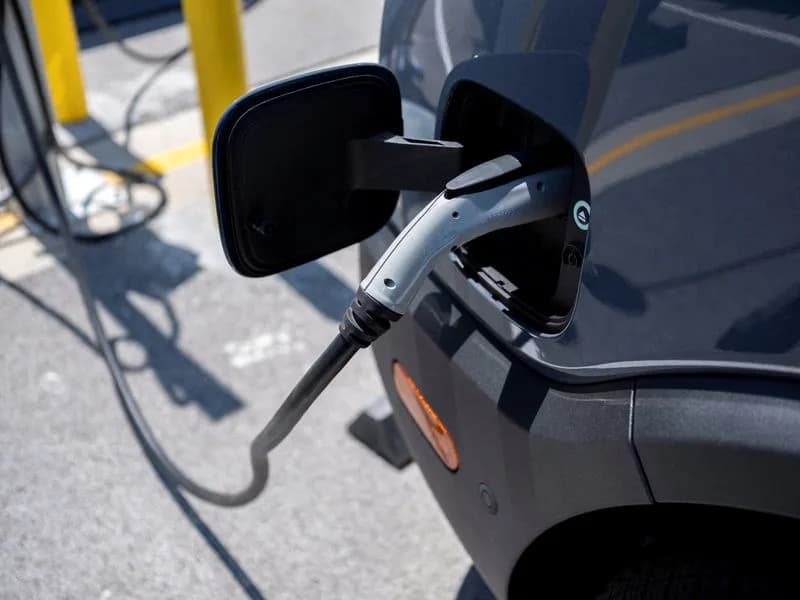
FILE PHOTO: New Amazon EV vans powered by Rivian are parked at charging stations at the Amazon Logistics Facility in Chicago. Amazon and Rivian unveil their final custom Electric Delivery Vehicles (EDV) to begin using them for customer deliveries, in Chicago, Illinois, U.S. July 21, 2022. REUTERS/Jim Vondruska/File Photo
WASHINGTON, Feb 18 — The Trump administration said Wednesday it will rescind a policy that had effectively rewarded automakers for producing electric vehicles by assigning overstated energy‑savings values to those cars when calculating fleetwide fuel-economy averages.
What changed: The Energy Department confirmed it will remove the provision known as the "fuel content factor" from its Corporate Average Fuel Economy (CAFE) calculations. That provision had given electric vehicles unusually generous fuel-economy credit, boosting manufacturers' compliance scores under federal rules.
Environmental groups and some analysts have long criticized the guidance for assigning unrealistically high fuel-economy values to electric vehicles, which were then counted toward manufacturers' fleetwide CAFE averages. Critics argued the credits overstated real-world energy savings and skewed compliance calculations.
The department said the decision follows an appeals court ruling in September and that it plans to propose additional regulatory revisions to clarify how electric vehicles are valued under federal fuel-economy standards.
Implications: Removing the fuel content factor reduces the extra compliance credit previously available for EVs and could affect automakers' planning and compliance strategies. The change does not ban electric vehicles or the use of EVs for compliance; rather, it alters how much credit EVs receive under current calculations.
Reporting by David Shepardson.
Help us improve.