New PNAS research finds that vegetation planted around the Taklamakan Desert—part of China’s Three‑North Shelterbelt Program—now absorbs more CO2 than the desert releases, effectively turning the desert rim into a net carbon sink. The study used 25 years of ground and satellite observations plus NOAA’s Carbon Tracker and reports that seasonal rainfall (≈0.6 in / 16 mm per month July–Sept) boosts photosynthesis and lowers regional CO2 from ~416 ppm to ~413 ppm between dry and wet seasons. While questions remain about water impacts and sandstorm frequency, the findings highlight a promising model for combining afforestation, land restoration and carbon sequestration in arid regions.
China’s Great Green Wall Turns Taklamakan’s Rim Into a Carbon Sink
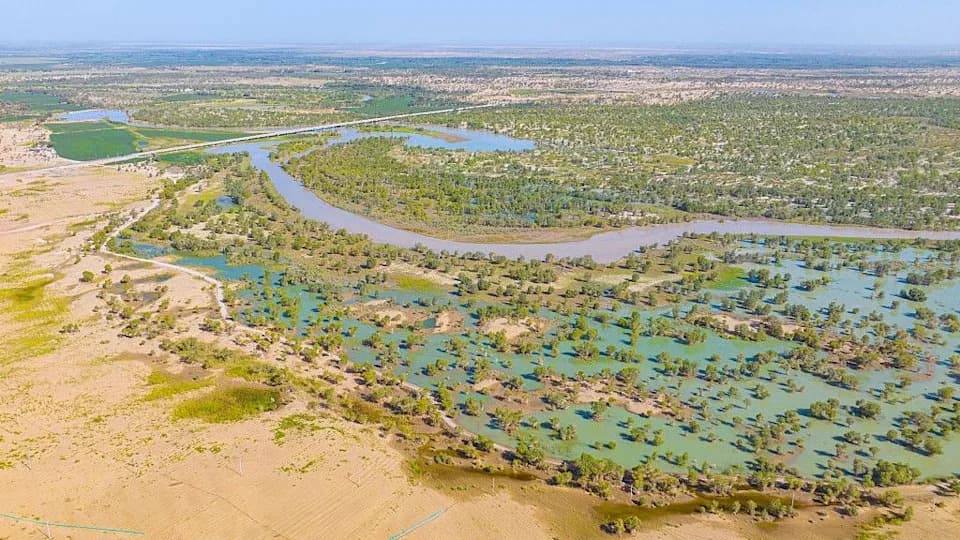
Vegetation grows on the banks of the Tarim River along the Taklamakan Desert's northern edge. | Credit: CFOTO/Future Publishing via Getty Images
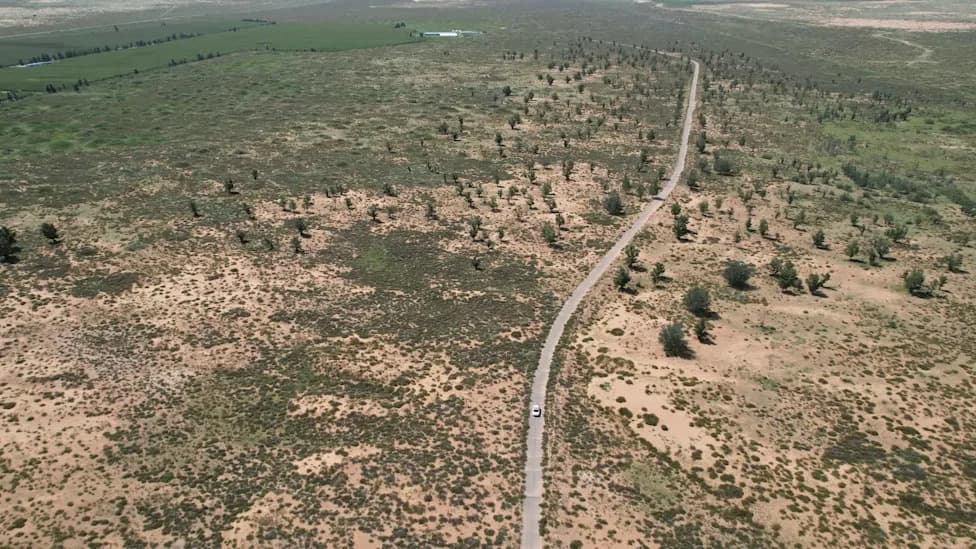
Mass tree-planting around the Taklamakan Desert is beginning to convert the desert’s margins into a net carbon sink, new research published in PNAS reports. The findings show that decades of afforestation, seasonal rainfall and expanding vegetation cover are now absorbing more CO2 than the desert releases.
What the Study Found
The Taklamakan Desert—also spelled Taklimakan or Takla Makan—covers roughly 130,000 square miles (about 337,000 km2), an area slightly larger than the U.S. state of Montana. Surrounded by high mountain ranges that block moist air, the region is extremely arid and historically supported little plant life. More than 95% of the desert remains shifting sand and has been described as a "biological void."
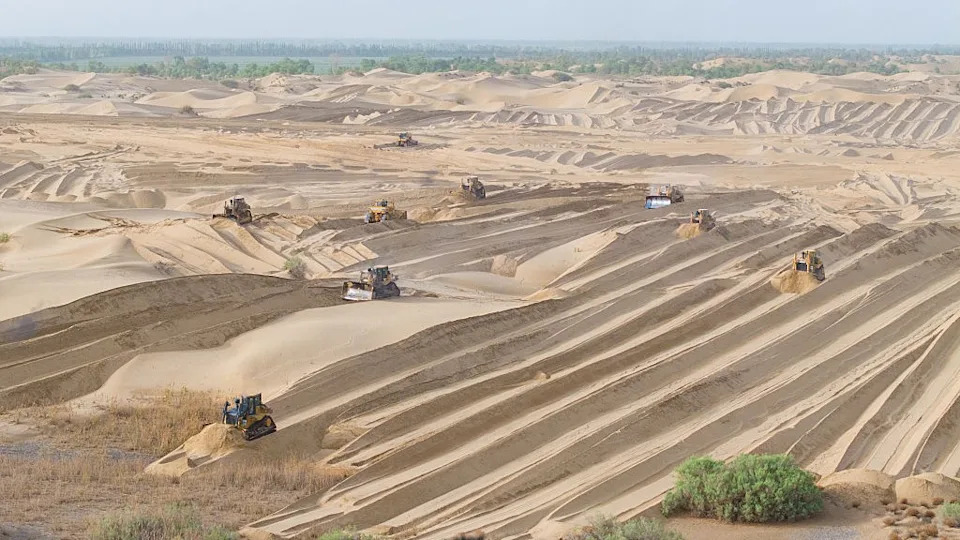
Heavy machinery is used to level sand dunes where China wants to plant trees and shrubs along the edges of the Taklamakan Desert. | Credit: CFOTO/Future Publishing via Getty Images
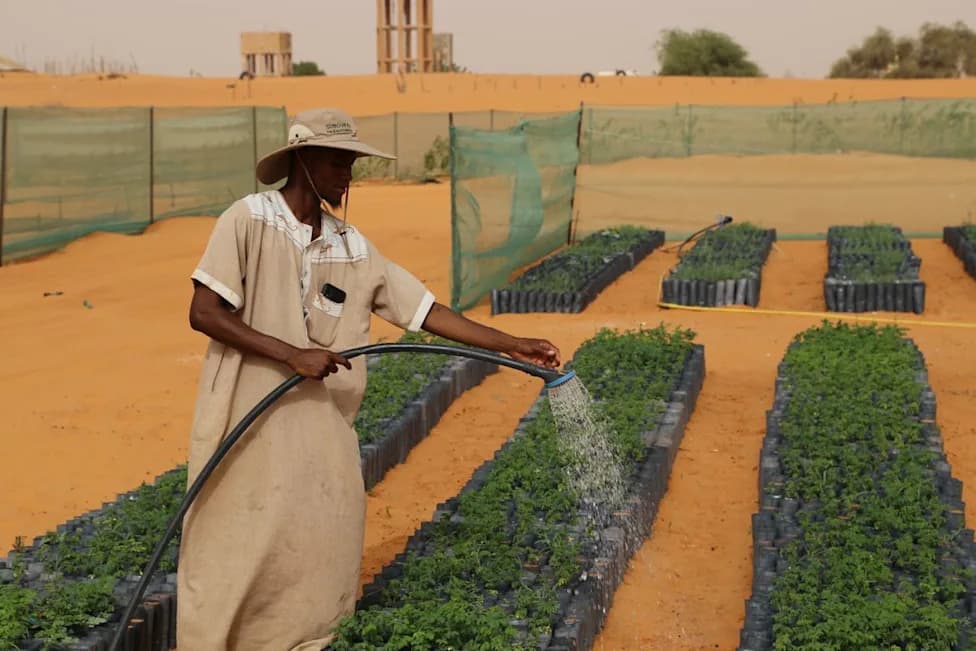
Since 1978, China’s Three‑North Shelterbelt Program (commonly called the "Great Green Wall") has planted belts of trees and shrubs across northern China to slow desertification. Authorities report more than 66 billion trees have been planted nationwide, and a vegetative ring encircling the Taklamakan was completed in 2024.
Data and Methods
The research team combined 25 years of ground observations of different vegetation types with multiple satellite records—precipitation, vegetation cover, greenness, photosynthesis indicators and CO2 fluxes—and used NOAA’s Carbon Tracker global model to cross-check regional CO2 sources and sinks. The results show a long-term increase in vegetation extent and in CO2 uptake along the desert’s margins that aligns in time and space with the Great Green Wall planting efforts.
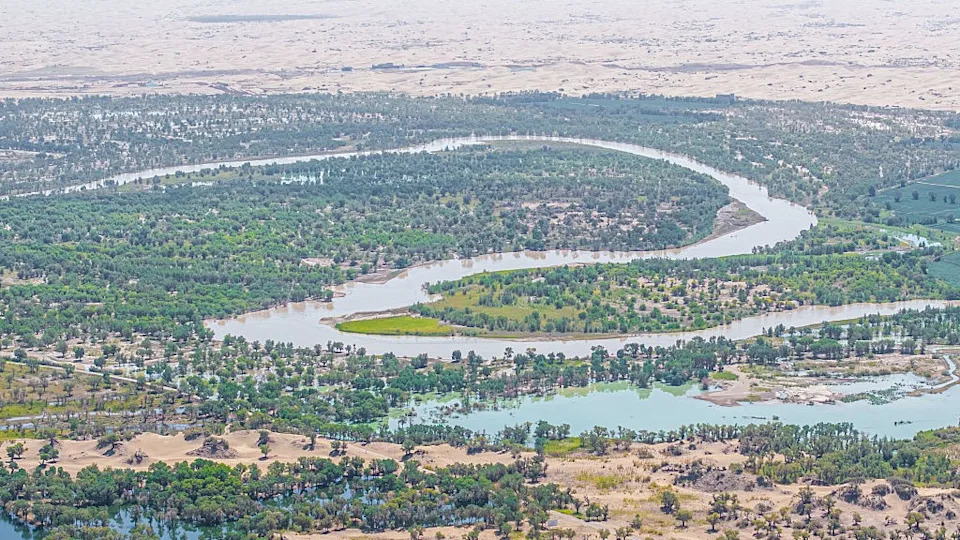
Vegetation cover around the Taklamakan Desert has grown, boosting photosynthesis and CO2 sequestration. | Credit: CFOTO/Future Publishing via Getty Images
"This is the first demonstration that human-led interventions can enhance carbon sequestration even in extreme arid landscapes," said study co-author Yuk Yung, a Caltech planetary scientist and senior research scientist at NASA’s Jet Propulsion Laboratory.
Seasonal Drivers and Carbon Effects
Seasonal rainfall plays an important role. During the wet season (July–September), precipitation averaged about 0.6 inches (16 mm) per month—roughly 2.5 times the dry-season rainfall. That moisture boosts vegetation cover, greenness and photosynthetic activity along the desert edge, and the study observed CO2 concentrations drop from about 416 ppm in the dry season to roughly 413 ppm in the wet season in the region.
Previous work suggested the Taklamakan might trap CO2 in its sands, but sand-bound carbon can be unstable under warming because temperature-driven expansion of air in sand can release stored CO2. By contrast, the new study indicates living vegetation at the desert rim is now the dominant and potentially more stable mechanism for sustained carbon uptake.
Caveats and Broader Context
Experts still debate whether the Great Green Wall has meaningfully reduced sandstorm frequency. Afforestation in arid areas can have trade-offs—such as water use and species choice—that affect local ecosystems and sustainability. Nevertheless, the study suggests that strategic afforestation combined with favorable seasonal moisture can stabilize dunes, increase regional forest cover (China’s reported forest cover rose from about 10% in 1949 to over 25% today) and sequester carbon at scale.
While more research is needed to assess long-term stability, water impacts and replicability in other deserts, the Taklamakan example offers an early model showing that large-scale human intervention can both restore degraded lands and contribute to climate mitigation.
Help us improve.