New analyses of cranial fragments from Olèrdola and Molí d’Espígol reveal that severed-head rituals reached farther south in Iron Age Iberia than previously believed, with evidence dating to at least the 6th century BCE. Cut marks, punctures and residues of fats, resins and waxes indicate deliberate preparation and preservation for public display. Placement of skulls in prominent communal spaces suggests symbolic or performative roles and may reflect cultural links with Gallic/Celtic practices.
Severed-Head Rituals in Iron Age Iberia Were More Widespread Than Previously Believed
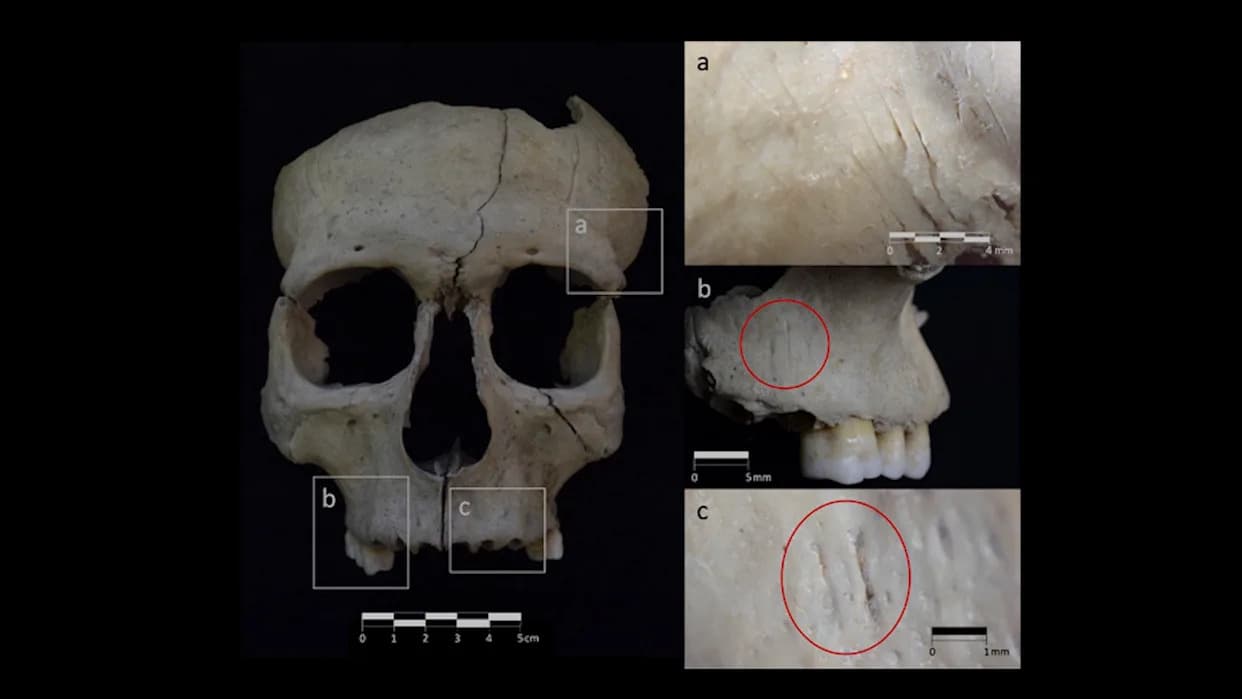
Scans of severed skull fragments from Iberian Peninsula
New bioanthropological analyses show that ritualized displays of severed heads extended farther across Iron Age northeastern Iberia than archaeologists once thought. Recent study of cranial fragments from Olèrdola and Molí d'Espígol reveals cut marks, punctures and preservative residues consistent with deliberate preparation and public display of skulls as early as the 6th century BCE.
Key Findings
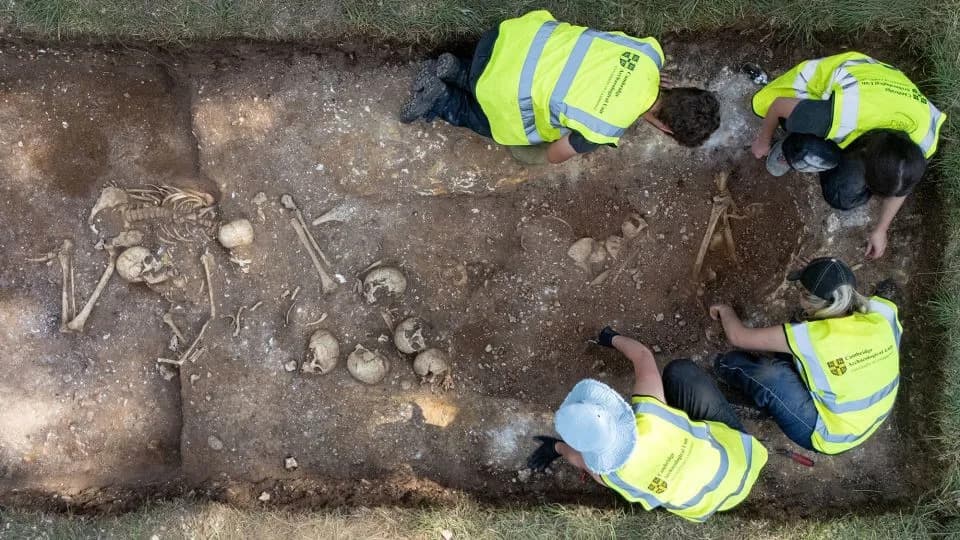
Researchers—led by Rubén de la Fuente (Autonomous University of Barcelona) and Eulàlia Subirà (Catalan Institute of Classical Archaeology)—reanalyzed cranial material published in the journal Trabajos de Prehistoria. The team examined five cranial fragments recovered near Olèrdola, about 25 miles west of Barcelona, and 10 previously collected fragments from Molí d'Espígol, roughly 60 miles to the north.
The remains show injuries made with sharp tools close to the time of death. Their location, arrangement and depth are consistent with a ritual of severing and preparing heads for display. Researchers also identified residues of natural substances—vegetable and animal fats, pine resins, waxes and oils—likely used to preserve and present the skulls.
“Bioanthropological and waste analyses have allowed us to identify injuries produced with sharp objects at a time close to death. Due to their arrangement, depth and location, they are compatible with the ritual of severed heads,” said Rubén de la Fuente.
Details From The Sites
At Olèrdola the recovered fragments belonged to a single male estimated between eight and 15 years old. The Molí d’Espígol collection represents at least three individuals, one of whom was a boy of comparable age. On the Olèrdola jawbone, researchers found fine, needle-like incisions—matching tools documented at other Iberian sites—consistent with deliberate removal of facial flesh and scalp.
“These marks were made to remove the flesh from the skull and indicate that, in addition to the scalp, the skin of the individual’s face was also removed,” Subirà said. “It is an infrequent practice, but it is documented in the ritual in European sites in France and the United Kingdom.”
Context And Interpretation
All cranial fragments were discovered in communal or prominent settlement spaces. In Olèrdola a skull was placed on the ground floor of an entrance tower, while the Molí d’Espígol bones came from an architecturally distinctive area described as emblematic for the settlement. These placement patterns imply the skulls had symbolic or performative value and were intended for public viewing.
Because cremation was the dominant burial practice across much of Iberia, the careful preparation and exhibition of severed heads likely targeted captives or enemies rather than community members. The similarities between these Iberian practices and contemporaneous rituals recorded among Gallic peoples in present-day France suggest potential cultural connections between Iberian groups and wider Celtic/Gallic traditions during the first millennium BCE.
Why It Matters
These results expand the known geographic range of severed-head rituals in Iron Age Iberia, adding the Cessetani and Ilergetes—groups farther south of the Llobregat River—to the list of communities that engaged in the practice. The findings force a reassessment of the ritual’s cultural framework and point to broader cross-regional interactions in prehistoric Western Europe.
Help us improve.