Israel’s National Security Minister Itamar Ben‑Gvir has authorised residents of 18 additional illegal West Bank settlements to apply for personal firearm licences. The move is part of a wider expansion that officials say has produced roughly 240,000 licences since the policy changed, compared with about 8,000 annually before. Critics and humanitarian organisations warn the policy accompanies increased settler violence and settlement growth—OCHA recorded over 1,800 settler attacks in 2025—and the ICJ has ruled Israel’s occupation unlawful.
Israel Authorises Gun Licence Applications For Residents Of 18 More West Bank Settlements
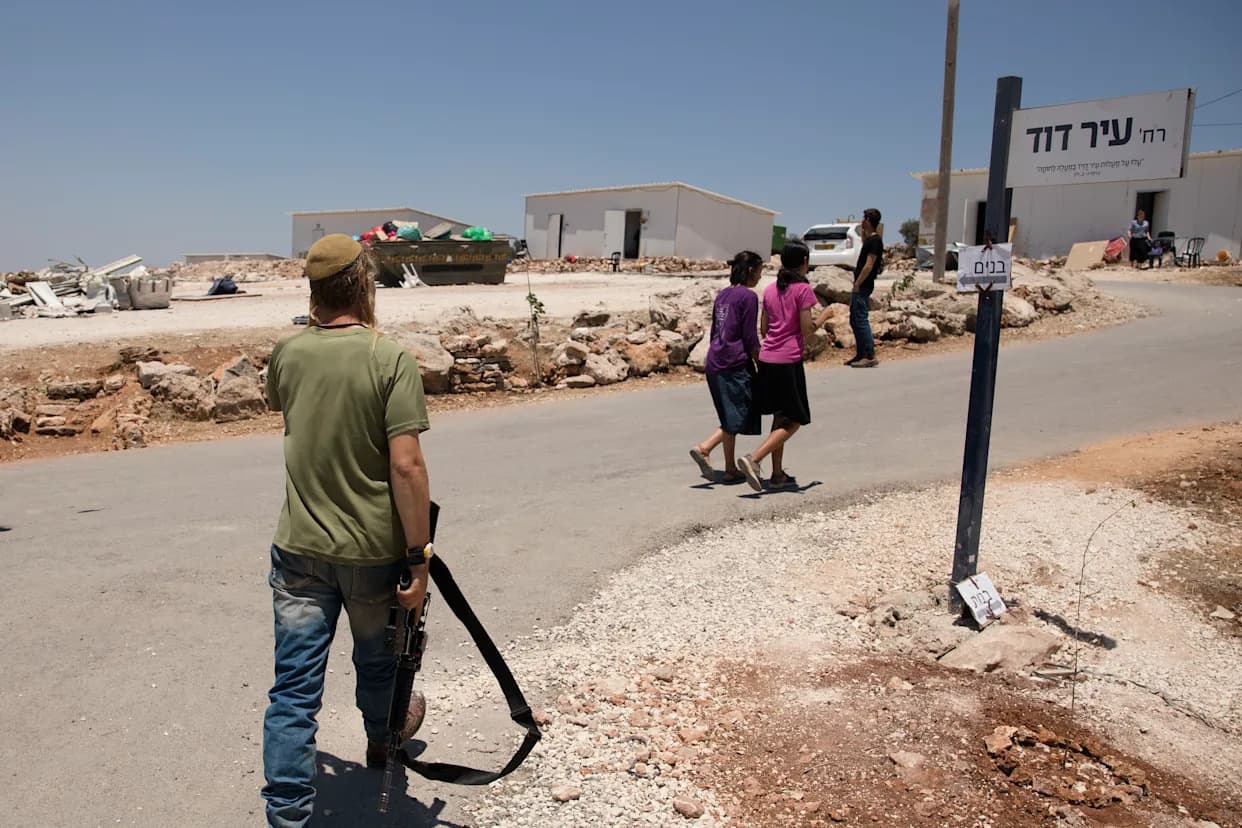
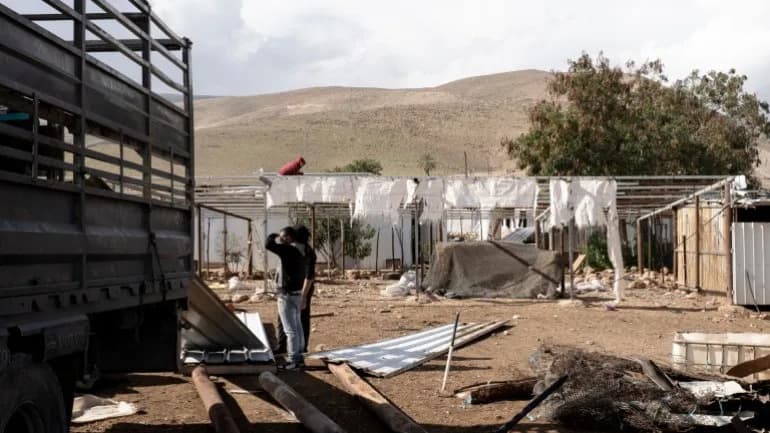
Israeli settlements, including Evyatar, near Jabal Subeih, in the occupied West Bank, are illegal under international law [File: Amir Levy/Getty Images]
Israel’s National Security Minister, Itamar Ben‑Gvir, has authorised residents of 18 additional illegal settlements in the occupied West Bank to apply for personal firearm licences, a move that has intensified concerns about settler armament and the expansion of settlements in Palestinian territory.
Ben‑Gvir framed the decision as a measure to strengthen self‑defence and personal security. Writing on Telegram, he said the change will allow residents of those communities to submit applications for personal weapon licences and claimed the wider licence expansion had helped prevent attacks.
Government and settler perspective: Israeli authorities and proponents argue that arming residents is necessary for personal protection in volatile areas. Ben‑Gvir and supporters point to what they describe as success in thwarting attacks and preventing infiltrations.
Critics' concerns: Humanitarian groups, Palestinian officials and other critics assert that the policy contributes to greater violence and emboldens settlers. They point to a broader armament programme launched when Israel began its operations in Gaza, and say that increased access to weapons—ranging in reports from pistols to military‑style rifles and drones—has coincided with rising settler attacks and intimidation of Palestinian communities.
Recent settlement developments: Last year authorities formalised plans for the contested E1 development, and officials are reportedly moving ahead with expansion plans near Jerusalem, in the Jordan Valley and around Ramallah. In December, the government retroactively recognised 19 previously unauthorised outposts. Overall, the number of settlements and outposts in the West Bank and occupied East Jerusalem increased from 141 in 2022 to 210—a near 50% rise.
Legal and humanitarian context: In 2024 the International Court of Justice (ICJ) ruled that Israel’s continued presence in occupied Palestinian territory is unlawful and should end “as rapidly as possible.” The United Nations Office for the Coordination of Humanitarian Affairs (OCHA) documented more than 1,800 settler attacks against Palestinians in 2025—roughly five per day—causing casualties or property damage across about 280 West Bank communities. In 2025 a total of 240 Palestinians, including 55 children, were killed by Israeli forces or settlers, according to available reporting.
Ben‑Gvir says more than 240,000 Israelis have received gun permits since the policy was expanded, compared with roughly 8,000 permits issued per year previously. He described this as an 'unprecedented number' that he says has improved security.
Implications: The licence authorisations add to a pattern of settlement consolidation and greater access to arms that critics warn undermines prospects for a negotiated two‑state solution and increases risks to Palestinian civilians. Supporters maintain the measures are defensive. The decision is likely to deepen domestic and international debate over security, legality and the future of the occupied territories.
Help us improve.