Israeli authorities ordered the Abu Najeh al-Kaabneh Bedouin community east of Ramallah to dismantle their homes within 48 hours and declared the area a closed military zone. Rights groups say the eviction is part of a wider pattern of forced displacement that follows the recent removal of the Shallal al-Auja community. At the same time, demolitions in East Jerusalem, settlers' disruptions of schools in the Jordan Valley, attacks on homes, and tightened checkpoints have increased insecurity for Palestinian civilians across the West Bank.
Israel Orders Bedouin Eviction Near Ramallah as Settler Violence Targets West Bank Schools
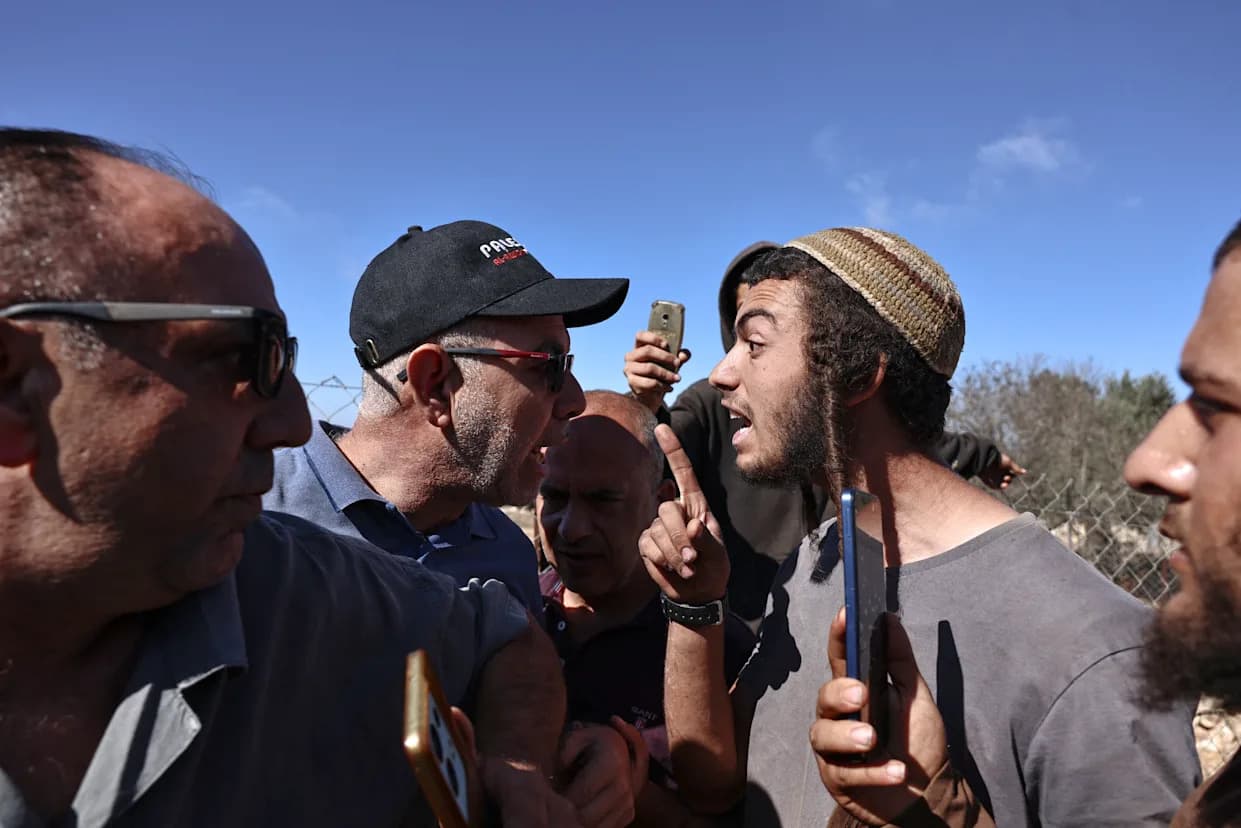
Palestinian farmers (L) scuffle with Israeli settlers during the olive harvest in the Palestinian village of Silwad, near Ramallah in the occupied West Bank, on October 29, 2025 [AFP]
Israeli forces have issued an eviction order to the Abu Najeh al-Kaabneh Bedouin community east of Ramallah and continued demolition measures in occupied East Jerusalem, amid a rise in settler attacks on schools and homes across the West Bank.
Eviction Order in al-Mughayyir
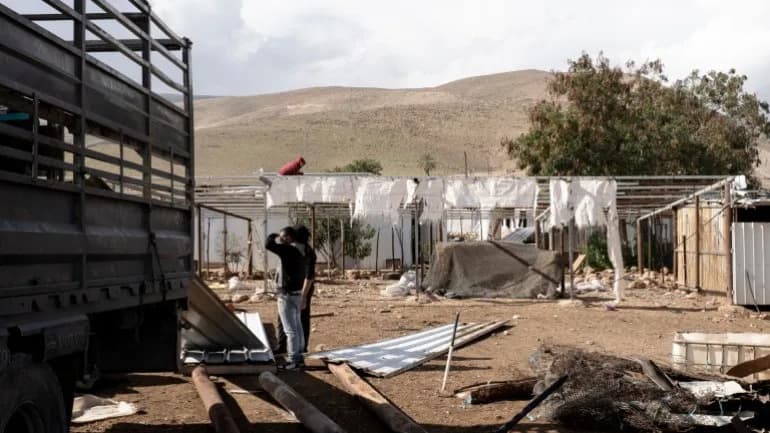
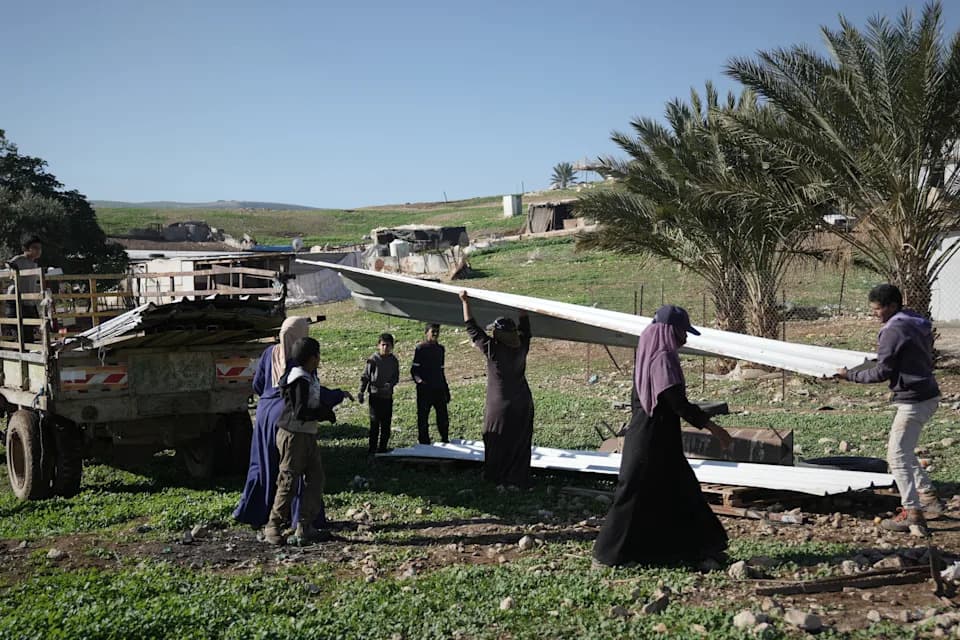
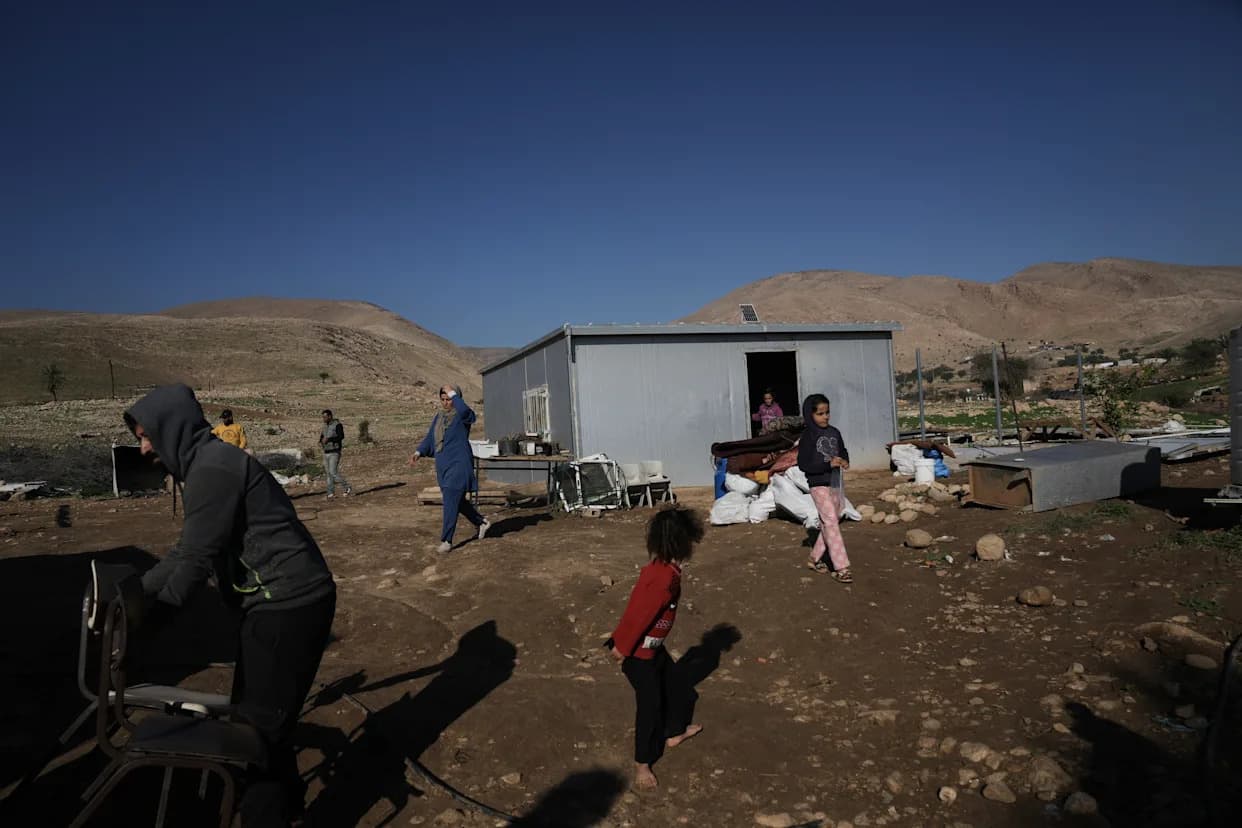
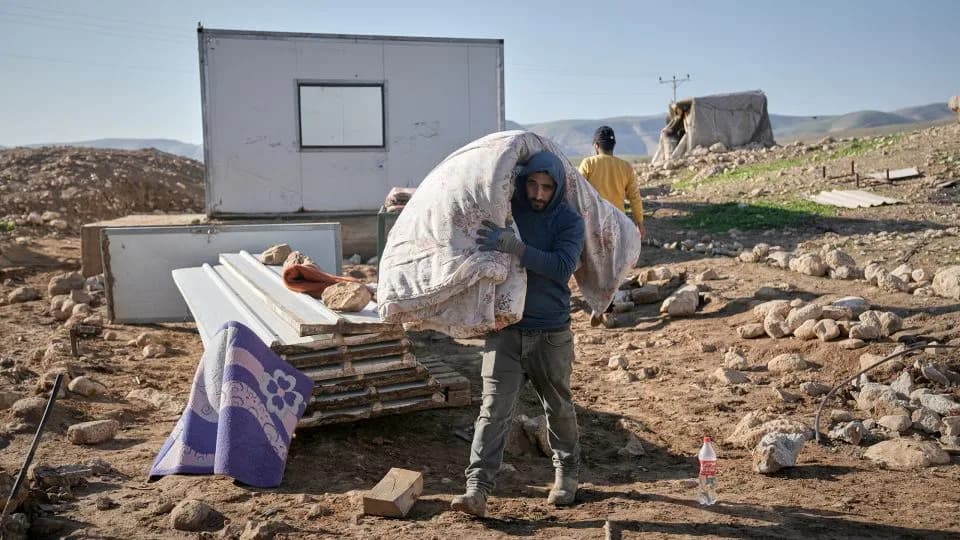
On Sunday morning, soldiers entered the Abu Najeh al-Kaabneh community in the village of al-Mughayyir and handed a military order demanding that the community's roughly 40 residents dismantle their homes and leave within 48 hours. The army declared the area a "closed military zone," a designation frequently cited by Palestinians and rights groups as a tactic used prior to settlement expansion. Local sources and the Wafa news agency reported that three foreign solidarity activists were arrested while attempting to document the order.
Recent Displacements
Rights groups and local sources described the measure as part of a broader pattern of forced displacement. The eviction follows the recent full removal of the Shallal al-Auja community north of Jericho, where the last three families left after years of pressure; the community once included roughly 120 families.
Demolitions in East Jerusalem
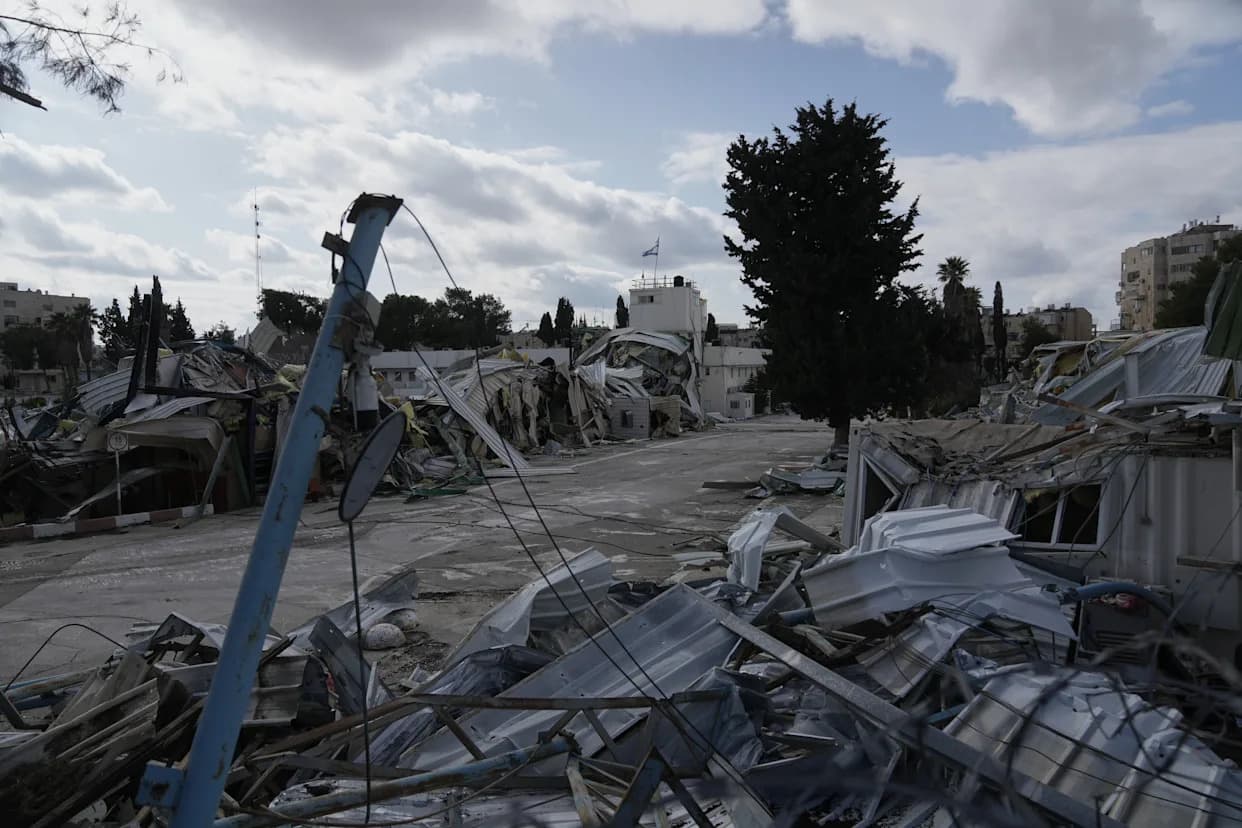
In East Jerusalem, municipal enforcement continued to displace Palestinian residents. On Sunday, Yasser Maher Dana of Jabal Mukaber was compelled to demolish his 100-square-metre house in the al-Salaa district to avoid municipal demolition fees. Rights groups say Palestinians face near-impossible barriers to obtaining building permits in the city, which Israeli authorities cite to justify demolitions.
In Silwan, municipal authorities issued a 10-day demolition order for a residential room owned by the al-Taweel family. Notices were also issued earlier this week for the demolition of two houses in the Wadi Qaddum neighbourhood.
Settler Incursions and School Disruption
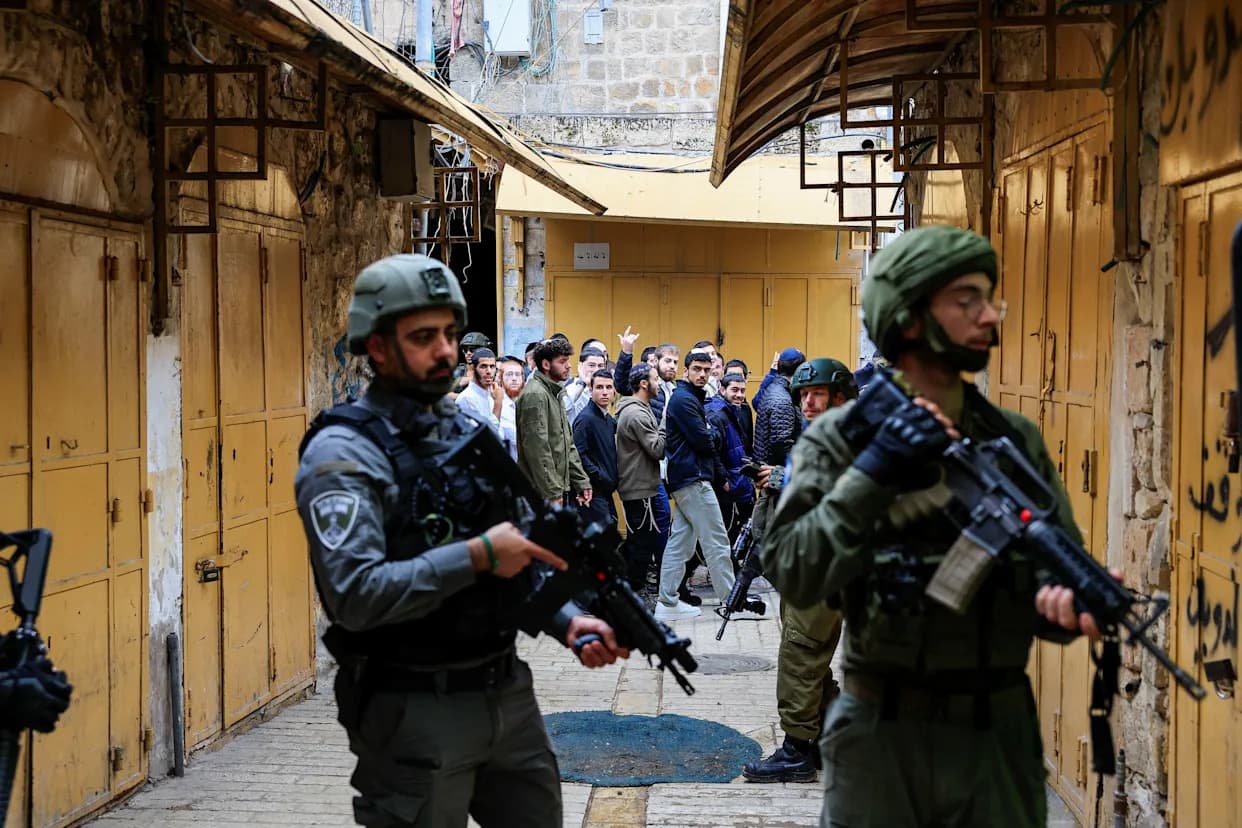
Tensions at the Al-Aqsa Mosque compound escalated when dozens of Israeli settlers entered under heavy police protection. The Jerusalem governorate reported that the incursion included a "wedding blessing" ritual by settlers in the compound courtyards, an act rights groups say violates the site's status quo.
In the northern Jordan Valley, settlers backed by military forces disrupted the school day at al-Maleh School by blocking teachers from reaching the campus. The school serves children from vulnerable Bedouin communities in al-Hadidiya, Makhoul and Samra. Observers noted the harassment came shortly after the creation of a new outpost in the al-Maleh area and the erection of a tent in nearby Khirbet Samra to seize grazing land.
Attacks on Homes and Arrests Across the West Bank
In Faraata, east of Qalqilya, residents said settlers from the Havat Gilad outpost attacked the home of Hijazi Yamin, pelting the house and releasing an attack dog that trapped his wife and seven children indoors. Yamin told Wafa his family lives in "a constant state of insecurity."
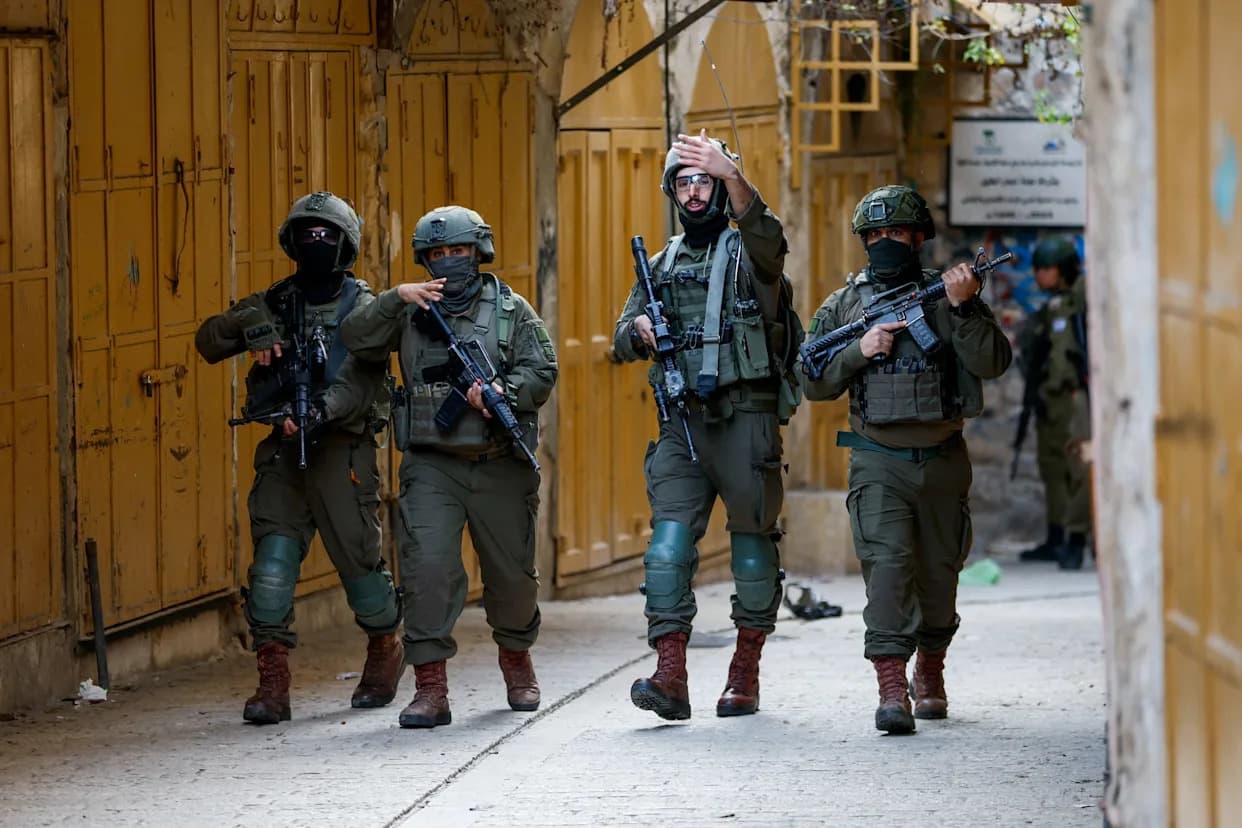
Israeli forces also conducted multiple raids across the West Bank, arresting at least four Palestinians. Reported raids included operations in Hebron (where two brothers were detained), Duma south of Nablus, and al-Ubeidiya east of Bethlehem. In Jenin, military vehicles entered the city centre and the Jabel Abu Dhuhair neighbourhood, and troops reportedly destroyed street vendors' carts at the Cinema Roundabout.
Movement Restrictions
Movement restrictions tightened in parts of the West Bank: for the second consecutive day, the Israeli army closed the main entrance to Turmus Aya north of Ramallah and kept the Atara military checkpoint blocked from early morning, severing connections between northern and central West Bank towns. The Colonization and Wall Resistance Commission reported that Israel currently operates 916 military checkpoints and gates throughout the West Bank.
Sources: Local Palestinian sources, Wafa news agency, Jerusalem governorate, rights groups and the Colonization and Wall Resistance Commission.
Help us improve.