Indian Prime Minister Narendra Modi visited Malaysian Prime Minister Anwar Ibrahim in Putrajaya on a two-day trip, the first since the countries upgraded ties to a Comprehensive Strategic Partnership in August 2024. The leaders witnessed the exchange of 11 cooperation agreements and pledged deeper collaboration across trade, defence, healthcare, tourism and semiconductors. They agreed to promote local-currency settlements, pursue closer semiconductor and AI ties, and aim to lift bilateral trade above $18.6 billion. Malaysia also offered support for India opening a consulate in Sabah.
India and Malaysia Deepen Strategic Partnership — Trade, Defence and Semiconductors Take Centre Stage
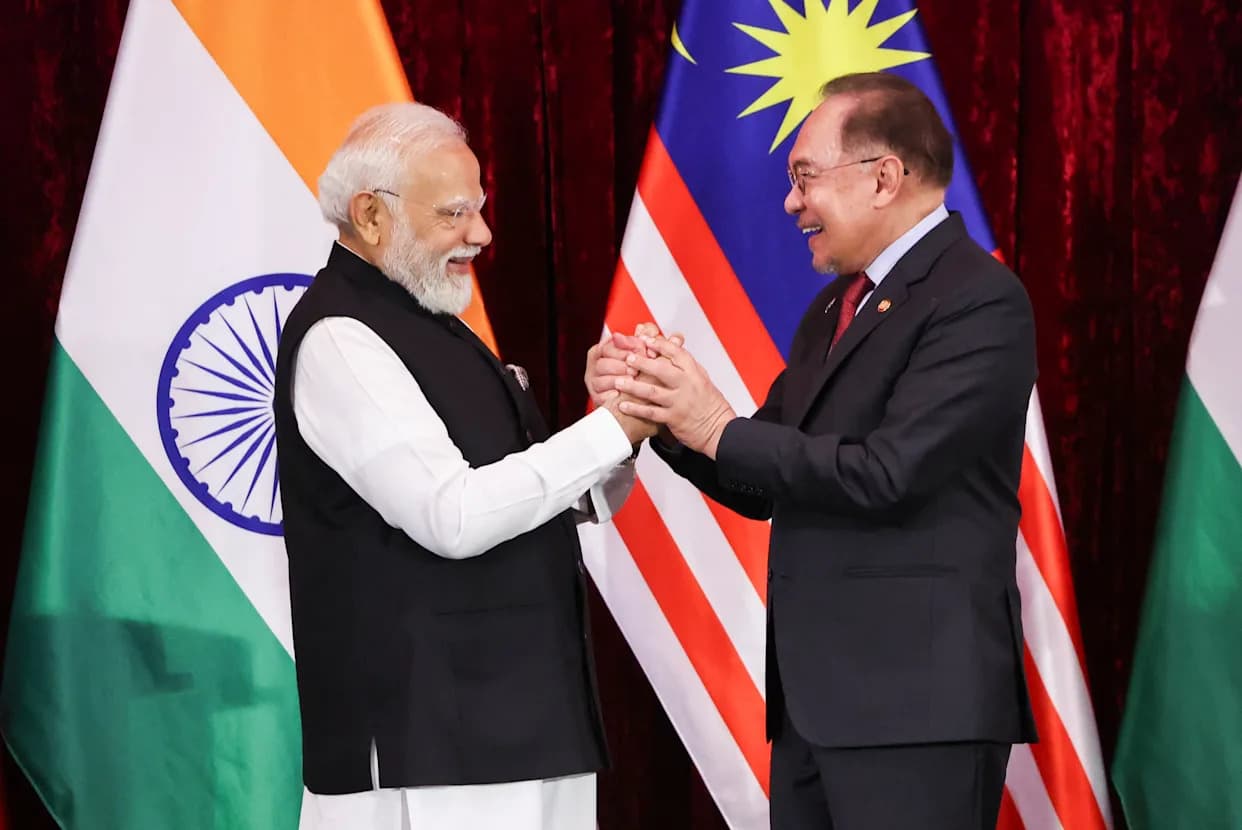
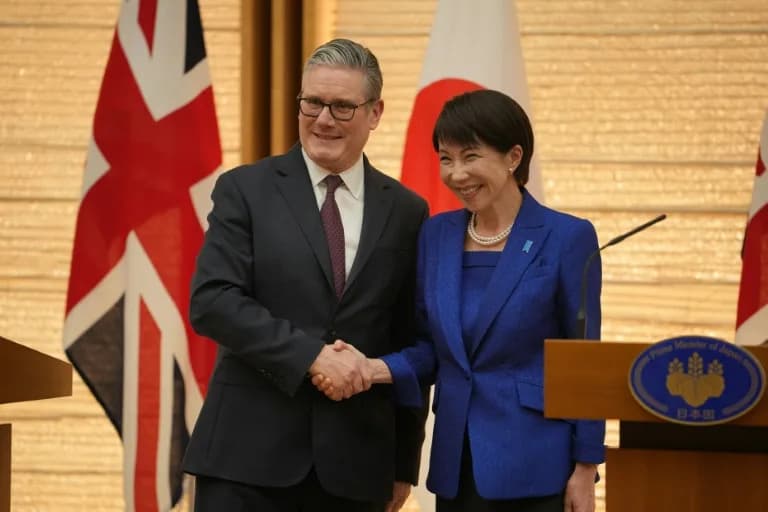
Indian Prime Minister Narendra Modi, left, and Malaysian Prime Minister Anwar Ibrahim hold hands during a news conference in Putrajaya, Malaysia, on February 8, 2026 [Hasnoor Hussain/AFP]
Indian Prime Minister Narendra Modi met Malaysian Prime Minister Anwar Ibrahim in Putrajaya on Sunday during a two-day visit — his first since the two countries upgraded ties to a Comprehensive Strategic Partnership in August 2024.
The leaders pledged to deepen cooperation across trade and investment, defence, healthcare, tourism, food security and semiconductors, and they oversaw the exchange of 11 cooperation agreements covering areas such as disaster management and peacekeeping.
Anwar Ibrahim: “It’s really comprehensive, and we believe that we can advance this and execute in a speedy manner with the commitment of both our governments.”
Narendra Modi (on X): “Had an excellent meeting with PM Anwar Ibrahim at Seri Perdana earlier today. India and Malaysia are maritime neighbours who have always enjoyed a close friendship.”
Both sides said they would promote the use of local-currency settlement for cross-border transactions and expressed a shared goal of lifting bilateral trade above last year’s $18.6 billion. Malaysia also pledged to support India’s plan to open a consulate in Sabah on Borneo island.
Defence cooperation is expected to expand under the 2024 Comprehensive Strategic Partnership: India and Malaysia have conducted five joint military exercises over the past five years, and officials signalled plans for deeper defence collaboration going forward.
Semiconductors and Industry Collaboration
The two leaders highlighted plans to strengthen semiconductor ties alongside cooperation on AI and digital technologies. According to Malaysian government figures, Malaysia ranks sixth worldwide in semiconductor exports and the sector accounts for about 25% of its GDP. India’s Ministry of External Affairs described Malaysia as having a “very strong semiconductor ecosystem” with decades of industry experience, and Indian companies have expressed interest in joint research and development, and in building manufacturing and testing facilities.
Indian and Malaysian media reported in June that Tata Electronics was in talks with global semiconductor firms to acquire either a fabrication plant or an outsourced semiconductor assembly and test (OSAT) facility in Malaysia — a move that could mark a significant step in bilateral industrial collaboration.
Officials also reiterated economic data and trade ambitions: imports from Malaysia into India totalled about $12.54 billion last year — mainly minerals, vegetable oils and electrical machinery — and both governments said they expect these numbers to rise as the new initiatives are implemented. (A reference to India’s exports to Nepal in earlier reporting appears to be unrelated and has been noted as such by sources.)
What Comes Next: Implementation of the 11 agreements, further defence exercises, targeted semiconductor investments and measures to encourage local-currency trade settlement are immediate priorities for both governments.
Help us improve.