The removal of Ed Martin from a senior Justice Department role by Deputy Attorney General Todd Blanche has exposed a sharp split over how aggressively DOJ should pursue President Trump’s political enemies. Martin’s turbulent 15-week tenure as U.S. Attorney in D.C., his withdrawn confirmation in May 2025, and allegations he mishandled grand-jury material in an Adam Schiff probe precipitated his reassignment. Blanche supporters say his actions protect DOJ norms; Martin backers argue aggressive tactics are needed to deliver results. The Weaponization Working Group is now under pressure to meet daily and produce outcomes in the coming months.
Inside the MAGA Rift: How Ed Martin’s Ouster Exposed a Split Over DOJ Tactics
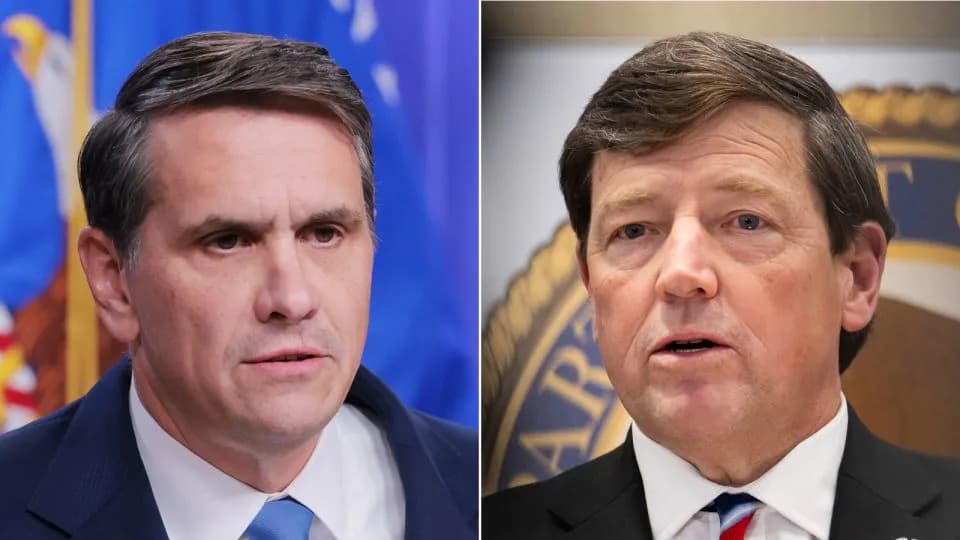
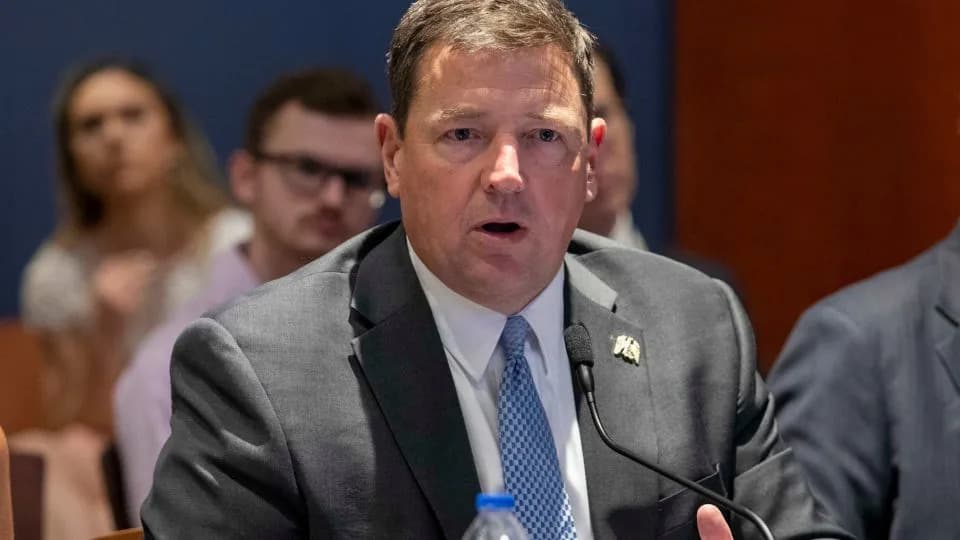
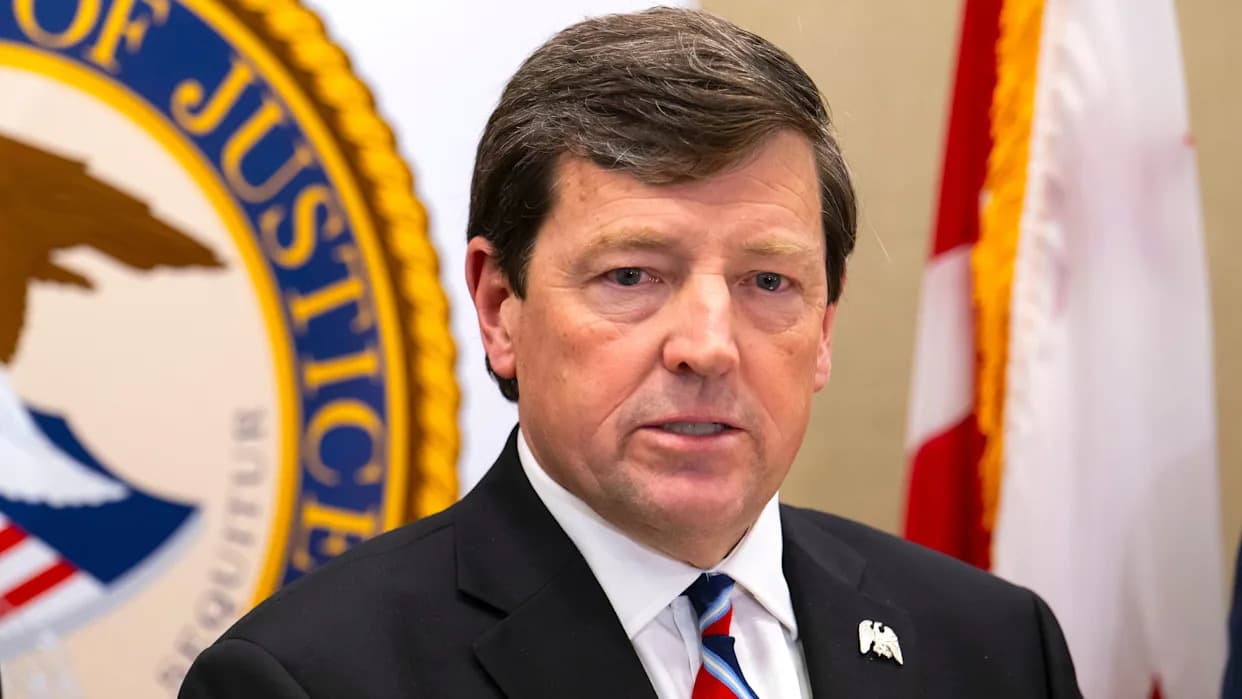
Todd Blanche and Ed Martin - Getty Images
Deputy Attorney General Todd Blanche this year removed conservative firebrand Ed Martin from a prominent Justice Department role, a move that has laid bare a growing schism inside the administration over how aggressively the department should pursue President Trump’s political opponents.
A Clash of Approaches
The decision to sideline Martin — who had been the most public face inside DOJ of pursuing cases against Trump’s critics — highlighted two competing camps: one that praises Blanche for preserving DOJ norms and legal guardrails, and another that views Martin as a necessary, hard-driving enforcer of the president’s priorities.
“You can understand the frustration that Blanche’s office is where things go to die, because things move so slow. But Ed’s ways ultimately don’t help get what the president wants,” said a Trump ally familiar with both men.
Different Paths, Different Styles
Todd Blanche is a former New York big-law attorney who represented Trump in three of his four criminal cases before being appointed Deputy Attorney General. He earned a reputation for managing internal political dynamics within Trump-world and prioritizing institutional norms.
Ed Martin, a former Missouri lawmaker, rose to prominence as a Stop The Steal organizer and as a defense lawyer for some January 6 defendants. Early in the second Trump administration he was installed as U.S. Attorney for Washington, D.C., where his 15-week tenure was marked by abrupt personnel moves, public confrontations and management controversies. His Senate confirmation was withdrawn in May 2025.
From U.S. Attorney To Weaponization Group
After his nomination was pulled, Martin was reassigned to two Justice Department roles under Blanche’s supervision: director of the Weaponization Working Group and Pardon Attorney. The Weaponization probe quickly stalled, producing few tangible results on the administration’s high-priority investigations into alleged misconduct during the Biden Justice Department and earlier prosecutions by Special Counsel Jack Smith.
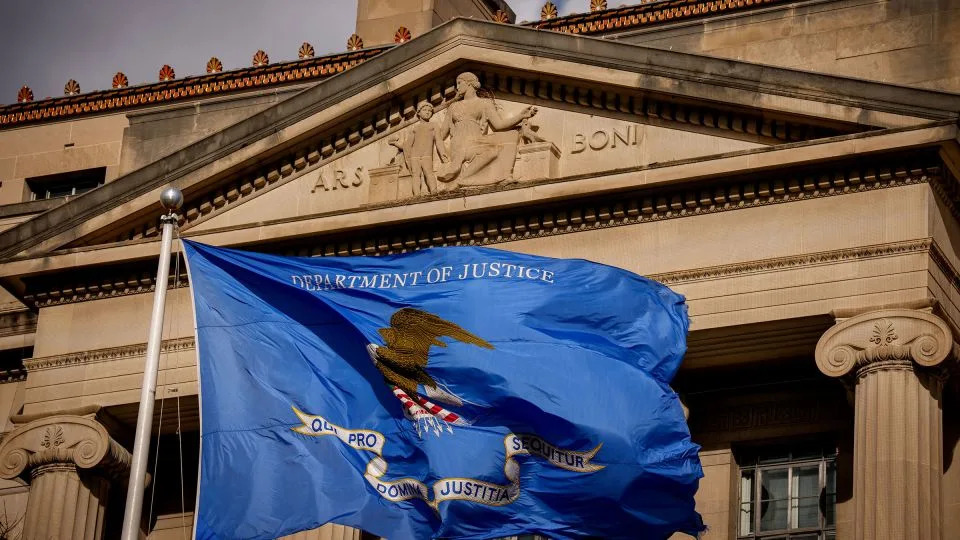
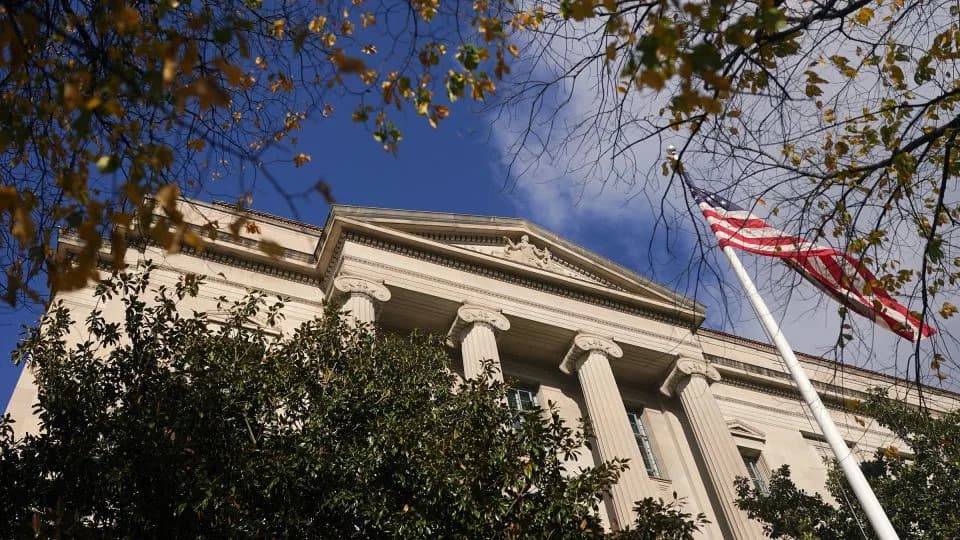
The Robert F. Kennedy Department of Justice Building on December 19, 2025 in Washington, DC. - Andrew Harnik/Getty Images
Martin continued to take high-profile actions that appealed to the president, including public efforts tied to investigations of political opponents. Those tactics — and his habit of coordinating directly with the White House — repeatedly frustrated Blanche and others who prioritized DOJ process and independence.
The December Incident
The conflict escalated in December after reports that Martin mishandled secret grand-jury material in an investigation into Senator Adam Schiff. Blanche’s office initiated a review; two sources told reporters the review found misconduct. Martin was stripped of his Weaponization Group title, moved to an office outside DOJ headquarters, and is reportedly considering leaving the department.
Blanche has publicly disputed ongoing misconduct probes: “There are no misconduct investigations into Ed Martin. Ed is doing a great job as Pardon Attorney,” he told CNN.
Broader Implications
The episode underscores a deeper tension inside the Justice Department and the broader Republican coalition: whether to work within longstanding DOJ legal traditions to advance a political agenda or to press more aggressive, unorthodox tactics to quickly deliver results for the president. Critics say repeated attempts to sidestep DOJ norms have weakened the department’s credibility and damaged case outcomes; supporters argue that institutional caution can stall the president’s priorities.
Facing pressure from the White House, the Weaponization Working Group has been ordered to meet daily and intensify efforts to produce measurable outcomes in the coming months. Meanwhile, Martin remains Pardon Attorney and has been active in clemency reviews, though final decisions on pardons typically rest with the White House.
It remains unclear where Martin will go if he leaves the department; some reports say he has been spending time at the White House. The clash between Blanche and Martin is likely to continue shaping debates over the balance between rule-of-law norms and political demands within DOJ for the foreseeable future.
Help us improve.