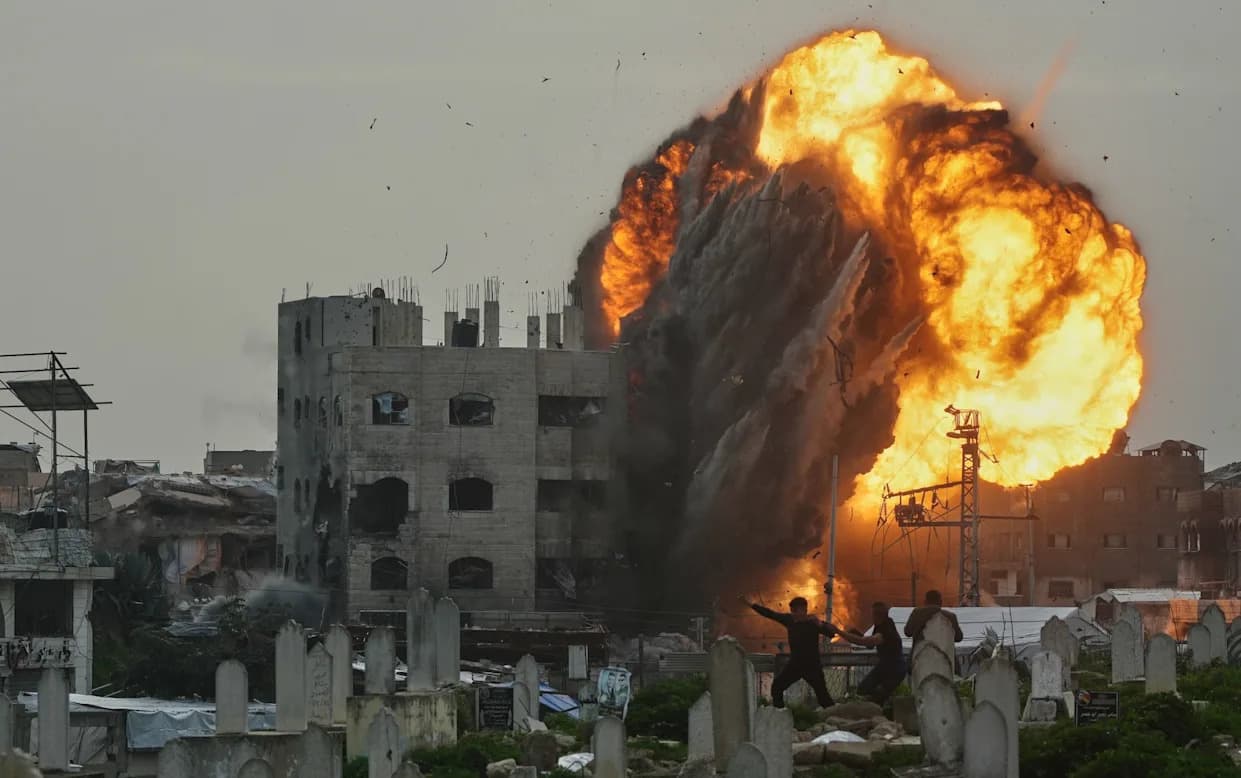
The Davydenko family moved from their 12th‑floor Kyiv flat into their generator‑powered Piggy Cafe after strikes left their home without electricity for eight days and without heating for almost two weeks. Night temperatures fell to about −20°C, forcing the family — parents Yuliia and Denys and three young children — to sleep on mattresses in the café, which houses seven small pigs. After a January 20 attack, 5,635 apartment blocks lost heating and roughly one million customers were briefly disconnected. The family say they will only leave Kyiv if Russian forces get within 10–12 km of the city.
Sleeping Among Pigs: Kyiv Family Turns Café Into Home After Severe Power Cuts

The Davydenko family (from left to right): Denys, 40, Yuliia, 40, and their children Maksym, 11, Tymofiy, 6, and Stephanie, 2 pose for a picture wearing winter clothes in the kitchen of their apartment, which has no heating or hot water and experiences frequent power outages amid Russia's attack on Ukraine, in Kyiv, Ukraine, February 1, 2026. Waves of Russian attacks over the past four months left hundreds of thousands without electricity and water, making this the most devastating winter since the war started; and so the Davydenko family made the choice to stay at the family-owned Piggy Cafe Kyiv - with power supplied by a generator and heating. "Maksym likes it," Denys joked about their new reality. "He actually says that at home we have to do household chores. Now there's no dish-washing, cleaning, walking the dogs. So he is happy about that." REUTERS/Alina Smutko
When Yuliia and Denys Davydenko found themselves waking through the night, bundled in winter coats and hats and buried beneath multiple duvets, they knew their 12th‑floor apartment in Kyiv had become unlivable.
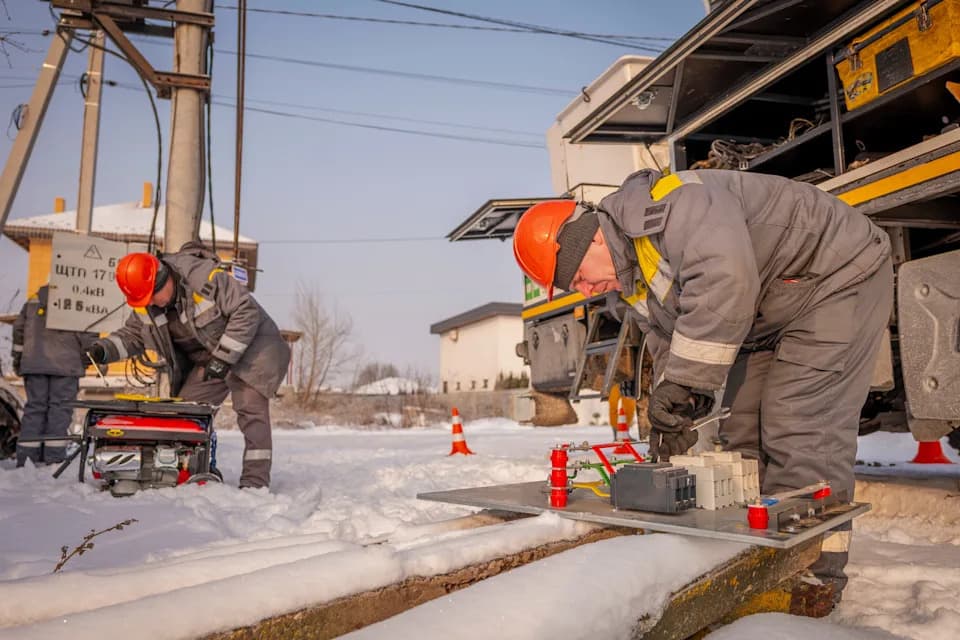
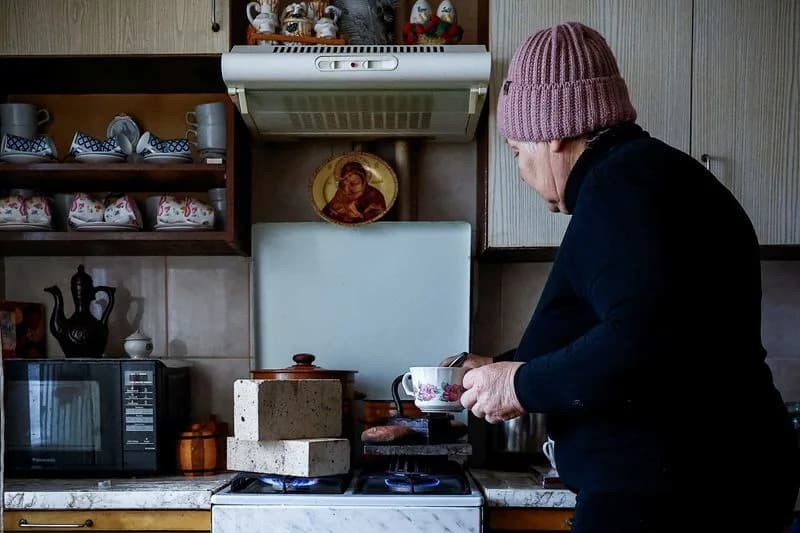
Systematic strikes on Ukraine's energy infrastructure since October left their flat without electricity for eight days and without heating for almost two weeks, while nighttime temperatures plunged to as low as −20°C (−4°F). With three young children, two cats, two dogs — and a family business — the couple moved their family into Piggy Cafe Kyiv, a generator‑powered, heated café where customers pet seven small pigs to relieve stress.
Braving Freezing Temperatures
After the café closes each evening, the Davydenkos roll out mattresses on the floor for sons Maksym, 11, Tymofiy, 6, and daughter Stephanie, 2. The family returns to their Troieshchyna apartment only every few days. There, laundry takes days to dry and can still feel damp; a shower is effectively impossible and even sitting on the toilet is uncomfortable because of the cold. On one visit, the kitchen was 2°C (35.6°F) and ice had formed on the inside of the window.
To lift the children’s spirits they treated them to a sauna — an outing that briefly turned hardship into adventure. With their own business and access to full‑day schooling for their sons, the Davydenkos are better positioned than many Kyiv residents, but they are far from immune to the hardships of an increasingly brutal winter.
Wider Impact And Ongoing Strikes
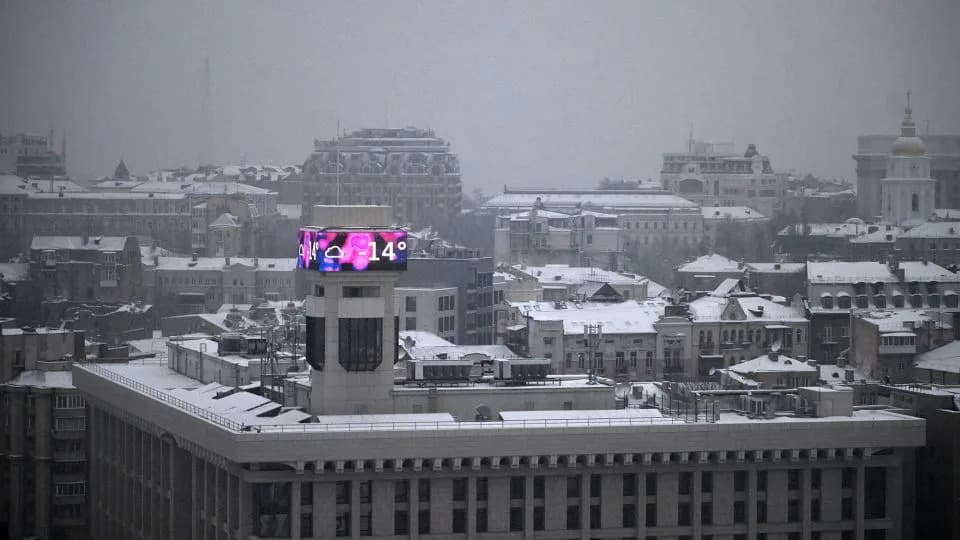
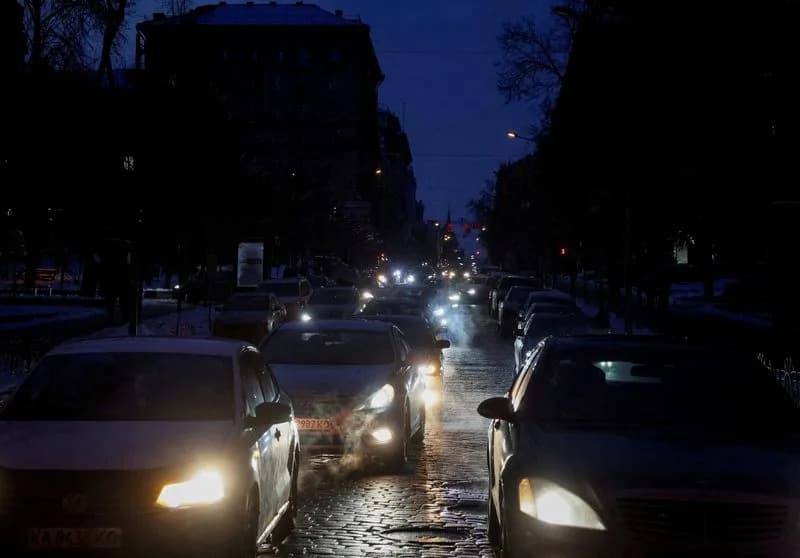
Waves of strikes in recent months have left hundreds of thousands across Kyiv without electricity or water, making this the hardest winter since the war began for the city’s roughly three million inhabitants. Infrastructure ministry data showed that after a particularly heavy attack on January 20, some 5,635 apartment blocks lost heating. Industry sources reported that at one point about one million customers were disconnected from the grid.
The Davydenkos' home is roughly 4 km from a major thermal power plant that has been repeatedly targeted since last autumn. Despite the intensifying bombardment, the family are preparing for worse while hoping for better. When asked what would make them leave Kyiv again, Yuliia answered bluntly: they would consider leaving only if Russian troops came within 10–12 km of the city.
"No big deal," Yuliia said when asked about contingency plans. "We will set up a wood stove."
On the morning Reuters spent with the family, Russia launched what officials described as one of the largest concentrated barrages of the war — firing dozens of missiles and hundreds of drones, much of which again struck Kyiv’s energy system. The family reported waking to explosions and rattling windows; the café's heating was briefly cut as well.
Resilience Amid Hardship
The Davydenkos' story is both deeply personal and emblematic: it illustrates how ordinary families adapt to cascading infrastructure failures and persist amid the physical and psychological toll of war. For now, their generator‑heated café — complete with seven small pigs that sometimes curl up with the children — offers shelter, warmth and a small measure of normalcy in a bitter winter.

Yuliia Davydenko, 40, holds her daughter Stephanie, 2, wrapped in a towel after showering at a public bathhouse, as their apartment has no heating or hot water and faces frequent power outages amid Russia's attack on Ukraine, in Kyiv, Ukraine, February 3, 2026. Waves of Russian attacks over the past four months left hundreds of thousands without electricity and water, making this the most devastating winter since the war started; and so the Davydenko family made the choice to stay at the family-owned Piggy Cafe Kyiv - with power supplied by a generator and heating. "The point when we decide to leave Kyiv again would be when Russian troops are 10-12 km from the city. That's it," Yuliia Davydenko, 40, said. REUTERS/Alina Smutko
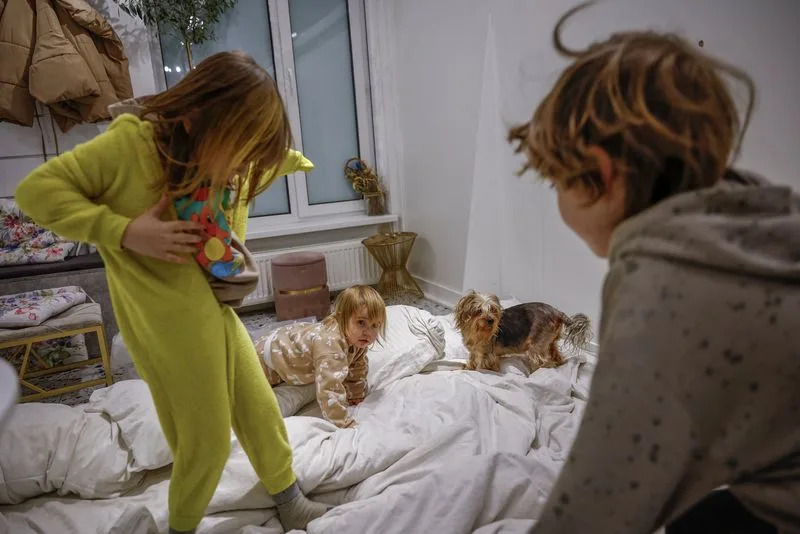
Siblings Maksym, 11, Tymofiy, 6, and Stephanie Davydenko, 2, play on an improvised bed on the floor of their family's cafe, where they are staying because their apartment has no heating or hot water and faces frequent power outages amid Russia's attack on Ukraine, in Kyiv, Ukraine, February 1, 2026. Waves of Russian attacks over the past four months left hundreds of thousands without electricity and water, making this the most devastating winter since the war started; and so the Davydenko family made the choice to stay at the family-owned Piggy Cafe Kyiv - with power supplied by a generator and heating. "Maksym likes it," the father Denys Davydenko, 40, joked about their new reality. "He actually says that at home we have to do household chores. Now there's no dish-washing, cleaning, walking the dogs. So he is happy about that." REUTERS/Alina Smutko
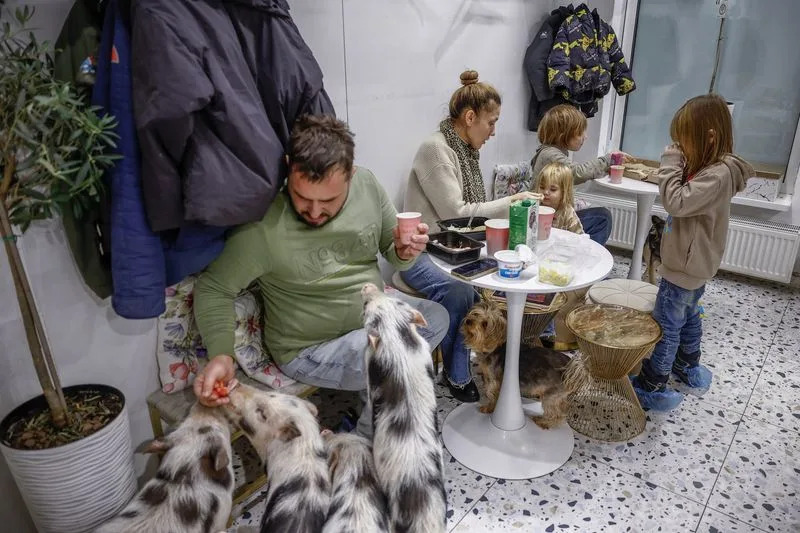
The Davydenko family has dinner at their cafe, where they are staying because their apartment has no heating or hot water and faces frequent power outages amid Russia's attack on Ukraine, in Kyiv, Ukraine, February 1, 2026. Waves of Russian attacks over the past four months left hundreds of thousands without electricity and water, making this the most devastating winter since the war started for the city's three million people; and so the Davydenko family made the choice to stay at the family-owned Piggy Cafe Kyiv - with power supplied by a generator and heating. "The point when we decide to leave Kyiv again would be when Russian troops are 10-12 km from the city. That's it," the mother Yuliia Davydenko, 40, said. REUTERS/Alina Smutko
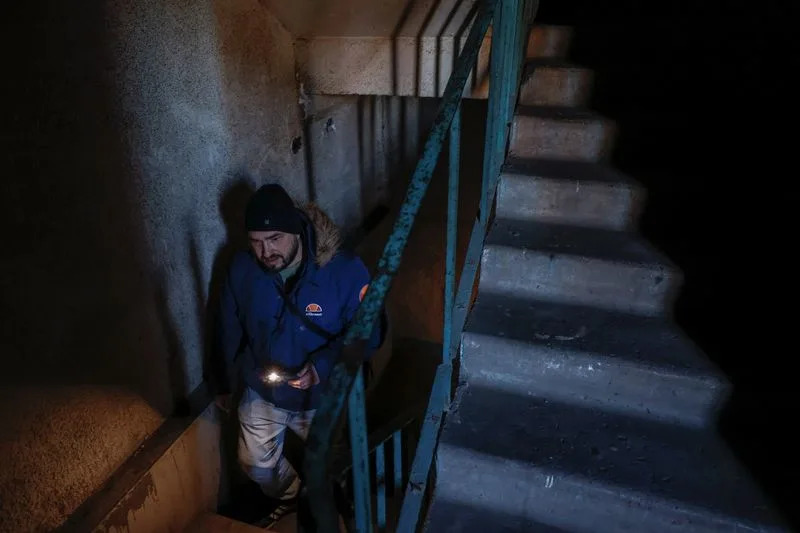
Denys Davydenko, 40, uses a flashlight to climb a stairwell to his family's 12th-floor apartment, which has no heating or hot water and experiences frequent power outages amid Russia's attack on Ukraine, in Kyiv, Ukraine, February 2, 2026. Waves of Russian attacks over the past four months left hundreds of thousands without electricity and water, making this the most devastating winter since the war started; and so the Davydenko family made the choice to stay at the family-owned Piggy Cafe Kyiv - with power supplied by a generator and heating. "Maksym likes it," Denys joked about their new reality. "He actually says that at home we have to do household chores. Now there's no dish-washing, cleaning, walking the dogs. So he is happy about that." REUTERS/Alina Smutko
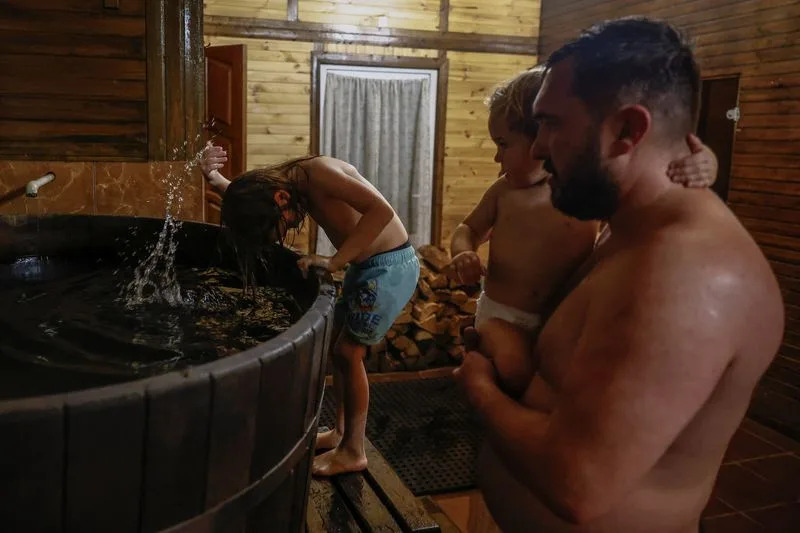
Tymofiy Davydenko, 6, bathes in a wooden tub at a public bathhouse as his father Denys holds his sister Stephanie, 2, as their apartment has no heating or hot water and faces frequent power outages amid Russia's attack on Ukraine, in Kyiv, Ukraine, February 3, 2026. Waves of Russian attacks over the past four months left hundreds of thousands without electricity and water, making this the most devastating winter since the war started; and so the Davydenko family made the choice to stay at the family-owned Piggy Cafe Kyiv - with power supplied by a generator and heating. "Maksym likes it," Denys joked about their new reality. "He actually says that at home we have to do household chores. Now there's no dish-washing, cleaning, walking the dogs. So he is happy about that." REUTERS/Alina Smutko
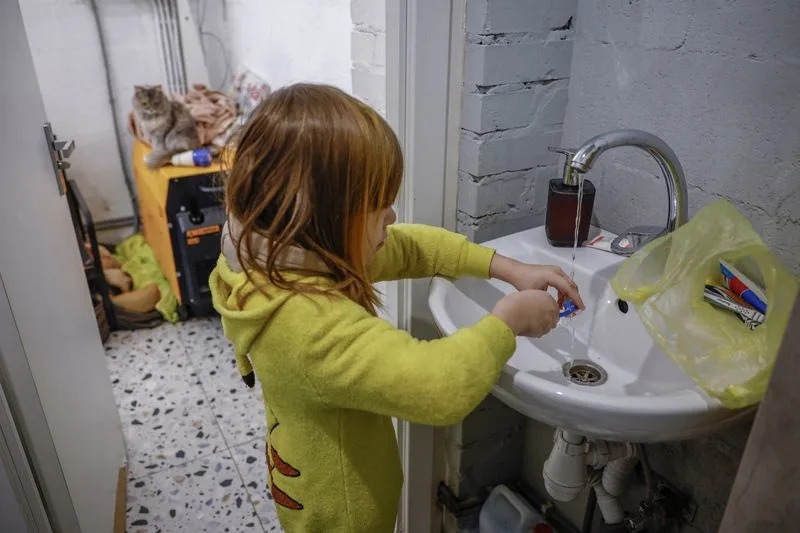
Tymofiy Davydenko, 6, washes his toothbrush in the bathroom of the family's cafe, where they are staying because their apartment has no heating or hot water and faces frequent power outages amid Russia's attack on Ukraine, in Kyiv, Ukraine, February 2, 2026. Waves of Russian attacks over the past four months left hundreds of thousands without electricity and water, making this the most devastating winter since the war started for the city’s three million people; and so the Davydenko family made the choice to stay at the family-owned Piggy Cafe Kyiv - with power supplied by a generator and heating. "The point when we decide to leave Kyiv again would be when Russian troops are 10-12 km from the city. That's it," the mother Yuliia Davydenko, 40, said. REUTERS/Alina Smutko
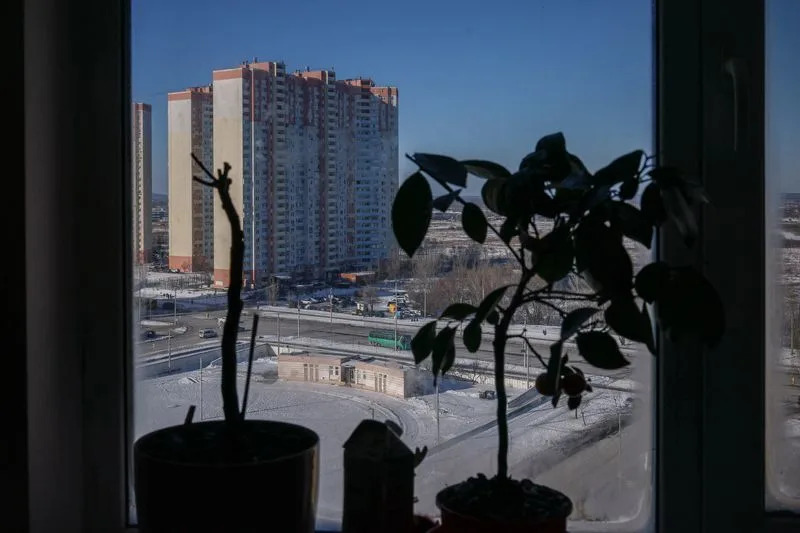
Apartment buildings of the residential area, which has no heating or hot water and experiences frequent power outages, are seen through a window at the Davydenko family's apartment, amid Russia's attack on Ukraine, in Kyiv, Ukraine, February 1, 2026. Waves of Russian attacks over the past four months left hundreds of thousands without electricity and water, making this the most devastating winter since the war started for the city's three million people; and so the Davydenko family made the choice to stay at the family-owned Piggy Cafe Kyiv - with power supplied by a generator and heating. "The point when we decide to leave Kyiv again would be when Russian troops are 10-12 km from the city. That's it," the mother Yuliia Davydenko, 40, said. REUTERS/Alina Smutko
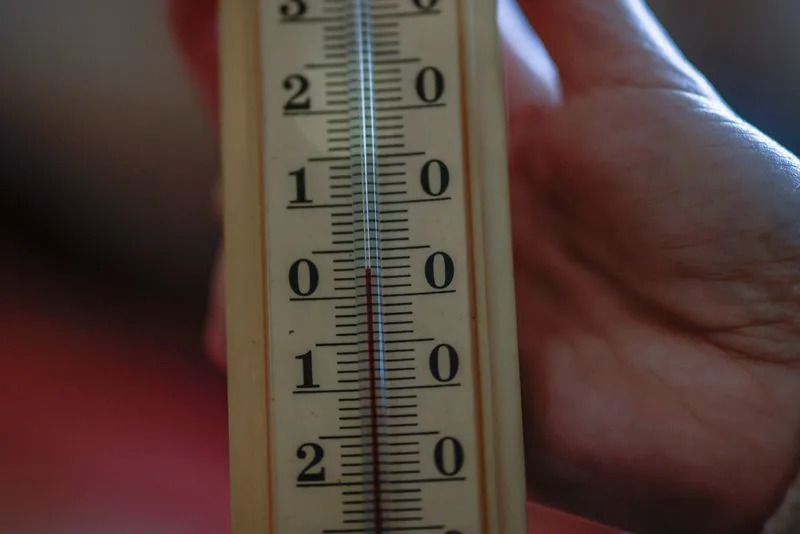
Yuliia Davydenko, 40, shows a thermometer reading of almost 3 degrees Celsius (about 37 degrees Fahrenheit) inside her family's apartment, which has no heating or hot water and experiences frequent power outages, amid Russia's attack on Ukraine, in Kyiv, Ukraine, February 1, 2026. Waves of Russian attacks over the past four months left hundreds of thousands without electricity and water, making this the most devastating winter since the war started; and so the Davydenko family made the choice to stay at the family-owned Piggy Cafe Kyiv - with power supplied by a generator and heating. "The point when we decide to leave Kyiv again would be when Russian troops are 10-12 km from the city. That's it," Yuliia said. REUTERS/Alina Smutko
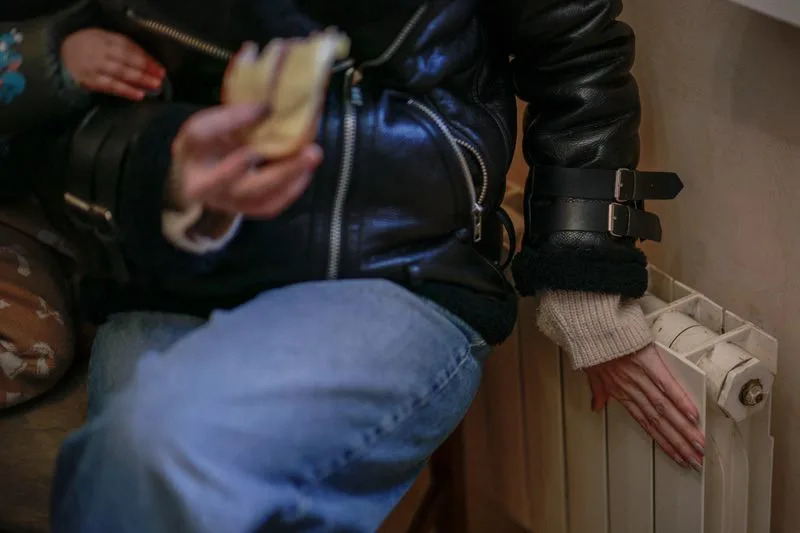
Yuliia Davydenko, 40, checks a radiator at her family's apartment, where the temperature does not exceed 3 degrees Celsius (about 37 degrees Fahrenheit), due to no heating or hot water and frequent power outages amid Russia's attack on Ukraine, in Kyiv, Ukraine, February 1, 2026. Waves of Russian attacks over the past four months left hundreds of thousands without electricity and water, making this the most devastating winter since the war started for the city's three million people; and so the Davydenko family made the choice to stay at the family-owned Piggy Cafe Kyiv - with power supplied by a generator and heating. "The point when we decide to leave Kyiv again would be when Russian troops are 10-12 km from the city. That's it," Yuliia Davydenko, 40, said. REUTERS/Alina Smutko
Help us improve.