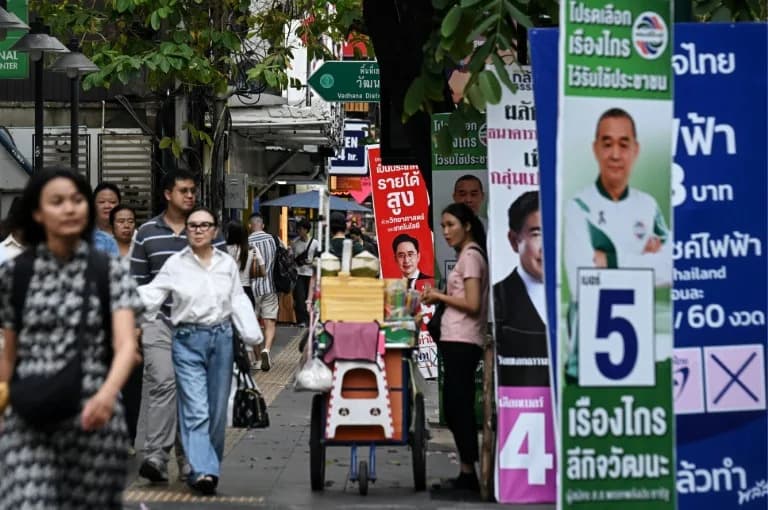
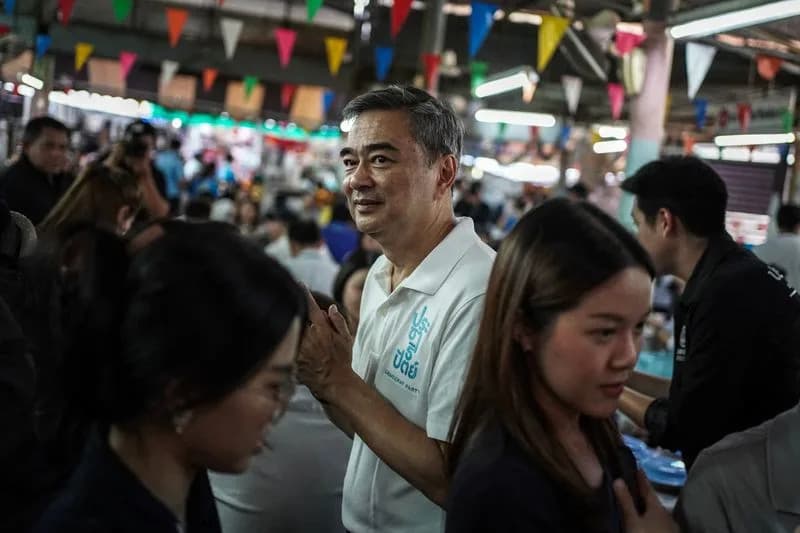
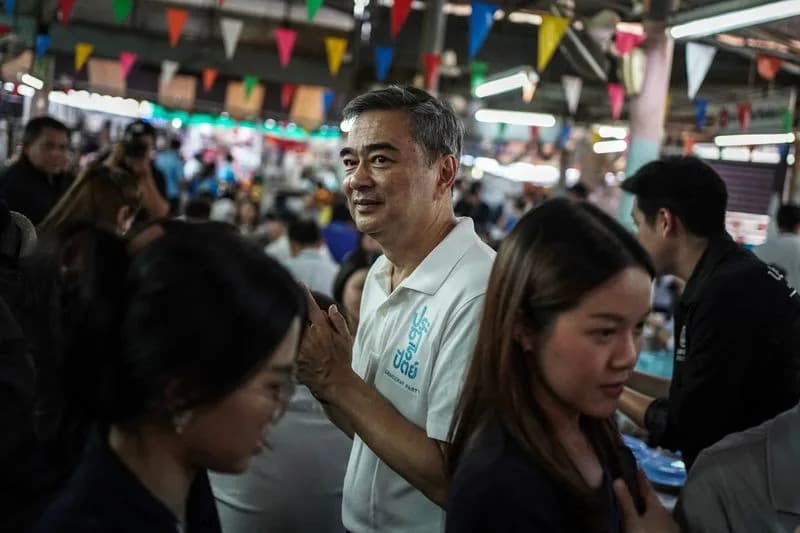
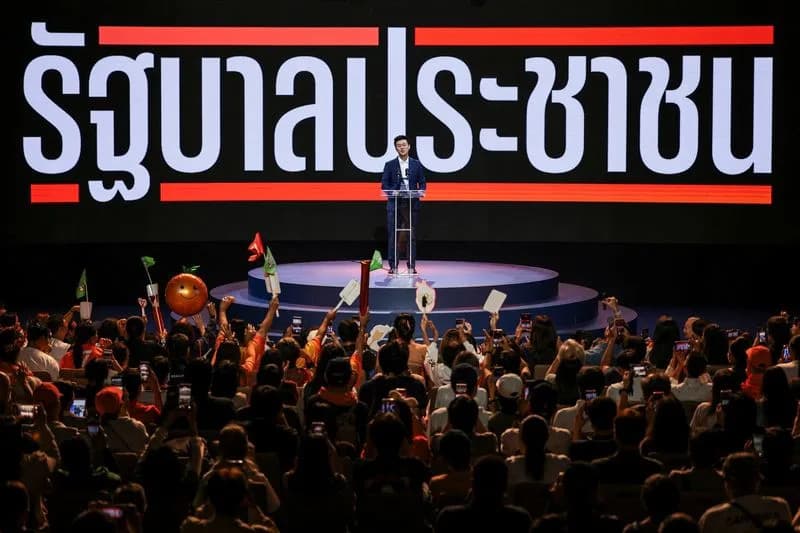
Thailand’s Feb. 8 general election pits three rival parties — incumbent Bhumjaithai, populist Pheu Thai and reformist People’s Party — against one another to lead the next government. Bhumjaithai emphasises social subsidies, jobs and green initiatives; Pheu Thai promises large cash handouts, broad farmer support and start-up incentives; People’s Party campaigns on institutional reforms, social policy changes and a voluntary military. The outcome will hinge on coalition building and the influence of the military-appointed Senate.
Thailand’s Feb. 8 Election: The Three Parties, Their Leaders and Key Policy Pledges

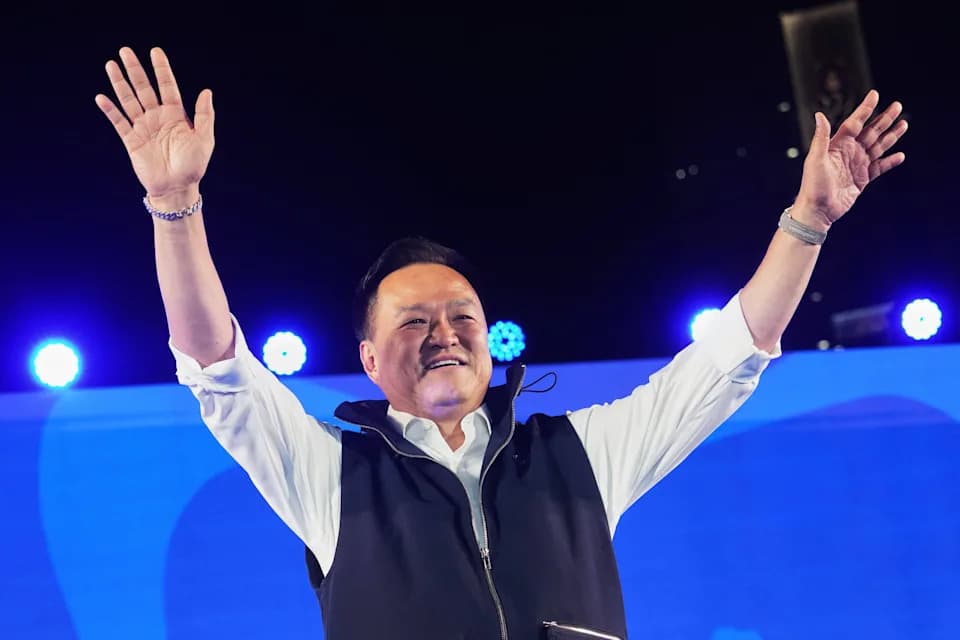
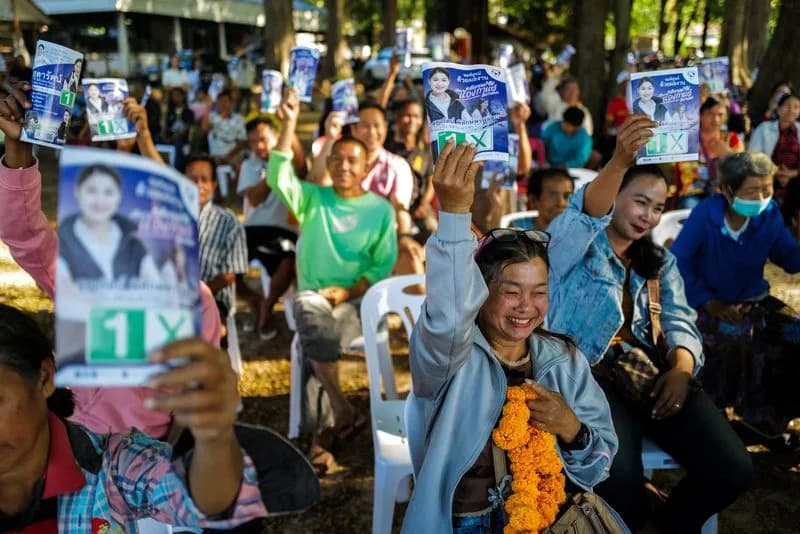
Supporters of the Bhumjaithai Party react during a general election campaign rally ahead of the February 8 election in Bangkok, Thailand, January 30, 2026. REUTERS/Athit Perawongmetha
Thailand holds a general election on February 8 to determine which party or coalition will form the next government. Three parties are widely expected to dominate the contest: the incumbent Bhumjaithai, the populist Pheu Thai, and the reform-minded People’s Party. Below are concise, clearly organised summaries of each party’s background, strengths and main policy pledges.
Bhumjaithai Party
Led by incumbent Prime Minister Anutin Charnvirakul, Bhumjaithai moved quickly in September to exit the previous Pheu Thai-led coalition after a court removed then-premier Paetongtarn Shinawatra. The party was a smaller player in recent elections — winning 51 seats in 2019 and 71 in 2023 — but has influence through coalition roles and recent defections. Bhumjaithai has recruited technocrats and emphasises pragmatic social and economic measures; it will likely need coalition partners to lead the next government.
- Launch phase two of a co-payment subsidy (phase one covered half the cost of selected food and consumer goods).
- Raise growth above 3% via a "10-Plus Plan" supporting low-income households, senior care, community products, free education linked to jobs and small-business support.
- Build border walls to curb smuggling, illegal labour and the spread of informal or "grey" businesses.
- Create paid volunteer soldier posts and a "One Village, One Volunteer Nurse" scheme to create 100,000 jobs.
- Use barter arrangements for some major state purchases (e.g., defence equipment) paid with agricultural goods.
- Establish a national disaster fund to support co-pay insurance for households.
- Offer cheap loans for electric motorcycles and strengthen small-business support via procurement, loans and credit guarantees.
- Promote green-economy measures such as community solar and cap household electricity bills.
Pheu Thai Party
Pheu Thai and its predecessors have been dominant in Thai electoral politics for roughly 25 years, building strong working-class support with large campaign resources and populist policies. Founded by the polarising Thaksin Shinawatra, the party has repeatedly faced opposition from royalist and military-aligned institutions. After setbacks following the removal of Paetongtarn Shinawatra and difficulties rolling out its "digital wallet" programme, Pheu Thai still centres its platform on broad cash support for households and farmers plus business incentives.
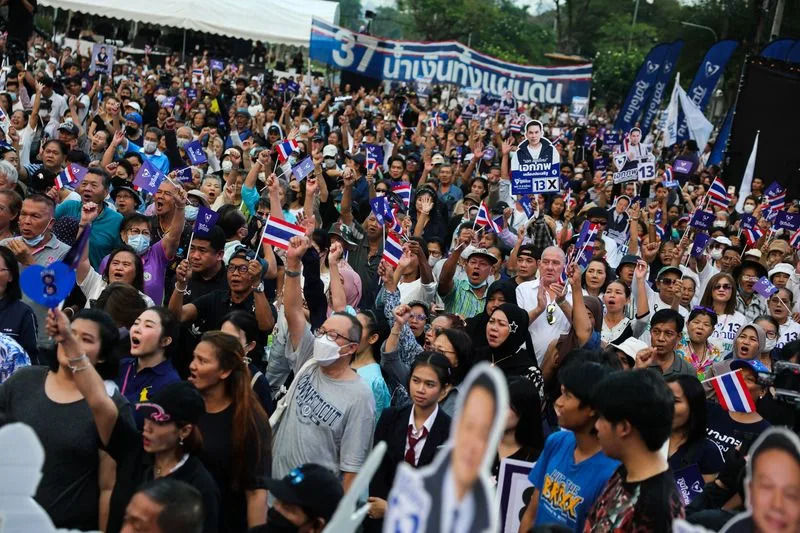
Supporters of the Bhumjaithai Party react during a general election campaign rally ahead of the February 8 election in Bangkok, Thailand, January 30, 2026. REUTERS/Athit Perawongmetha
- "Millionaire-maker" lottery-style scheme: nine daily 1 million baht prizes targeted at tax filers, seniors, farmers, volunteers and consumers.
- Top-up incomes for people earning under 36,000 baht per year.
- Support for farmers: market-price targets for rice, cassava, rubber and corn and a guarantee of at least 30% profit in the first year.
- Coupons for fertiliser (up to 250 kg) and seeds (up to 150 kg) per household; three-year suspension on principal and interest for farmer loans up to 500,000 baht.
- Convert certain land documents into full title deeds for millions of rai and provide start-up seed funding (500,000 baht) with five-year tax breaks.
- Expand universal healthcare to include mental health; create a national credit guarantee agency and a programme to develop 20 million skilled workers.
- Affordable housing measures for first-time buyers, flat 20 baht fares on electric trains, and temporary tax relief for delivery riders.
- Relief measures for holders of non-performing loans below set thresholds and state-backed small loans to replace informal debt.
People's Party
The People’s Party is the current incarnation of a progressive movement whose earlier forms — notably Move Forward — were dissolved by courts. Move Forward won the most votes in 2023 but was blocked from forming a government by a military-appointed Senate. Polls show People’s Party is popular among younger and urban voters, pushing a reformist agenda that challenges entrenched interests and could face political resistance if it wins power.
- End compulsory conscription in favour of a fully voluntary military with 4–8 year enlistment contracts, fewer generals and improved welfare for lower-ranking soldiers.
- Government loan guarantees for small businesses and upgrades to the national credit database.
- Tighten company registration to curb illicit businesses and nominee structures, increase penalties and speed up court processes.
- Develop a southern port link system to reduce logistics costs and boost the regional economy.
- Introduce a single transport ticket capping fares across urban rail, buses and ferries.
- Implement a national single-wage formula adjusted annually for living costs and economic conditions.
- Provide a 1,000 baht co-payment top-up for 12 million people and subsidise market-relevant skills training.
- Gradually raise VAT to 8% by 2028 and 10% by 2030 with compensatory support for low-income households.
- Police reform to stop the buying and selling of positions; limit working hours to 40 per week; introduce menstrual leave and extended compassionate leave.
- Establish a 10 billion baht annual fund to buy and absorb surplus farm produce before prices collapse.
Context: Political tensions remain over the role of the military, the appointed Senate and conservative elites in shaping government formation. The election’s result will determine whether Thailand pursues continuity with pragmatic coalition politics, a return to Pheu Thai-style populism, or a push for deeper institutional reforms.
Exchange Rate: $1 = 31.6900 baht.
Compiled by Orathai Sriring and Martin Petty; Edited by Raju Gopalakrishnan.
Help us improve.